|
|
|||
|
||||
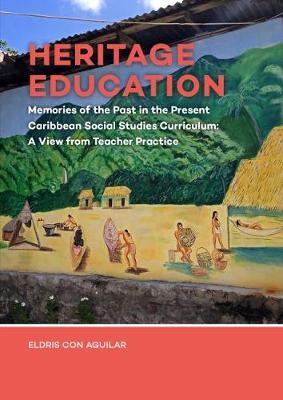
OverviewThis book compiles the results of a doctoral research study that sought to gain insight into how indigenous heritage is represented in the school curriculum for social studies. To this end, the questions focused on studying the relationships that are formed between individuals and the past in the school context. Taking into account teachers’ perspectives on subject content and pedagogical practices can contribute to gaining a better understanding of the role of education in safeguarding heritage. Heritage is continuously under threat from natural disasters; in recent years, the Caribbean region has suffered due to the increasing effects of climate change. But cultural and natural heritage are also threatened by human activity when members of a society forget their relationship with heritage and consequently stop caring about safeguarding it. A negligent attitude toward heritage can lead to acts of vandalism and destruction. Such a scenario poses special challenges to the education sector, which is ultimately seen as a source for positive change and development in society. This study, aimed at investigating the use of heritage education in the classroom, treats this subject in the form of analyses of three country case studies: the Dominican Republic, Dominica and Saint Kitts and Nevis. Along these lines, results were drawn from an informed analysis of educational policies concerning cultural heritage as well as accounts of teachers’ perspectives on subject content and pedagogical practices. This study sought to shed light on the pedagogical practices used by teachers in the context of the three countries that formed this research. This research ultimately seeks to contribute to the fields of heritage education, teacher education and Caribbean studies by understanding the role of teacher knowledge and practices in safeguarding heritage - in this particular investigation, with a focus on the indigenous heritage of the Caribbean. Full Product DetailsAuthor: Eldris Con AguilarPublisher: Sidestone Press Imprint: Sidestone Press ISBN: 9789088908422ISBN 10: 9088908427 Pages: 190 Publication Date: 03 March 2020 Audience: Professional and scholarly , Professional & Vocational Format: Paperback Publisher's Status: Active Availability: Available To Order We have confirmation that this item is in stock with the supplier. It will be ordered in for you and dispatched immediately. Table of ContentsList of figures List of tables Abstract Acknowledgments Chapter 1 General introduction: Perspectives on teaching indigenous heritage in the Caribbean 1.1 Introduction 1.2 Challenging traditional perspectives on Caribbean history: Why does it matter for educational practice? 1.3 Reviving the past in the present: Teaching about the past in the contemporary Caribbean 1.4 Educational policies and Caribbean identities 1.5 Social studies: A window into understanding approaches to teaching and learning about the past in the Caribbean curriculum 1.5.1 The role of teachers in defining indigenous heritage in classroom practice 1.6 Research design for studying the teaching of indigenous heritage in the context of the study 1.7 Outline of the study Chapter 2 Heritage education and teaching Practice 2.1 Introduction 2.2 Heritage and heritage education 2.2.1 Heritage education 2.3 The link between heritage and citizenship education 2.4 Indigenous heritage education 2.5 Teachers' knowledge of indigenous heritage 2.6 Teachers' knowledge: Pedagogical Content Knowledge 2.6.1 Content knowledge 2.6.2 Instructional strategies and representations 2.6.3 Goals and objectives of the curriculum 2.6.4 Student understanding 2.6.5 Knowledge of the context 2.7. Applications of the PCK model in indigenous heritage education 2.7.1 PCK for social studies and history 2.7.2 PCK for indigenous heritage 2.8 The role of teachers' practical knowledge in defining indigenous heritage education 2.9 Chapter summary Chapter 3 Methodology Approaches to assessing indigenous heritage education from the teachers' perspectives 3.1 Introduction 3.2 Doing research in education 3.3 Research design3.3.1 Selection of research design and approach 3.3.2 The case-study approach 3.4 Description of the case studies: Research sites and subjects 3.4.1 Participants and sampling procedures 3.4.2 Sampling criteria 3.5 Instruments and Data Collection 3.5.1 Interviews 3.5.2 Surveys questionnaires 3.6 Analytic procedures 3.6.1 Document research and curriculum analysis 3.6.2 Analysis and interpretation of qualitative data: The interviews 3.6.3 Analysis and interpretation of quantitative data: The survey questionnaires 3.7 Chapter summary Chapter 4 finding Liamuiga: teaching indigenous heritage education in Saint Kitts 4.1 Introduction 4.2 Historical and archaeological background of Saint Kitts 4.3 Context of study 4.3.1 The social studies curriculum in Saint Kitts and Nevis 4.3.2 Primary-school education: fostering understanding of cultural heritage 4.3.3 Secondary-school education and Caribbean Identity 4.4 Data collection, processing and interpretation 4.4.1 Teacher interviews 4.4.2 Participatory activities 4.4.3 Education and cultural stakeholders interviews 4.5 analysis and discussion of results 4.5.1 The place of indigenous heritage in the school curriculum 4.5.2 Understanding of local history and heritage 4.5.3 Need for a more integrated agenda between local institutions and the school community 4.5.4 Engaging with the past through practical experiences 4.5.5 Difficulties in bridging the gap between the island's Amerindian heritage and contemporary society 4.6 Reflections on the current status of teaching indigenous heritage in Saint Kitts Chapter 5 Teaching indigenous heritage in the Dominican Republic: Memories of Quisqueya in the classroom 5.1 Introduction 5.2 Archaeological and historical background of Dominican Republic 5.2.1 The first inhabitants and the origin of the Taino 5.2.2 Narratives of national identity in Dominican historiography 5.3 Context of study: Education policy in the Dominican Republic 5.3.1 An overview of the instructional content and pedagogy of the social science curriculum in Dominican Republic 5.4 Data collection, processing and interpretation 5.4.1 Participatory activities 5.4.2 Survey Questionnaire 5.4.3 Semi-structured interview 5.4.4 Education officers and cultural stakeholders interviews 5.5. Analysis and discussion of results 5.5.1 Subject matter knowledge and curriculum 5.5.2 Instructional strategies, knowledge of the context and student understanding Chapter 6 The presence of Wai'tu kubuli in teaching history and heritage in Dominica 6.1 Introduction 6.2 Historical and archaeological background of Dominica 6.2.1 The precolonial period 6.2.2 The Island Carib 6.2.3 Dominica today 6.3 Context of study: Education policy framework in Dominica 6.3.1 An overview of the instructional content and pedagogy of the social science curriculum in Dominica 6.4 Data collection, processing and interpretation 6.4.1 Teacher interviews 6.4.2 Participatory activities 6.4.3 Results from surveys questionnaires and interviews 6.5 Internal and external stakeholders interviews 6.5.1 Teacher training and education 6.5.2 Initiatives and activities 6.6 Analysis and discussion of results 6.6.1 Prospective: teaching and learning strategies for Kalinago heritage education Chapter 7 discussion: the role of teachers in the formation of a balanced Caribbean identity within the framework of regional policy 7.1 Introduction 7.2 Narratives of Caribbean identity in the school curriculum 7.3 Contribution to the knowledge of teaching indigenous heritage: Tools for heritage professionals 7.4 Overcoming the challenges of education research 7.5 Prospective for studying indigenous heritage in the Caribbean region References Appendixes Interview Protocol appendix A Interview Guides (for in-service teachers, workshop participants and stakeholders, 2014) Appendix B Interview Guide (for in-service teachers and participants of the workshops held in 2015 and 2016) Appendix C Survey Questionnaire Appendix D CXC Caribbean History Curriculum Indicators Appendix E CXC Social Studies Curriculum Indicators Appendix F Contents related to indigenous heritage in the social studies curriculum at the primary-school level, Dominican Republic appendix G Summary of indigenous heritage in the social studies curriculum, Dominican Republic appendix H Social studies curriculum indicator for the primary-school level, Dominican Republic appendix IReviewsAuthor InformationEldris Con Aguilar is an education specialist and qualitative researcher, born in Venezuela and living in the Netherlands. Having both Latino and Caribbean heritage, she has always been interested in the study of these regions. She moved to the Netherlands in 2011 after completing her bachelor’s degree cum laude (with honors) in education (history and geography) at the Universidad Católica Andrés Bello, Venezuela (2011). Inspired by her father’s Dutch Caribbean heritage, in 2011 she began studying the impacts of Curaçao’s change of political status within the Kingdom of the Netherlands. This research, which formed the subject of her MA thesis in Latin American Studies at Leiden University (2012), included interviewing and attending the events of the Curaçaoan community in the Netherlands. Moved by her desire to return to her roots as an educator, in 2013 Eldris joined the Nexus 1492 team, thereby combining her research interests in education policies and Caribbean cultural heritage. Since then she has dedicated her research efforts to studying, from teachers’ perspectives, how indigenous heritage is taught in the current social studies curricula. Being an educator, Eldris was very much interested in conducting her study from a teacher education approach so as to highlight the valuable contributions of teacher knowledge to research on education in the region. During her time with Nexus 1492, she presented her research at international conferences, as well as collaborating with research fellows and producing articles and educational resources. Lastly, as part of her research activities, she organized workshops in collaboration with local stakeholders and education authorities for teachers of primary and secondary school education in the countries in her study. Her publications include: Con Aguilar, E., Slayton, E. and Hofman C.L. (2018) Exploring the Concept of Teaching Sea Travel: Experiences from Valverde and Montecristi, Dominican Republic. Journal of Community Archaeology and Heritage 5(3), 182–197. Con Aguilar, E. and Hofman C.L. (2017) Teaching Indigenous History and Heritage. A Guide for Teachers in the Caribbean. Leiden: NEXUS 1492 New World Encounters In A Globalising World. Con Aguilar, E., Slayton, E. and Hofman C.L. (2017) Connecting Canoes Understanding Seascapes in the Classroom. New Approaches to Studying Caribbean History and Social Studies. Leiden: NEXUS 1492 New World Encounters In A Globalising World. Con Aguilar, E., Álvarez, A. Frederick, C. and Hofman C.L. (2017) Teaching Indigenous History and Heritage. Reviving the Past in the Present: Caribbean Experiences from the Dominican Republic and Dominica. Creative Education 8, 333-346. Tab Content 6Author Website:Countries AvailableAll regions |
||||