Overview
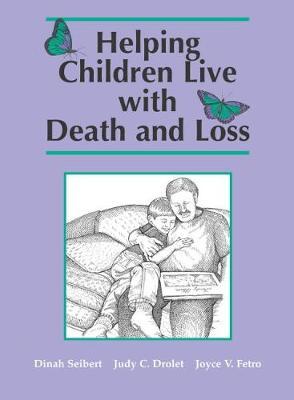
Designed to help children between the ages of two and ten, this is a practical guide for parents, caregivers, teachers, clergy, funeral directors and other adults who may interact with children dealing with loss and grief. Utilizing a developmental approzch that is critical for understanding the unique characteristics and needs among children under ten, the volume is enhanced by a positive attitude that should make it possible for any reader to comprehend and apply the concepts when discussing death and loss with young children. The scope of concepts ranges from adult self-assessment to knowledge of children's developmental stages in learning. Building on that foundation, the book provides four basic content areas for teaching, supplies sample questions and answers, and suggests strategies for teaching general death education as well as strategies for responding to a current death or loss. The resource concludes with print and Internet resources for adults and children. It also aims to help adults and children in improving their communication and coping skills, which are critical for managing loss and preparing for a healthier future.
Full Product Details
Author: Dinah Seibert ,
Judy C. Drolet ,
Joyce V. Fetro ,
Christine Stetter
Publisher: Southern Illinois University Press
Imprint: Southern Illinois University Press
Dimensions:
Width: 17.80cm
, Height: 1.00cm
, Length: 24.10cm
Weight: 0.313kg
ISBN: 9780809324644
ISBN 10: 0809324644
Pages: 144
Publication Date: 18 April 2003
Audience:
General/trade
,
Professional and scholarly
,
General
,
Professional & Vocational
Format: Paperback
Publisher's Status: Out of Print
Availability: Out of stock

Reviews
Because we know that children can learn to understand death, because we have respect for their capacity to be resilient and face difficult experiences, and because we know that children can experience benefits of personal growth, we believe that death education should be shared with children as well as adults. From the Preface This is a sensitive handbook designed to provide tangible suggestions, from spontaneous conversations to planned classroom activities, to assist children to explore and to accept their feelings about loss and death. This book helps prepare caregivers for common questions with appropriate answers for each development stage. Read Two Books and Let s Talk Next Week: Using Bibliotheraphy in Clinical Practice Because we know that children can learn to understand death, because we have respect for their capacity to be resilient and face difficult experiences, and because we know that children can experience benefits of personal growth, we believe that death education should be shared with children as well as adults. --From the Preface This is a sensitive handbook designed to provide tangible suggestions, from spontaneous conversations to planned classroom activities, to assist children to explore and to accept their feelings about loss and death. This book helps prepare caregivers for common questions with appropriate answers for each development stage. -- Read Two Books and Let's Talk Next Week: Using Bibliotheraphy in Clinical Practice Because we know that children can learn to understand death, because we have respect for their capacity to be resilient and face difficult experiences, and because we know that children can experience benefits of personal growth, we believe that death education should be shared with children as well as adults. -- From the Preface This is a sensitive handbook designed to provide tangible suggestions, from spontaneous conversations to planned classroom activities, to assist children to explore and to accept their feelings about loss and death. This book helps prepare caregivers for common questions with appropriate answers for each development stage. -- Read Two Books and Let ' s Talk Next Week: Using Bibliotheraphy in Clinical Practice Because we know that children can learn to understand death, because we have respect for their capacity to be resitient and face difficult experiences, and because we know that children can experience benefits of personal growth, we believe that death education should be shared with children as well as adults. This is a sensitive handbook designed to provide tangible suggestions, from spontaneous conversations to planned classroom activities, to assist children to explore and to accept their feelings about loss and death. This book helps prepare caregivers for common questions with appropriate answers for each development stage.
"""Because we know that children can learn to understand death, because we have respect for their capacity to be resilient and face difficult experiences, and because we know that children can experience benefits of personal growth, we believe that death education should be shared with children as well as adults.""--From the Preface ""This is a sensitive handbook designed to provide tangible suggestions, from spontaneous conversations to planned classroom activities, to assist children to explore and to accept their feelings about loss and death. This book helps prepare caregivers for common questions with appropriate answers for each development stage.""--Read Two Books and Let's Talk Next Week: Using Bibliotheraphy in Clinical Practice"
Because we know that children can learn to understand death, because we have respect for their capacity to be resilient and face difficult experiences, and because we know that children can experience benefits of personal growth, we believe that death education should be shared with children as well as adults. --From the Preface
Because we know that children can learn to understand death, because we have respect for their capacity to be resilient and face difficult experiences, and because we know that children can experience benefits of personal growth, we believe that death education should be shared with children as well as adults. From the Preface
Author Information
Dinah Seibert has facilitated professional and community workshops regarding grief education for more than twenty years. She currently teaches in the College of Applied Sciences and Arts at Southern Illinois University Carbondale. She was a founding member of her local hospice organization, where she developed its first volunteer training curriculum. Judy C. Drolet is a professor of health education at Southern Illinois University Carbondale where she has been the coordinator of graduate teaching assistants for the Department of Health Education since 1982 and has taught mental/emotional health courses since 1983. Much of her professional career has been directed toward the areas of sexuality education, death education, and professional preparation in health education. Joyce V. Fetro is a professor of health education at Southern Illinois University Carbondale, where she currently teaches courses in death education. A former Health Education Specialist for the San Francisco Unified School District, Fetro is the author of Step by Step to Health-Promoting Schools and Personal and Social Skills: Levels I, II, and III