Overview
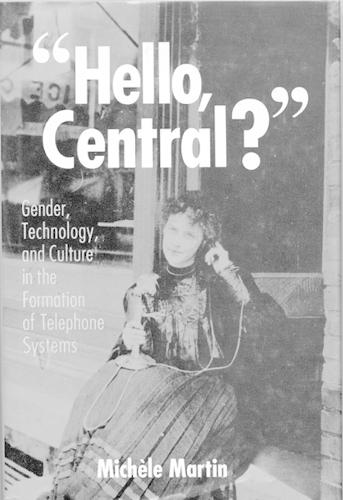
Drawing on the archives of Bell Canada in Montreal, this study analyzes the development of the telephone system in Canada, particularly in Ontario and Quebec, from 1878 to 1920. Bell Telephone originally envisaged the telephone as a business tool for a relatively small group of male professionals. The women who worked as operators - an occupation which rapidly became a female ghetto - played a key role in mediating the demands of telephone users and the limitations of the new technology. The many women who began to use the telephone for domestic, two-way communication eventually forced Bell Telephone to change its approach and ultimately transformed the telephone's social impact. Through a critical examination of the political and economic aspects of the development of telephone systems, the author outlines changes in the nature of women's economic experience and in their participation in the community. She analyzes the transformation of the telephone into a ""public utility"", stressing the ever-present economic incentives at the base of Bell Canada's decision-making. She also examines the impact of this new technology on women and the labour process and on women's social and cultural practices. Her study not only provides an understanding of a particular period, but also insight into the effect of new communication technology on social structure.
Full Product Details
Author: Michèle Martin ,
Michele Martin
Publisher: McGill-Queen's University Press
Imprint: McGill-Queen's University Press
Weight: 0.510kg
ISBN: 9780773508309
ISBN 10: 0773508309
Pages: 232
Publication Date: 06 August 1991
Audience:
Professional and scholarly
,
Professional & Vocational
Format: Hardback
Publisher's Status: Active
Availability: Out of stock

The supplier is temporarily out of stock of this item. It will be ordered for you on backorder and shipped when it becomes available.
Reviews
As revisionist history, Martin's book makes a significant contribution by showing how women workers and early telephone users played an active role in determining the social character of the new technology. Most studies on gender and technology tend to emphasize women's passivity and powerlessness in the face of new technology. Rarely are women portrayed as active mediators in the development and social assimilation of technology. Elaine Bernard, Trade Union Program, Harvard University. This work fills a gap in Canadian communication history and in feminist studies of technology. It is an informative and interesting history of the development of telephone service ... from the perspective of women's practices, both as employees and customers. Maurice Charland, Department of Communication Studies, Concordia University.
Author Information
Michèle Martin is professor emerita in the School of Journalism and Communication at Carleton University.