|
|
|||
|
||||
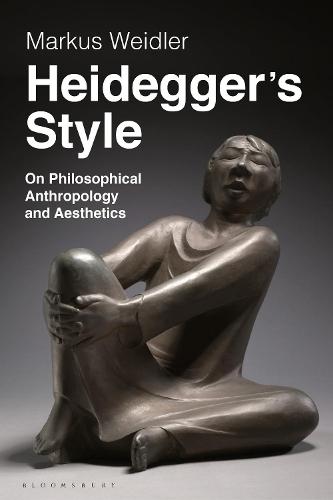
OverviewAddressing Heidegger’s continuing centrality to continental thought, Markus Weidler argues that Heidegger’s prickly charm is best explained in terms of his great ingenuity, crafting a novel genre of writing which promises to harness the revelatory power of artworks for the purpose of philosophical inquiry. In doing so, Heidegger challenges the reader with a provocative form of artisan thinking, which for Weidler is central to understanding the significance of Heidegger’s work overall. In Vorträge und Aufsätze (Public Lectures and Essays) Heidegger declares: 'once it has become anthropology, philosophy perishes from metaphysics.' Remarks critical of 'philosophical anthropology' are scattered throughout his writings, but so far commentators have not connected these tantalizing statements in any systematic way. This book deals with his hostility by addressing what we are to make of Heidegger’s frequent but elusive dismissals of philosophical anthropology as a field of study. This examination of Heidegger’s complex relation to philosophical anthropology traces how pioneering thinkers like Schelling and Schiller paved the way not only for Heidegger but also for some of his potential competitors, most notably Max Scheler and Georg Simmel. Weidler argues that confronting the puzzle over Heidegger’s peculiar relation to philosophical anthropology is also one of the keys to explaining his popularity as a philosopher, which has endured despite revelations of his various personal and political failings. Full Product DetailsAuthor: Markus Weidler (Assistant Professor of Philosophy, Columbus State University, USA)Publisher: Bloomsbury Publishing PLC Imprint: Bloomsbury Academic Weight: 0.576kg ISBN: 9781350083394ISBN 10: 1350083399 Pages: 288 Publication Date: 24 January 2019 Audience: College/higher education , Tertiary & Higher Education Format: Hardback Publisher's Status: Active Availability: Manufactured on demand We will order this item for you from a manufactured on demand supplier. Table of ContentsAbbreviations Introduction: The Decisive Decade from 1936 to 1946 PART I: Back to the 1780s Chapter 1 Philosophical Anthropology: Herder's Pantheism as a Subtext for Heidegger's First Schelling Lecture Chapter 2 Revelation: Heidegger's Second Schelling Lecture vis-a-vis Scheler and Simmel Chapter 3 The Origin of the Work of Art : A Critique of Schiller Incognito and the Beginning of Artisan Thinking PART II: Battleground Nietzsche Chapter 4 Heidegger's Nietzsche Volumes: Nihilism, Physiological Aesthetics, and Volitional Metaphysics Chapter 5 Hegel and Nietzsche in Holzwege: Religious Skepticism, Witnessing, and Subjectity PART III: Poeticsat the Zero Hour Chapter 6 Why Poets? : Cultural Rebirth and the Poetic Inception of Piety Chapter 7 The Letter on Humanism: Modulations of the German Poet in a Demonic Text CODA: Being and Time as an Old-fashioned Book? Chapter 8 Freedom for Death and Prussian Resolve Conclusion: Faith and Fanaticism after Heidegger Notes Selected Bibliography IndexReviewsRarely are books this nuanced also this comprehensive. Anyone interested in Heidegger should read this book. Everyone attempting to think about aesthetics or religion after Heidegger must read it. -- J. Aaron Simmons, Associate Professor of Philosophy, Furman University, USA Author InformationMarkus Weidler is Assistant Professor of Philosophy at Columbus State University, USA. Tab Content 6Author Website:Countries AvailableAll regions |
||||