Overview
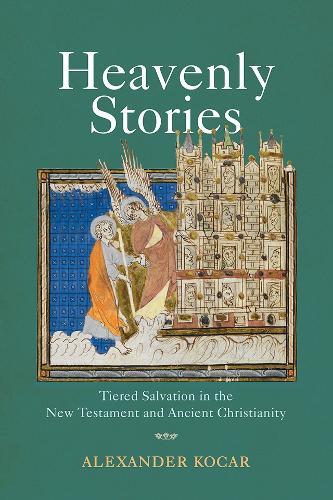
Salvation is often thought to be an all-or-nothing matter: you are either saved or damned. In the ancient world some figures, including Paul the Apostle, John of Patmos, Hermas, the Sethians, and the Valentinians, did not think this way, however. For them, there were multiple levels of salvation. Examining the reasons and implications for why these important thinkers believed that salvation comes in degrees, Heavenly Stories offers a fresh perspective on ancient thinking about responsibility, especially as it intersects with concerns such as genealogy and determinism. It shows why Jews and Christians of various kinds-some eventually declared orthodox, others heretical-correlated ethics and soteriology and argued over how this should be done. By constructing a difference between a lower and higher level of salvation, ancient authors devised soteriological hierarchies that could account for ethical imperfections and social differentiation between their communities and outsiders, as well as reinforce idealized portrayals of conduct among members of their own groups. Alexander Kocar asks how these thinkers identified and described these ethical and social differences among people; what commitments motivated them to make such distinctions; what were the social effects of different salvific categories and ethical standards; and what impact did hierarchically structured soteriologies have on notions of ethical responsibility? His findings have repercussions for the study of ancient ethics (especially free will and responsibility), our understanding of orthodoxy and heresy, and scholarly debates surrounding the origins of Christianity as a movement that allegedly transcends ethnic boundaries.
Full Product Details
Author: Alexander Kocar
Publisher: University of Pennsylvania Press
Imprint: University of Pennsylvania Press
ISBN: 9780812253269
ISBN 10: 0812253264
Pages: 312
Publication Date: 30 July 2021
Audience:
College/higher education
,
Tertiary & Higher Education
Format: Hardback
Publisher's Status: Active
Availability: In Print

This item will be ordered in for you from one of our suppliers. Upon receipt, we will promptly dispatch it out to you. For in store availability, please contact us.
Reviews
In this thoughtful and thought-provoking work, Alexander Kocar assembles an intriguing selection of Late- and post-Second Temple Jewish and early Christian texts around a premier question: How do their concepts of 'salvation' encode a vision of ethical behavior? What emerges is a picture of vigorous variety-in ideas about salvation and its dark obverse, sin; about what it is to be human; about the cosmos as alien exile and as home. How is one 'saved'? And saved from what, to what, for what? Heavenly Stories helps us to hear the ancient answers to these urgent questions. * Paula Fredriksen, author of <i>Paul: The Pagans' Apostle</i> *
In this thoughtful and thought-provoking work, Alexander Kocar assembles an intriguing selection of Late- and post-Second Temple Jewish and early Christian texts around a premier question: How do their concepts of 'salvation' encode a vision of ethical behavior? What emerges is a picture of vigorous variety-in ideas about salvation and its dark obverse, sin; about what it is to be human; about the cosmos as alien exile and as home. How is one 'saved'? And saved from what, to what, for what? Heavenly Stories helps us to hear the ancient answers to these urgent questions. -Paula Fredriksen, author of Paul: The Pagans' Apostle
In this thoughtful and thought-provoking work, Alexander Kocar assembles an intriguing selection of Late- and post-Second Temple Jewish and early Christian texts around a premier question: How do their concepts of 'salvation' encode a vision of ethical behavior? What emerges is a picture of vigorous variety--in ideas about salvation and its dark obverse, sin; about what it is to be human; about the cosmos as alien exile and as home. How is one 'saved'? And saved from what, to what, for what? Heavenly Stories helps us to hear the ancient answers to these urgent questions. --Paula Fredriksen, author of Paul: The Pagans' Apostle
Author Information
Alexander Kocar has taught at Princeton, Rutgers, and New York Universities and is currently on the faculty of the Lawrenceville School. He is editor, with Mika Ahuvia, of Placing Ancient Texts: The Ritual and Rhetorical Use of Space.