Overview
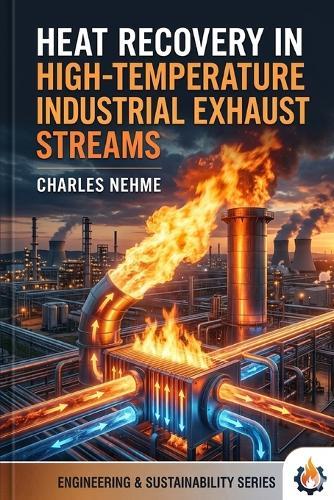
Industrial facilities across the world continue to release enormous quantities of thermal energy into the atmosphere through exhaust stacks, cooling systems, furnaces, kilns, and process vents. In heavy industries such as steel, cement, and glass manufacturing, high-temperature exhaust streams represent one of the largest untapped opportunities for improving energy efficiency, reducing operational costs, and lowering carbon emissions. Despite decades of technological progress, a significant portion of industrial waste heat remains unrecovered due to technical complexity, harsh operating environments, and limited practical guidance tailored specifically to these sectors. This book, Heat Recovery in High-Temperature Industrial Exhaust Streams, was written to bridge that gap. While many publications discuss general energy efficiency concepts, few provide focused and practical insight into the recovery of high-grade thermal energy from demanding industrial applications. Steel plants, cement factories, and glass manufacturing facilities operate under extreme temperatures, abrasive exhaust conditions, corrosive atmospheres, and highly variable process loads. Designing effective heat recovery systems for these environments requires a deep understanding of thermodynamics, heat transfer, materials engineering, process integration, maintenance challenges, and economic feasibility. The purpose of this book is to present both the theoretical foundations and the real-world engineering practices involved in capturing and utilizing waste heat from high-temperature industrial exhaust streams. It explores the technologies, strategies, operational challenges, and future innovations shaping industrial heat recovery today. Special attention is given to: Waste heat recovery opportunities in steel, cement, and glass industries Recuperators, regenerators, HRSGs, ORC systems, and advanced recovery technologies Fouling, corrosion, and reliability issues in harsh exhaust environments Process integration and optimization techniques Economic evaluation and sustainability benefits Emerging trends including AI-assisted optimization, hydrogen-ready systems, and thermal storage The industries covered in this book are among the most energy-intensive sectors in the global economy. They also represent some of the greatest opportunities for industrial decarbonization. As governments, industries, and organizations move toward net-zero targets and stricter environmental regulations, waste heat recovery is becoming not only an economic advantage but also a strategic necessity. This book is intended to serve as both a technical reference and a practical engineering guide. Whether the reader is involved in designing heat recovery systems, optimizing plant performance, conducting energy audits, or developing sustainability initiatives, the material presented here aims to provide valuable insight grounded in engineering practice and industrial reality. The future of industry will depend heavily on how efficiently energy is managed, recovered, and reused. Waste heat should no longer be viewed as a byproduct to discard, but as a valuable thermal resource capable of improving efficiency, competitiveness, and environmental performance. It is my hope that this book contributes to that transformation and supports engineers, researchers, students, plant operators, and decision-makers in advancing the next generation of industrial energy recovery systems.
Full Product Details
Author: Charles Nehme
Publisher: Independently Published
Imprint: Independently Published
Dimensions:
Width: 15.20cm
, Height: 1.50cm
, Length: 22.90cm
Weight: 0.376kg
ISBN: 9798197426017
Pages: 280
Publication Date: 18 May 2026
Audience:
General/trade
,
General
Format: Paperback
Publisher's Status: Active
Availability: Available To Order

We have confirmation that this item is in stock with the supplier. It will be ordered in for you and dispatched immediately.