Overview
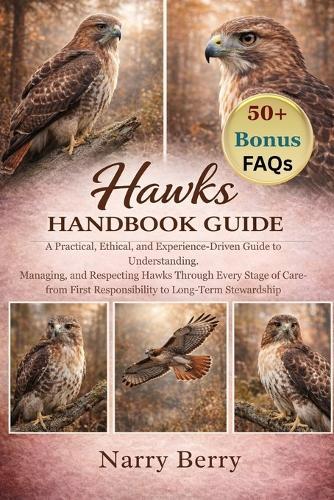
A Practical, Ethical, and Experience-Driven Guide to Understanding, Managing, and Respecting Hawks Through Every Stage of Care-from First Responsibility to Long-Term Stewardship Hawks inspire awe for a reason. They are precise, intelligent predators built for speed, focus, and survival-yet they are also highly sensitive to stress, easily harmed by poor handling, and protected by serious legal and ethical standards in many places. HAWKS HANDBOOK GUIDE is a grounded resource for readers who want clear, practical knowledge about hawks while keeping the most important priorities front and center: welfare, safety, legality, and respect. This guide explains hawk behavior in a way that helps you interpret what you see-posture, eye focus, feather position, vocal cues, and changes in routine that signal stress or discomfort. It also covers the realities of care and management in human-controlled settings, including housing expectations, sanitation, nutrition, enrichment, and the daily discipline required to keep a raptor healthy and stable. Rather than romanticizing close contact, the book emphasizes ethical responsibility: minimizing disturbance, understanding limits, and choosing prevention over reaction. You will also find practical guidance for the situations people commonly face-encountering an injured hawk, supporting rehabilitation efforts, learning the basics of falconry-level responsibility, or building better field awareness for safe coexistence. Throughout, the handbook reinforces long-term stewardship: hawks are not beginner ""pets,"" and responsible involvement requires planning, training, proper support, and a mindset that protects the animal's dignity above human curiosity. What you'll learn inside Hawk biology and behavior: hunting instincts, daily rhythms, and common stress triggers Communication and body language: how to recognize calm, fear, overstimulation, and defensive intent Welfare essentials: appropriate space, perching, weather protection, and clean, safe environments Nutrition realities: safe feeding structure, portion control, and why incorrect diets cause rapid decline Handling and safety boundaries: talons, beak risk, and why restraint must be limited and skilled Enrichment and conditioning: maintaining strength and mental stability without pushing stress Health monitoring: early warning signs, common issues, and veterinary preparedness Emergency and rehabilitation basics: what to do if you find a hawk and what to avoid Ethical and legal responsibility: why permissions matter and how responsible people reduce harm through restraint Long-term planning: costs, time, facilities, and the lifelong commitment behind any serious stewardship Benefits of this handbook Clearer understanding of hawk behavior so you can respond calmly and appropriately More realistic expectations about raptor care and the discipline it requires Practical guidance that reduces injury risk to both hawk and handler Stronger welfare outcomes through proper housing, nutrition, and stress reduction Better decision-making in rescue situations by knowing what helps and what harms An ethical framework that supports respect, distance when needed, and responsible long-term stewardship
Full Product Details
Author: Narry Berry
Publisher: Independently Published
Imprint: Independently Published
Dimensions:
Width: 15.20cm
, Height: 0.90cm
, Length: 22.90cm
Weight: 0.222kg
ISBN: 9798243045346
Pages: 160
Publication Date: 07 January 2026
Audience:
General/trade
,
General
Format: Paperback
Publisher's Status: Active
Availability: Available To Order

We have confirmation that this item is in stock with the supplier. It will be ordered in for you and dispatched immediately.