Overview
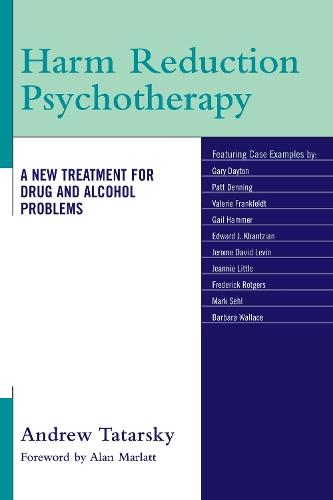
This ground-breaking volume provides readers with both an overview of harm reduction therapy and a series of ten case studies, treated by different therapists, that vividly illustrate this treatment approach with a wide variety of clients. Harm reduction is a framework for helping drug and alcohol users who cannot or will not stop completely_the majority of users_reduce the harmful consequences of use. Harm reduction accepts that abstinence may be the best outcome for many but relaxes the emphasis on abstinence as the only acceptable goal and criterion of success. Instead, smaller incremental changes in the direction of reduced harmfulness of drug use are accepted. This book will show how these simple changes in emphasis and expectation have dramatic implications for improving the effectiveness of psychotherapy in many ways. From the Foreword by Alan Marlatt, Ph.D.: OThis ground-breaking volume provides readers with both an overview of harm reduction therapy and a series of ten case studies, treated by different therapists, that vividly illustrate this treatment approach with a wide variety of clients. In his introduction, Andrew Tatarsky describes harm reduction as a new paradigm for treating drug and alcohol problems. Some would say that harm reduction embraces a paradigm shift in addiction treatment, as it has moved the field beyond the traditional abstinence-only focus typically associated with the disease model and the ideology of the twelve-step approach. Others may conclude that the move toward harm reduction represents an integration of what Dr. Tatarsky describes as the Obasic principles of good clinical practiceO into the treatment of addictive behaviors. OChanging addiction behavior is often a complex and complicated process for both client and therapist. What seems to work best is the development of a strong therapeutic alliance, the right fit between the client and treatment provider. The role of the harm reduction therapist is closer to that of a guide, someone who can provide support and guidance throughout the difficult journey. The therapist-guide offers validation and respect for each client, along with willingness to meet the person where he or she is on the journey and to help them achieve the next step toward their goal.O
Full Product Details
Author: Andrew Tatarsky
Publisher: Jason Aronson Publishers
Imprint: Jason Aronson Publishers
Dimensions:
Width: 15.50cm
, Height: 2.30cm
, Length: 23.20cm
Weight: 0.578kg
ISBN: 9780765703736
ISBN 10: 0765703734
Pages: 392
Publication Date: 10 June 2007
Audience:
College/higher education
,
Professional and scholarly
,
Undergraduate
,
Postgraduate, Research & Scholarly
Format: Paperback
Publisher's Status: Active
Availability: In Print

This item will be ordered in for you from one of our suppliers. Upon receipt, we will promptly dispatch it out to you. For in store availability, please contact us.
Reviews
Personal dignity and responsibility as well as compassion and the recognition that one's steps take place one day at a time are fundamental to both harm reduction and 12-step approaches to drug addiction. Tatarsky's excellent new paradigm rescues these principles with courage, compassion, and intellectual rigor. Harm reduction psychotherapy has come of age. -- Ethan Nadelman, executive director, Lindesmith Center Drug Policy Foundation Although this book is a good read for substance misuse specialists too, its readership should be predominantly out with the specialist field. It should be on the bookshelves of the legions of individual psychotherapists who claim no expertise with substance misusers, but who are probably working with some anyway. Addiction Research and Theory Andrew Tatarsky's book, using cases submitted by practitioners from different psychological schools of thought, clearly elucidates the way harm reduction philosophy can be integrated into clinical work. The cases are varied, the practitioners have unique styles and varying approaches, and the realistic conclusions offer the reader a way to integrate slow, incremental change at the client's pace into whatever treatment model they currently use. No longer do therapists have to send people away to become abstinent before they can work with them; no longer do therapists have to feel responsible to set goals for their clients' drug use. This is a must-read for today's psychotherapists who want to practice state-of-the-art healing. -- Edith Springer, Edith Springer Associates
Andrew Tatarsky's book, using cases submitted by practitioners from different psychological schools of thought, clearly elucidates the way harm reduction philosophy can be integrated into clinical work. The cases are varied, the practitioners have unique styles and varying approaches, and the realistic conclusions offer the reader a way to integrate slow, incremental change at the client's pace into whatever treatment model they currently use. No longer do therapists have to send people away to become abstinent before they can work with them; no longer do therapists have to feel responsible to set goals for their clients' drug use. This is a must-read for today's psychotherapists who want to practice state-of-the-art healing.--Edith Springer
Author Information
Andrew Tatarsky, Ph.D., holds a doctorate in clinical psychology from City University of New York. He has a private practice in New York City specializing in harm reduction psychotherapy with drug and alcohol users and is co-director, with Dr. Mark Sehl, of the Harm Reduction Psychotherapy and Training Associates, a treatment and training organization. His perspective on substance use problems has evolved over twenty years of experience working in the area as psychotherapist, supervisor, program director, teacher, writer, and public speaker. He is a founding member and Past President of the Addiction Division of the New York State Psychological Association and Chairperson of Mental Health Professionals in Harm Reduction.