Overview
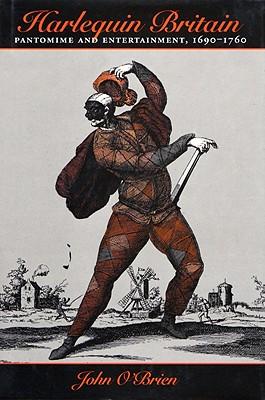
In the fall of 1723, two London theaters staged almost simultaneous pantomime performances of the Faust story. Unlike traditional five-act plays, pantomime--a bawdy hybrid of dance, music, spectacle, and commedia dell'arte featuring the familiar figure of the harlequin at its center--was a theatrical experience of unprecedented accessibility. The immediate popularity of this new genre created the first instance of youth culture in modern Europe, drawing theater apprentices to the cities to learn the new style, and pantomime became the subject of lively debate within British society. Alexander Pope and Henry Fielding, for example, bitterly opposed the intrusion into legitimate literary culture of what they regarded as fairground amusements, which appealed to sensation and passion over reason and judgment. In Harlequin Britain, literary scholar John O'Brien examines this new form of entertainment and the effect it had on British culture. Why did pantomime become so popular so quickly? Why was it perceived as culturally threatening and socially destabilizing? Among other factors cited by O'Brien, Robert Walpole's one-party rule, which increasingly dampened debate, created a vacuum in the public sphere. Pantomime filled that void with socially subversive commentary. At the same time, pantomime appealed to the abstracted taste of the mass audience. Its extraordinary popularity underscores the continuing centrality of live performance in a culture that is most typically seen as having shifted its attention to the written text, in particular to the novel. Written in a lively style rich with anecdotes, Harlequin Britain establishes the emergence of eighteenth-century English pantomime, with its promiscuous blending of genres and subjects, as a key moment in the development of modern entertainment culture. ""John O'Brien's Harlequin Britain is an original and provocative study of the ways in which pantomime, entertainment, and modernity are entwined in English culture. It adds significantly to our understanding of the role of the theater in the early eighteenth century and makes a compelling case for the significance of theatrical performance to the emergence of the Habermasian bourgeois public sphere.""--Robert Markley, University of Illinois
Full Product Details
Author: John O'Brien (University of Virginia)
Publisher: Johns Hopkins University Press
Imprint: Johns Hopkins University Press
Dimensions:
Width: 15.20cm
, Height: 2.60cm
, Length: 22.90cm
Weight: 0.590kg
ISBN: 9780801879104
ISBN 10: 0801879108
Pages: 304
Publication Date: 22 October 2004
Recommended Age: From 17
Audience:
General/trade
,
Professional and scholarly
,
College/higher education
,
General
,
Professional & Vocational
Format: Hardback
Publisher's Status: Out of Print
Availability: Out of stock

Reviews
This well argued text on pantomime offers a fascinating investigation of a subgenre of British theater. -- Scriblerian
Author Information
John O'Brien is the NEH Daniels Family Distinguished Teaching Professor at the University of Virginia.