Overview
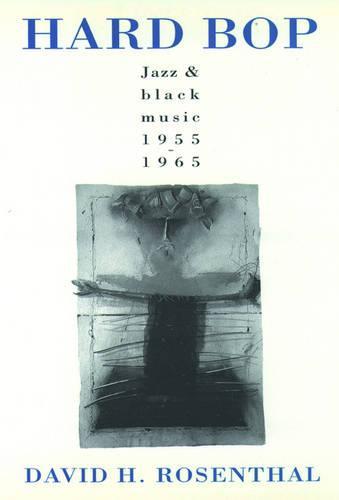
It's nineteen fifty-something, in a dark, cramped, smoke-filled room. Everyone's wearing black. And on-stage a tenor is blowing his heart out, a searching, jagged saxophone journey played out against a moody, walking bass and the swish of a drummer's brushes. To a great many listeners--from African American aficionados of the period to a whole new group of fans today--this is the very embodiment of jazz. It is also quintessential hard bop. In this, the first thorough study of the subject, jazz expert and enthusiast David H. Rosenthal vividly examines the roots, traditions, explorations and permutations, personalities and recordings of a climactic period in jazz history. Beginning with hard bop's origins as an amalgam of bebop and R&B, Rosenthal narrates the growth of a movement that embraced the heavy beat and bluesy phrasing of such popular artists as Horace Silver and Cannonball Adderley; the stark, astringent, tormented music of saxophonists Jackie McLean and Tina Brooks; the gentler, more lyrical contributions of trumpeter Art Farmer, pianists Hank Jones and Tommy Flanagan, composers Benny Golson and Gigi Gryce; and such consciously experimental and truly one-of-a-kind players and composers as Andrew Hill, Sonny Rollins, John Coltrane, Thelonious Monk, and Charles Mingus. Hard bop welcomed all influences--whether Gospel, the blues, Latin rhythms, or Debussy and Ravel--into its astonishingly creative, hard-swinging orbit. Although its emphasis on expression and downright ""badness"" over technical virtuosity was unappreciated by critics, hard bop was the music of black neighborhoods and the last jazz movement to attract the most talented young black musicians. Fortunately, records were there to catch it all. The years between 1955 and 1965 are unrivaled in jazz history for the number of milestones on vinyl. Miles Davis's Kind of Blue, Charles Mingus's Mingus Ah Um, Thelonious Monk's Brilliant Corners, Horace Silver's Further Explorations--Rosenthal gives a perceptive cut-by-cut analysis of these and other jazz masterpieces, supplying an essential discography as well. For knowledgeable jazz-lovers and novices alike, Hard Bop is a lively, multi-dimensional, much-needed examination of the artists, the milieus, and above all the sounds of one of America's great musical epochs.
Full Product Details
Author: David H. Rosenthal
Publisher: Oxford University Press Inc
Imprint: Oxford University Press Inc
Dimensions:
Width: 13.90cm
, Height: 1.40cm
, Length: 21.70cm
Weight: 0.318kg
ISBN: 9780195085563
ISBN 10: 0195085566
Pages: 224
Publication Date: 24 February 1994
Audience:
Professional and scholarly
,
Professional & Vocational
Format: Paperback
Publisher's Status: Active
Availability: To order

Stock availability from the supplier is unknown. We will order it for you and ship this item to you once it is received by us.
Reviews
'very good overview of the genesis and development of that music which flourished from 1955 to 1965' Peter Hepple, Stage & Television Today
Lively history by flee-lance jazz-journalist Rosenthal of a brief but important musical era falling between post-Charlie Parker jazz and Stevie Wonder-style tunes. Today, Rosenthal explains, hard bop is heard only in revivals as the neo-bop fabrication of feelings of another era. But as musician Henry Threadgill complains: For the first time in the history of jazz, many young artists have become virtuosos of styles that have passed....Are we so nostalgic that we need virtuosos of the graveyard? Bop grew out of Charlie Parker, Dizzy Gillespie, and Bud Powell, elided into its second generation (and perhaps its finest flower) with effervescent, feelingful trumpeter Clifford Brown. Where classic bop had bubbled with ebullience, Rosenthal says, hard bop sprang from a cooler, more laid-back yet hard-swinging spirit, as exemplified by Miles Davis's seminal Bags' Groove. Davis had come into being with Parker, with a modest middle-range style of which Rosenthal does not think highly. It was only after a four-year bout with heroin that Davis returned with his ringingly inventive major style, the biting but full-toned phrasing of pieces like Bags' Groove and Cookin' and with synergies drawn from working with the emerging John Coltrane. Hard bop's most tragic figure is best seen, going by Rosenthal, in trumpeter Lee Morgan, who began recording with Art Blakey's Jazz Messengers when only 18, winnowed an overactive style down to notes well weighed, worked up a timbre that seemed to convey a mixture of bitter irony and sorrow, and then, in 1980, was shot dead at age 30 by his spurned mistress at a jazz club on N.Y.C.'s Lower East Side. And at that point, hard bop and the milieu that buoyed it up - ghetto life with jazz at its center - vanished under Motown, soul, and concept albums. An original and compelling assessment. (Kirkus Reviews)
Author Information
A free-lance jazz critic, David H. Rosenthal was also a poet, literary critic, journalist, and translator of Catalan and Portuguese literature. His articles on music have appeared in Down Beat, JazzTimes, Keyboard, the Village Voice, and other publications.