Overview
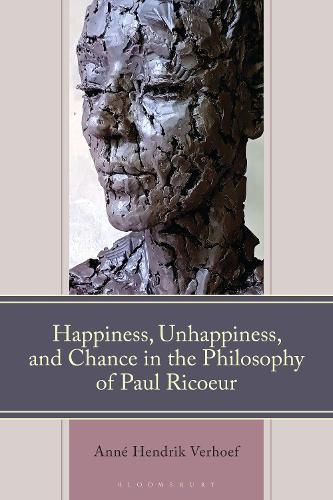
An alternative philosophical understanding of happiness can serve as a corrective to the accounts of happiness offered by modern sciences, religion, and consumerism. This book argues that the notions of happiness, unhappiness, and chance in the philosophy of Paul Ricoeur offer an overarching conceptualization of happiness that has significant implications for contemporary philosophical accounts of happiness. By analyzing Ricoeur’s philosophy, and specifically his two articles on happiness, “Le Bonheur Hors Lieu” (1994) and “L’optatif du bonheur” (2001), Anné H. Verhoef argues that a significant alternative mode of understanding happiness is found in the dialectical thinking of Ricoeur. Ricoeur’s dialectic of happiness and unhappiness entails that one cannot exist without the other; unhappiness is not something to be overcome, but something to be embraced. Furthermore, Ricoeur’s recognition of chance in relation to happiness opens a recognition for happiness as something received without any effort, while simultaneously preserving the Aristotelian idea that one should strive for goodness. There is a fragile dialectic of receiving and striving for happiness within the simultaneous dialectic of happiness and unhappiness.
Full Product Details
Author: Anné Hendrik Verhoef
Publisher: Bloomsbury Publishing Plc
Imprint: Rowman & Littlefield
Dimensions:
Width: 16.00cm
, Height: 2.00cm
, Length: 22.80cm
Weight: 0.500kg
ISBN: 9781666976373
ISBN 10: 1666976377
Pages: 250
Publication Date: 11 December 2025
Audience:
Professional and scholarly
,
Professional & Vocational
Format: Hardback
Publisher's Status: Active
Availability: Manufactured on demand

We will order this item for you from a manufactured on demand supplier.
Reviews
Anné Verhoef’s book is a timely and welcome work on the philosophy of happiness. It offers a broad survey of the many contemporary views on happiness, as well as a thorough analysis of Paul Ricoeur’s ideas on this topic. Against the current tendency to aim at increasing one’s happiness, including many commercial efforts to sell alleged unique roads to complete happiness, this study argues for relating happiness, unhappiness and chance. Verhoef rightly argues that happiness is not only something to achieve; it needs to be given, and this gift can only be accepted if one confirms human life, including its possible unhappiness and misfortune. This book is an important work for Ricoeur scholars and continental philosophers, but also for anyone who is interested in a profound academic study of happiness. -- Eddo Evink * Open University * South-African philosopher Anné Verhoef addresses a topic not yet explored by many Ricoeur scholars: happiness. Arguing against a consumerist and capitalistic understanding, Verhoef claims that Paul Ricoeur ’s work offers a more balanced view of happiness that is in dialectical relation to unhappiness and chance. The book contains not only an astute analysis of the philosophical concept of happiness, but also two essays by Ricoeur, translated by the author, about this topical problem. -- Annemie Halsema * Free University Amsterdam * Engaging in a critical analysis of both classical and contemporary understandings of happiness is a bold undertaking, yet Verhoef approaches it with rigorous analytical and hermeneutical skill. By developing a constructive typology of perspectives, he exposes the shortcomings of existing views and demonstrates how, where, and why Paul Ricoeur’s nuanced perspective is needed. He then presents this perspective with clarity and a dazzling command of Ricoeur’s vast and complex oeuvre. Together, his critical evaluation of prevailing conceptions of happiness and his interpretation of Ricoeur’s corrective vision form a vital contribution to present-day debates in the field. -- W.L. van der Merwe * Free University Amsterdam * Emphasizing two understudied essays by Paul Ricoeur, Verhoef’s book allows readers to revisit Ricoeur’s oeuvre—commonly understood as a philosophy of suffering—from a refreshing perspective: happiness. Expertly tracing the co-belonging of happiness and unhappiness, chance and the good, the resulting theory provides a powerful alternative to the positivistic accounts of happiness that modern science and industry offer. Anybody interested in the current state of philosophical research into happiness should read this book. -- Ype de Boer * Radboud University Nijmegen *
Author Information
Anné H. Verhoef is a professor of philosophy at North-West University, Potchefstroom, South Africa.