Overview
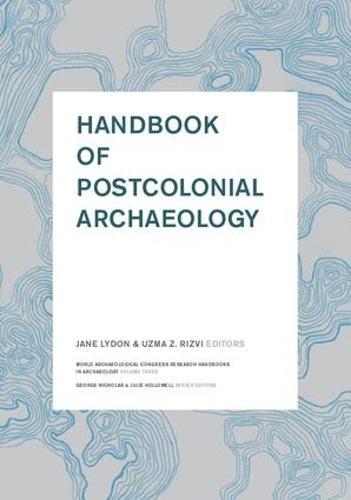
This essential handbook explores the relationship between the postcolonial critique and the field of archaeology, a discipline that developed historically in conjunction with European colonialism and imperialism. In aiding the movement to decolonize the profession, the contributors to this volume—themselves from six continents and many representing indigenous and minority communities and disadvantaged countries—suggest strategies to strip archaeological theory and practice of its colonial heritage and create a discipline sensitive to its inherent inequalities. Summary articles review the emergence of the discipline of archaeology in conjunction with colonialism, critique the colonial legacy evident in continuing archaeological practice around the world, identify current trends, and chart future directions in postcolonial archaeological research. Contributors provide a synthesis of research, thought, and practice on their topic. The articles embrace multiple voices and case study approaches, and have consciously aimed to recognize the utility of comparative work and interdisciplinary approaches to understanding the past. This is a benchmark volume for the study of the contemporary politics, practice, and ethics of archaeology. Sponsored by the World Archaeological Congress
Full Product Details
Author: Jane Lydon ,
Uzma Z Rizvi ,
George Nicholas ,
Julie Hollowell
Publisher: Left Coast Press Inc
Imprint: Left Coast Press Inc
Dimensions:
Width: 17.80cm
, Height: 2.80cm
, Length: 25.40cm
Weight: 0.929kg
ISBN: 9781598741834
ISBN 10: 1598741837
Pages: 526
Publication Date: 29 February 2012
Audience:
General/trade
,
General
Format: Paperback
Publisher's Status: Active
Availability: In Print

This item will be ordered in for you from one of our suppliers. Upon receipt, we will promptly dispatch it out to you. For in store availability, please contact us.
Reviews
""This volume attests to archaeology's involvement with colonialism as well as its potential to decolonize practice, interpretation, and theory. It is extraordinary and notable in bringing together perspectives from so many places around the world. In doing so, it provides inspiration and impetus for further examining the nature of the relationships between postcolonialism and archaeology. In fact, we believe it is largely by delving deeply into this undercurrent that archaeology will sustain itself as relevant and ethical social theory and practice over the next century. Just as archaeology has been central to the colonial project, so it may have an important role in re-visioning the relations of production of knowledge about the past."" --From the Foreword by George Nicholas and Julie Hollowell
This volume attests to archaeology's involvement with colonialism as well as its potential to decolonize practice, interpretation, and theory. It is extraordinary and notable in bringing together perspectives from so many places around the world. In doing so, it provides inspiration and impetus for further examining the nature of the relationships between postcolonialism and archaeology. In fact, we believe it is largely by delving deeply into this undercurrent that archaeology will sustain itself as relevant and ethical social theory and practice over the next century. Just as archaeology has been central to the colonial project, so it may have an important role in re-visioning the relations of production of knowledge about the past. --From the Foreword by George Nicholas and Julie Hollowell
This volume attests to archaeology's involvement with colonialism as well as its potential to decolonize practice, interpretation, and theory. It is extraordinary and notable in bringing together perspectives from so many places around the world. In doing so, it provides inspiration and impetus for further examining the nature of the relationships between postcolonialism and archaeology. In fact, we believe it is largely by delving deeply into this undercurrent that archaeology will sustain itself as relevant and ethical social theory and practice over the next century. Just as archaeology has been central to the colonial project, so it may have an important role in re-visioning the relations of production of knowledge about the past.--From the Foreword by George Nicholas and Julie Hollowell
"""This volume attests to archaeology's involvement with colonialism as well as its potential to decolonize practice, interpretation, and theory. It is extraordinary and notable in bringing together perspectives from so many places around the world. In doing so, it provides inspiration and impetus for further examining the nature of the relationships between postcolonialism and archaeology. In fact, we believe it is largely by delving deeply into this undercurrent that archaeology will sustain itself as relevant and ethical social theory and practice over the next century. Just as archaeology has been central to the colonial project, so it may have an important role in re-visioning the relations of production of knowledge about the past."" --From the Foreword by George Nicholas and Julie Hollowell"
Author Information
Jane Lydon is a Senior Research Fellow at the Centre for Australian Indigenous Studies at Monash University in Melbourne. She is the author of Many Inventions: The Chinese in the Rocks, 1890-1930 and of Fantastic Dreaming: Archaeology of an Aboriginal Mission and coeditor of Object Lessons: Archaeology and Heritage in Australia. She has previously worked for the Museum of Sydney, the Australian Heritage Commission, the Victoria Archaeological Survey, and as coordinator of a heritage program at La Trobe University. Uzma Rizvi is Assistant Professor at the Pratt Institute in Brooklyn. She has a Ph.D. from University of Pennsylvania and most recently served as a post-doc fellow at the Institute for Humanities of Stanford Univesrity. Rizvi is an anthropologist specializing in archaeology of complex societies, with a passion for cities and urbanism. She recently co-edited the volume Archaeology and the Postcolonial Critique.