Overview
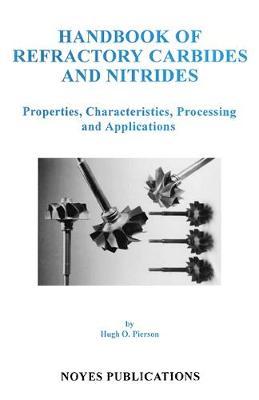
This book provides and complete review of the structures and properties of refractory carbides and nitrides. It gives a thorough assessment of the technology, processing, equipment and systems used in research and development with emphasis on advanced designs. The applications are identified and described, particularly in new and emerging areas. The refractory carbides and nitrides are discussed in one book because: They form two families of closely relation materials with similar atomic structures and chemistry Carbon and Nitrogen are next to each other in the Table of Elements, and in many cases carbides and nitrides form solid solutions known as carbonitrides Many of their properties are similar They have essentially the same processing characteristics and applications They often complement each other. Refractory carbides and nitrides are useful materials with numerous industrial applications and a promising future, in addition to being materials of great interest to the scientific community. Although most of their applications are recent, the refractory carbides and nitrides have been known for over 100 years. The industrial importance of the refractory carbides and nitrides is growing rapidly, not only in the traditional and well-established applications based on the strength and refractory nature of these materials such as cutting tools and abrasives, but also in new, promising fields such as electronics and optoelectronics. Contents Include: Introduction The Refractory Carbides Interstitial Carbides - Structure and Composition Carbides of Group IV - Titanium, Zirconium, and Hafnium Carbides Carbides of Group V - Vanadium, Niobium and Tantalum Carbides Carbides of Group VI - Chromium, Molybdenum, and Tungsten Carbides Covalent Carbides - Structure and Composition Characteristics and Properties of Silicon Carbide and Boron Carbides The Refractory Nitrides Interstitial Nitrides - Structure and Composition Covalent Nitrides - Composition and Structure Processing of Refractory Carbides and Nitrides (Powder, Bulk, and Fibers) Processing of Refractory Carbides and Nitrides (Coatings) Applications of Refractory Carbides and Nitrides Appendix - Conversion Guide.
Full Product Details
Author: Hugh O. Pierson (Sandia National Laboratories (retired))
Publisher: William Andrew Publishing
Imprint: William Andrew Publishing
Dimensions:
Width: 15.20cm
, Height: 2.00cm
, Length: 22.90cm
Weight: 0.830kg
ISBN: 9780815513926
ISBN 10: 0815513925
Pages: 362
Publication Date: 31 December 1996
Audience:
Professional and scholarly
,
Professional & Vocational
Format: Hardback
Publisher's Status: Out of Print
Availability: Out of print, replaced by POD

We will order this item for you from a manufatured on demand supplier.
Reviews
A useful book for materials scientists and graduate students. - High Tech Ceramics News
Author Information
Hugh Pierson is a private consultant in Chemical Vapor Deposition. He was the head of the Deposition