|
|
|||
|
||||
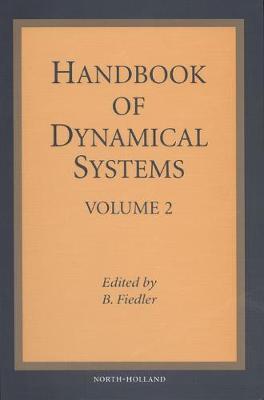
OverviewThis handbook is the second volume in a series collecting mathematical state-of-the-art surveys in the field of dynamical systems. Much of this field has developed from interactions with other areas of science, and this volume shows how concepts of dynamical systems further the understanding of mathematical issues that arise in applications. Although modelling issues are addressed, the central theme is the mathematically rigorous investigation of the resulting differential equations and their dynamic behaviour. However, the authors and editors have made an effort to ensure readability on a non-technical level for mathematicians from other fields and for other scientists and engineers. The 18 surveys collected here do not aspire to encyclopedic completeness, but present selected paradigms. The surveys are grouped into those emphasizing finite-dimensional methods, numerics, topological methods, and partial differential equations. Application areas include the dynamics of neural networks, fluid flows, nonlinear optics, and many others. While the survey articles can be read independently, they deeply share recurrent themes from dynamical systems. Attractors, bifurcations, center manifolds, dimension reduction, ergodicity, homoclinicity, hyperbolicity, invariant and inertial manifolds, normal forms, recurrence, shift dynamics, stability, to name just a few, are ubiquitous dynamical concepts throughout the articles. Full Product DetailsAuthor: B. Fiedler (Freie Universität Berlin, Institut für Mathematik I, Berlin, Germany)Publisher: Elsevier Science & Technology Imprint: North-Holland Volume: 2 Dimensions: Width: 15.90cm , Height: 7.10cm , Length: 24.10cm Weight: 2.150kg ISBN: 9780444501684ISBN 10: 0444501681 Pages: 1098 Publication Date: 21 February 2002 Audience: Professional and scholarly , Professional & Vocational Format: Hardback Publisher's Status: Active Availability: In Print This item will be ordered in for you from one of our suppliers. Upon receipt, we will promptly dispatch it out to you. For in store availability, please contact us. Table of ContentsA. Finite-Dimensional Methods 1. Mechanisms of phase-locking and frequency control in pairs of coupled neural oscillators (N. Kopell, G.B. Ermentrout). 2. Invariant manifolds and Lagrangian dynamics in the ocean and atmosphere (C. Jones, S. Winkler). 3. Geometric singular perturbation analysis of neuronal dynamics (J.E. Rubin, D. Terman). B. Numerics 4. Numerical continuation, and computation of normal forms (W.-J. Beyn, A. Champneys, E. Doedel, W. Govaerts,Y.A. Kuznetsov, B. Sandstede). 5. Set oriented numerical methods for dynamical systems (M. Dellnitz, O. Junge). 6. Numerics and exponential smallness (V. Gelfreich). 7. Shadowability of chaotic dynamical systems (C. Grebogi, L. Poon, T. Sauer, J.A. Yorke, D. Auerbach). 8. Numerical analysis of dynamical systems (J. Guckenheimer). C. Topological Methods 9. Conley index (K. Mischaikow, M. Mrozek). 10. Functional differential equations (R.D. Nussbaum). D. Partial Differential Equations 11. Navier--Stokes equations and dynamical systems (C. Bardos, B. Nicolaenko). 12. The nonlinear Schrödinger equation as both a PDE and a dynamical system (D. Cai, D.W. McLaughlin, K.T.R. McLaughlin). 13. Pattern formation in gradient systems (P.C. Fife). 14. Blow-up in nonlinear heat equations from the dynamical systems point of view (M. Fila, H. Matano). 15. The Ginzburg--Landau equation in its role as a modulation equation (A. Mielke). 16. Parabolic equations: asymptotic behavior and dynamics on invariant manifolds (P. Poláčik). 17.Global attractors in partial differential equations (G. Raugel). 18. Stability of travelling waves (B. Sandstede).ReviewsAuthor InformationTab Content 6Author Website:Countries AvailableAll regions |
||||