Overview
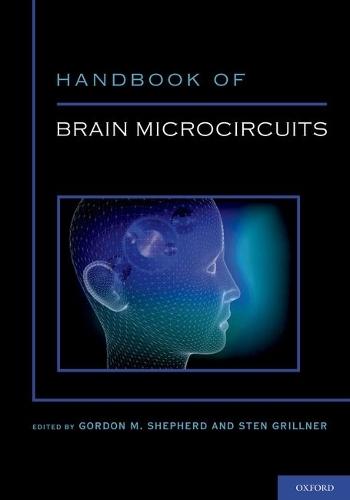
Microcircuits are the specific arrangements of cells and their connections that carry out the operations unique to each brain region. This resource summarizes succinctly these circuits in over 40 regions - enabling comparisons of principles across both vertebrates and invertebrates. It provides a new foundation for understanding brain function that will be of interest to all neuroscientists. Oxford Clinical Neuroscience is a comprehensive, cross-searchable collection of resources offering quick and easy access to eleven of Oxford University Press's prestigious neuroscience texts. Joining Oxford Medicine Online these resources offer students, specialists and clinical researchers the best quality content in an easy-to-access format.
Full Product Details
Author: Gordon Shepherd , Sten Grillner, MD.
Publisher: Oxford University Press
Imprint: Oxford University Press
Dimensions:
Width: 18.40cm
, Height: 3.40cm
, Length: 25.80cm
Weight: 1.492kg
ISBN: 9780195389883
ISBN 10: 0195389883
Pages: 536
Publication Date: 30 September 2010
Audience:
College/higher education
,
Undergraduate
,
Postgraduate, Research & Scholarly
Format: Hardback
Publisher's Status: Active
Availability: In Print 
This item will be ordered in for you from one of our suppliers. Upon receipt, we will promptly dispatch it out to you. For in store availability, please contact us.
Table of Contents
Introduction Gordon M. Shepherd and Sten Grillner Contributors Part 1: Vertebrates Section 1: Neocortex Chapter 1: Neocortical Microcircuits Javier DeFelipe and Edward G. Jones Chapter 2: Canonical Cortical Circuits Rodney J. Douglas and Kevan A.C. Martin Chapter 3: Microcircuitry of the Neocortex Henry Markram Chapter 4: Barrel Cortex Karel Svoboda, Bryan M. Hooks, and Gordon M.G. Shepherd Chapter 5: The Motor Cortical Circuit (MCC) Apostolos P. Georgopoulos and Costas N. Stefanis Chapter 6: Prefrontal Cortex Xiao-Jing Wang Section 2: Thalamus Chapter 7: Thalamus Edward G. Jones Chapter 8: The Lateral Geniculate Nucleus S. Murray Sherman Chapter 9: Thalamocortical Networks David A. McCormick Section 3: Circadian System Chapter 10: The Suprachiasmatic Nucleus Gabriella B. Lundkvist and Gene Block Section 4: Basal Ganglia Chapter 11: Microcircuits of the Striatum. J. Paul Bolam Chapter 12: Templates for Neural Dynamics in the Striatum: Striosomes and Matrisomes Ann M. Graybiel Chapter 13: Subthalamo-Pallidal Circuit Charles J. Wilson Section 5: Limbic Systems Chapter 14: Amygdala complex Luke R. Johnson and Joseph E. Ledoux Chapter 15: Hippocampus- Intrinsic Organization Peter Somogyi Chapter 16: Hippocampus: physiology György Buzsáki Chapter 17: Entorhinal cortex Edvard I. Moser, Menno P. Witter, and May-Britt Moser Section 6: Visual System Chapter 18: Retina: Microcircuits for Daylight, Twilight, and Starlight Jonathan B. Demb Chapter 19: Evolution of Retinal Circuitry: From Then to Now Frank S. Werblin and John Dowling Section 7: Auditory System Chapter 20: Cochlea Peter Dallos Chapter 21: Cochlear Nucleus Eric D. Young and Donata Oertel Chapter 22: Nucleus Laminaris Yuan Wang, Jason Tait Sanchez, and Edwin W. Rubel Section 8: Touch System Chapter 23: Spinal cord: dorsal horn Frédéric Nagy Section 9: Olfactory System Chapter 24: Olfactory Bulb Gordon M. Shepherd, Michele Migliore, and David C. Willhite Chapter 25: Olfactory cortex Donald A. Wilson and Edi Barkai Section 10: Taste System Chapter 26: Taste Coding and Feed-forward/ Feedback Signaling in Taste Buds Stephen D. Roper and Nirupa Chaudhari Chapter 27: Microcircuitry of the Rostral Nucleus of the Solitary Tract Joseph B. Travers and Susan P. Travers Section 11: Cerebellum Chapter 28: Cerebellar cortex Masao Ito Chapter 29: Olivo-Cerebellar System Rodolfo R. Llinás Section 12: Motor Systems Chapter 30: Superior colliculus Katsuyuki Kaneda and Tadashi Isa Chapter 31: The Mammalian Brainstem Chewing Circuitry Arlette Kolta and James P. Lund Chapter 32: Lamprey Swimming Circuit Sten Grillner Chapter 33: The Mauthner Cell: Sensory Integration, Decision-making, and Motor Functions Donald S. Faber and Henri Korn Chapter 34: Modulation of Lamprey Locomotor Circuit A. El Manira Chapter 35: Tadpole Swimming Network Keith T. Sillar and Wenchang Li Chapter 36: Spinal circuit for escape in goldfish and zebrafish Joseph R. Fetcho Chapter 37: Locomotor circuits in the developing rodent spinal cord Ole Kiehn and Kimberly J. Dougherty Chapter 38: The Lamprey Postural Circuit Tatiana G. Deliagina, Pavel V. Zelenin, and Grigori N. Orlovsky Chapter 39: Respiratory CPG Jack L. Feldman Part 2: Invertebrates Section 1: Visual System Chapter 40: Neurons and circuits contributing to the detection of directional motion across the fly's retina. Nicholas J. Strausfeld Chapter 41: The optic lamina of fast flying insects as a guide to neural circuit design Simon B. Laughlin Section 2: Olfactory System Chapter 42: Implications from Microcircuits of a Moth Antennal Lobe for Olfactory Information Processing Hong Lei, Lynne A. Oland, Jeffrey A. Riffell, Aaron Beyerlein, and John G. Hildebrand Chapter 43: Antennal Lobe of the Honeybee Randolf Menzel and Jürgen Rybak Chapter 44: Mushroom Body of the Honeybee Jürgen Rybak and Randolf Menzel Section 3: Motor Systems Chapter 45: The Tritonia Swim Central Pattern Generator Paul S. Katz Chapter 46: The heartbeat neural control system of the leech Ronald L. Calabrese Chapter 47: The Leech Local Bending Circuit William B. Kristan, Jr. Chapter 48: Neural circuits that generate swimming movements in leeches Wolfgang Otto Friesen Chapter 49: Stomatogastric CPG Eve Marder Chapter 50: The swimming circuit in the Pteropod Mollusc Clione limacina Yuri I. Arshavsky, Tatiana G. Deliagina, and Grigori N. Orlovsky Chapter 51: The circuit of chemotaxis and exploratory behavior in C. elegans Cornelia I. Bargmann Chapter 52: The Neuronal Circuit for Simple Forms of Learning in Aplysia Robert D. Hawkins, Craig H. Bailey and Eric R. Kandel Index
Reviews
<br> Few would question that one of the major frontiers being explored in neuroscience is the understanding of brain circuits and the ways in which they process information and generate behavior. This outstanding volume by Shepherd and Grillner is essential reading for anyone participating in that exploration or following it as an observer. The 52 chapters in this volume come from the world's leading experts on microcircuits, and it covers a wide span of topics ranging from chemotaxis in C. elegans to microcircuitry of the primate prefrontal cortex. <br>- John H. Byrne, PhD, June and Virgil Waggoner Chair and Chairman, Department of Neurobiology and Anatomy, The University of Texas Medical School at Houston, Houston, TX <br> In the brain hardware sculpted throughout life by a dynamic and continuously updated software, endowed with a biological complexity absent in machines, microcircuits provide fundamental units of processing. In this outstanding book with 52 sharp and authoritat
<br> Few would question that one of the major frontiers being explored in neuroscience is the understanding of brain circuits and the ways in which they process information and generate behavior. This outstanding volume by Shepherd and Grillner is essential reading for anyone participating in that exploration or following it as an observer. The 52 chapters in this volume come from the world's leading experts on microcircuits, and it covers a wide span of topics ranging from chemotaxis in C. elegans to microcircuitry of the primate prefrontal cortex. <br>- John H. Byrne, PhD, June and Virgil Waggoner Chair and Chairman, Department of Neurobiology and Anatomy, The University of Texas Medical School at Houston, Houston, TX <br><p><br> In the brain hardware sculpted throughout life by a dynamic and continuously updated software, endowed with a biological complexity absent in machines, microcircuits provide fundamental units of processing. In this outstanding book with 52 sharp and aut
Author Information
Professor Shepherd was educated at Iowa State College and Harvard Medical School during the 1950s, and received further training at Oxford University, the National Institutes of Health, and Karolinska Institutet. He has been at the Yale University School of Medicine since 1967, and has held visiting positions at the University of Pennsylvania, Collège de France, Ècole Normale Supérieure, Oxford University, and Institut Pasteur. In his research he and his collaborators introduced computational modeling into studies of brain neurons, revealed a new type of neuronal interaction between dendrites, and showed how smells are represented in the brain by distinct patterns of activity. His work has led to new concepts of brain organization, including the term microcircuits to describe canonical types of neuronal interactions. He has been editor in chief of the Journal of Neurophysiology and the Journal of Neuroscience. His books include The Synaptic Organization of the Brain, Neurobiology, and Creating Modern Neuroscience: The Revolutionary 1950s. His Foundations of the Neuron Doctrine was the first to focus on the dramatic events around the classical work on the neuron in the 19th and early 20th century. The present work takes up the even more dramatic events around the work at mid-20th century that established the modern neuroscience of today. Professor Grillner was educated at the University of Göteborg in Sweden. He is past Chairman if the Nobel Assemply at the Karolinska Institutet. Currently he is Director of the Nobel Institute for Neurophysiology at the Karolinska Institutet in Stockholm.
Tab Content 6
Author Website:
Countries Available
All regions
|