Overview
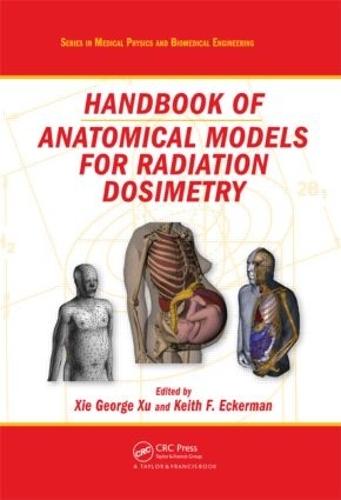
Over the past few decades, the radiological science community has developed and applied numerous models of the human body for radiation protection, diagnostic imaging, and nuclear medicine therapy. The Handbook of Anatomical Models for Radiation Dosimetry provides a comprehensive review of the development and application of these computational models, known as ""phantoms."" An ambitious and unparalleled project, this pioneering work is the result of several years of planning and preparation involving 64 authors from across the world. It brings together recommendations and information sanctioned by the International Commission on Radiological Protection (ICRP) and documents 40 years of history and the progress of those involved with cutting-edge work with Monte Carlo Codes and radiation protection dosimetry. This volume was in part spurred on by the ICRP's key decision to adopt voxelized computational phantoms as standards for radiation protection purposes. It is an invaluable reference for those working in that area as well as those employing or developing anatomical models for a a number of clinical applications. Assembling the work of nearly all major phantom developers around the world, this volume examines: The history of the research and development in computational phantoms Detailed accounts for each of the well-known phantoms, including the MIRD-5, GSF Voxel Family Phantoms, NCAT, UF Hybrid Pediatric Phantoms, VIP-Man, and the latest ICRP Reference Phantoms Physical phantoms for experimental radiation dosimetry The smallest voxel size (0.2 mm), phantoms developed from the Chinese Visible Human Project Applications for radiation protection dosimetry involving environmental, nuclear power plant, and internal contamination exposures Medical applications, including nuclear medicine therapy, CT examinations, x-ray radiological image optimization, nuclear medicine imaging, external photon and proton treatments, and management of respiration in modern image-guided radiation treatment Patient-specific phantoms used for radiation treatment planning involving two Monte Carlo code systems: GEANT4 and EGS Future needs for research and development Related data sets are available for download on the authors' website. The breadth and depth of this work enables readers to obtain a unique sense of the complete scientific process in computational phantom development, from the conception of an idea, to the identification of original anatomical data, to solutions of various computing problems, and finally, to the ownership and sharing of results in this groundbreaking field that holds so much promise.
Full Product Details
Author: Xie George Xu ,
Keith F. Eckerman ,
Keith F. Eckerman (Oak Ridge National Laboratory, Tennessee, USA) ,
Slavik Tabakov (King's College London, Strand, UK)
Publisher: Taylor & Francis Inc
Imprint: CRC Press Inc
Volume: v. 14
Dimensions:
Width: 17.80cm
, Height: 4.10cm
, Length: 25.40cm
Weight: 1.560kg
ISBN: 9781420059793
ISBN 10: 1420059793
Pages: 757
Publication Date: 01 September 2009
Audience:
Professional and scholarly
,
Professional & Vocational
Format: Hardback
Publisher's Status: Active
Availability: In Print

This item will be ordered in for you from one of our suppliers. Upon receipt, we will promptly dispatch it out to you. For in store availability, please contact us.
Author Information
Dr. X. George Xu is a professor of nuclear engineering and biomedical engineering at Rensselaer Polytechnic Institute (RPI), Troy, New York. Dr. Keith F. Eckerman is the leader of the Dosimetry Research Team in the Environmental Science Division at the Oak Ridge National Laboratory (ORNL).