Overview
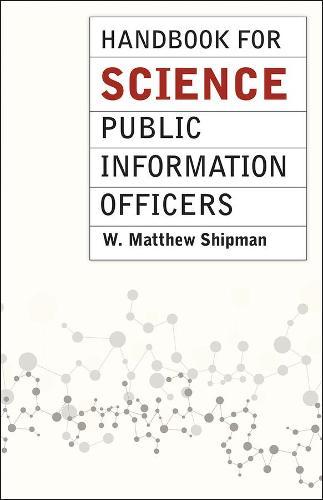
Whether sharing a spectacular shot from a deep-space probe, announcing a development in genetic engineering, or crafting an easy-to-reference list of cancer risk factors, science public information officers, or PIOs, serve as scientific liaisons, connecting academic, nonprofit, government, and other research organizations with the public. And as traditional media outlets cut back on their science coverage, PIOs are becoming a vital source for science news. W. Matthew Shipman’s Handbook for Science Public Information Officers covers all aspects of communication strategy and tactics for members of this growing specialty. It includes how to pitch a story, how to train researchers to navigate interviews, how to use social media effectively, and how to respond to a crisis. The handbook offers a wealth of practical advice while teaching science PIOs how to think critically about what they do and how they do it, so that they will be prepared to take advantage of any situation, rather than being overwhelmed by it. For all science communicators—whether they’re starting their careers, crossing over from journalism or the research community, or professional communicators looking to hone their PIO skills—Shipman’s Handbook for Science Public Information Officers will become their go-to reference.
Full Product Details
Author: W. Matthew Shipman
Publisher: The University of Chicago Press
Imprint: University of Chicago Press
Dimensions:
Width: 1.50cm
, Height: 0.20cm
, Length: 2.20cm
Weight: 0.340kg
ISBN: 9780226179322
ISBN 10: 022617932
Pages: 176
Publication Date: 15 August 2015
Audience:
Professional and scholarly
,
Professional & Vocational
Format: Hardback
Publisher's Status: Active
Availability: Out of stock

The supplier is temporarily out of stock of this item. It will be ordered for you on backorder and shipped when it becomes available.
Reviews
Matt Shipman has long been a thought leader among PIOs, and now we have a book that demonstrates why. Being a PIO can be a tough job, as it often means pleasing a number of masters at once. Shipman deftly guides readers through the minefields, unafraid to recommend the more difficult path if it's more ethical and likely to be effective. His specific advice on subjects from crisis communications to social media, and everything in between, makes this a book I hope all PIOs and public relations students will read. --Ivan Oransky, faculty at New York University and vice president and global editorial director of MedPage Today Shipman has produced a much-needed resource for communications officers. Although intended for science communications, many of the strategies he describes, and much of the advice he imparts, would be valuable to any communications professional. It's an engaging, accessibly written work that could easily become a standard reference guide in the field, as well as a teaching tool for students in communications studies. I would, without hesitation, recommend that any communications professional read this book. --Tom Breen, deputy spokesperson at University of Connecticut This guide is well-timed and much needed. Shipman's tone is informal and efficient, his emphasis practical, his intent for his readers to develop literacy in the tools and processes of science communication. --Science and Public Policy Shipman's Handbook for Science Public Information Officers is so smart and so insightful about communicating science that it would be a useful guide for anyone who cares about illuminating research and improving science literacy. It's also so good at exploring the challenges and opportunities from a public information standpoint that it should be essential reading for anyone in the business. --Deborah Blum, director, Knight Science Journalism at MIT
Shipman s Handbook for Science Public Information Officers is so smart and so insightful about communicating science that it would be a useful guide for anyone who cares about illuminating research and improving science literacy. It s also so good at exploring the challenges and opportunities from a public information standpoint that it should be essential reading for anyone in the business. --Deborah Blum, director, Knight Science Journalism at MIT
W. Matthew Shipman is a public information officer at North Carolina State University.
Author Information
W. Matthew Shipman is a public information officer at North Carolina State University.