Overview
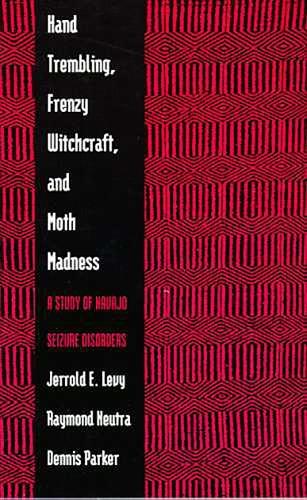
According to traditional Navajo belief, seizures are the result of sibling incest, sexual witchcraft, or possession by a supernatural spirit--associations that have kept such disorders from being known outside Navajo families. This new study is concerned with discovering why the Navajos have accorded seizures such importance and determining their meaning in the larger context of Navajo culture. The book is based on a 14-year study of some 40 Navajo patients and on an epidemiological survey among the Navajos and among three Pueblo tribes.
Full Product Details
Author: Jerrold Levy
Publisher: University of Arizona Press
Imprint: University of Arizona Press
Dimensions:
Width: 13.90cm
, Height: 1.40cm
, Length: 21.70cm
Weight: 0.260kg
ISBN: 9780816515721
ISBN 10: 0816515727
Pages: 196
Publication Date: 30 January 1988
Audience:
General/trade
,
General
Format: Paperback
Publisher's Status: Active
Availability: Out of stock

The supplier is temporarily out of stock of this item. It will be ordered for you on backorder and shipped when it becomes available.
Reviews
Given the rarity of good books in the medical anthropology of native Americans in the southwestern United States, this book is a most welcome addition to the literature. Its authors recognize the necessity of a multidisciplinary approach to adequately explain even one type of illness within this bicultural area and they succeed in integrating historical, psychiatric, epidemiologic and anthropological perspectives on seizure disorders. An interdisciplinary team, they expended years of research efforts in five Indian communities (Navaho, Apache, Zuni, Tewas, and Hopis). The result is an unusually comprehensive treatment of a disorder on which we have very little cultural data. -- Transcultural Psychiatric Research Review The authors explore many questions . . . including the relationships among culture, psychopathology, and the personality types of shamans. This book will be . . . of interest to medical anthropologists and others involved in Navajo studies. -- Medical Anthropology Q
Given the rarity of good books in the medical anthropology of native Americans in the southwestern United States, this book is a most welcome addition to the literature. Its authors recognize the necessity of a multidisciplinary approach to adequately explain even one type of illness within this bicultural area and they succeed in integrating historical, psychiatric, epidemiologic and anthropological perspectives on seizure disorders. An interdisciplinary team, they expended years of research efforts in five Indian communities (Navaho, Apache, Zuni, Tewas, and Hopis). The result is an unusually comprehensive treatment of a disorder on which we have very little cultural data. -- Transcultural Psychiatric Research Review The authors explore many questions . . . including the relationships among culture, psychopathology, and the personality types of shamans. This book will be . . . of interest to medical anthropologists and others involved in Navajo studies. -- Medical Anthropology Quarterly [Clinically oriented case histories] provide considerable information that could complement other studies of these ceremonies--the Tremblingway, the Frenzy Witchcraftway, and the Mothway. -- Shaman's Drum This book is a literary mosaic of bits from many sources--Navajo and Pueblo mythology, historical documents, culture and personality theory, epidemiological survey statistics, patient interviews, Freudian theories, disease incidence statistics . . . [and provides] readers with an extensive bibliography. -- Journal of the Southwest
Given the rarity of good books in the medical anthropology of native Americans in the southwestern United States, this book is a most welcome addition to the literature. Its authors recognize the necessity of a multidisciplinary approach to adequately explain even one type of illness within this bicultural area and they succeed in integrating historical, psychiatric, epidemiologic and anthropological perspectives on seizure disorders. An interdisciplinary team, they expended years of research efforts in five Indian communities (Navaho, Apache, Zuni, Tewas, and Hopis). The result is an unusually comprehensive treatment of a disorder on which we have very little cultural data. --Transcultural Psychiatric Research Review The authors explore many questions . . . including the relationships among culture, psychopathology, and the personality types of shamans. This book will be . . . of interest to medical anthropologists and others involved in Navajo studies. --Medical Anthropology Quarterly [Clinically oriented case histories] provide considerable information that could complement other studies of these ceremonies--the Tremblingway, the Frenzy Witchcraftway, and the Mothway. --Shaman's Drum This book is a literary mosaic of bits from many sources--Navajo and Pueblo mythology, historical documents, culture and personality theory, epidemiological survey statistics, patient interviews, Freudian theories, disease incidence statistics . . . [and provides] readers with an extensive bibliography. --Journal of the Southwest
Author Information
Jerrold E. Levy is a professor emeritus of anthropology at the University of Arizona whose special interest has been Indian health problems. Raymond Neutra is the chief of the Epidemiological Studies and Surveillance Section, California Department of Health. Dennis Parker (1912-1984) was a Navajo who devoted much of his life to promoting better health for his people.