Overview
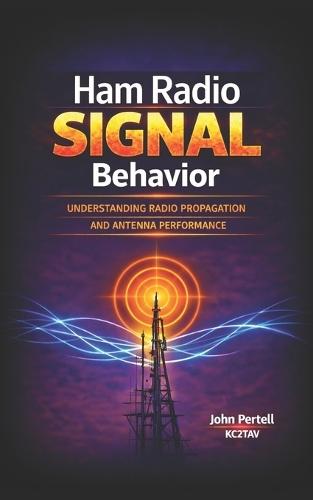
Most amateur radio stations fail before the signal ever leaves the antenna. You can have good SWR. You can run more power. You can follow popular antenna designs. And still be weak, inconsistent, or unreadable. If you're tired of guessing, this book was written for you. If you have ever wondered why an antenna that should work doesn't, this book explains the exact reasons. Ham Radio Signal Behavior shows what radio waves actually do once they leave the wire-and why small changes in height, geometry, or ground interaction can completely transform performance. This is not an exam-prep manual. This is not a collection of antenna recipes. It is a practical guide to understanding why antennas succeed or fail. When you understand behavior, you stop guessing. When you stop guessing, results become predictable. What This Book Will Do For You- Explain why low SWR does not mean good radiation - Show how radiation angle controls communication distance - Reveal why antenna height often matters more than power - Explain how ground interaction creates or destroys efficiency - Clarify when verticals outperform horizontals-and when they don't - Show why end-fed and ""compromise"" antennas behave unpredictably - Identify what changes actually improve real-world performance You will learn how to diagnose antenna problems using cause and effect, not folklore. Who This Book Is For- Newly licensed operators building strong fundamentals - Experienced operators frustrated with inconsistent results - Antenna builders and experimenters - Operators who want predictable performance - Hams who value physics over myths If you are tired of trying random changes and hoping for improvement, this book was written for you. How This Book Is DifferentMost amateur radio books focus on construction details. This book focuses on behavior. You will learn: - How energy couples into the ground - How radiation patterns form - How propagation modes interact with antennas - How installation geometry reshapes performance Once these relationships are understood, antenna selection becomes deliberate instead of experimental. Inside You'll Discover- HF vs VHF propagation behavior - Ground-wave, line-of-sight, and sky-wave explained clearly - Electrical length and resonance demystified - Standing waves and reflected power in context - Radiation patterns and gain explained realistically - Vertical antennas and ground systems - Dipoles, horizontal wires, end-fed, and long-wire behavior - Matching the antenna to the job Plus practical reference tables, formulas, and a technical glossary. About the AuthorJohn Pertell, KC2TAV, has been a licensed amateur radio operator since 2008. Based in upstate New York, he focuses on understanding how radio systems behave in real-world conditions and explaining those principles clearly. His writing emphasizes cause and effect, helping operators build antennas and stations that perform predictably rather than by trial and error. Also by John Pertell KC2TAVHam Radio Jargon and Q Codes A practical reference for understanding common operating terminology and Q-signals used on the air. If you want antennas that work because you understand why they work, Ham Radio Signal Behavior belongs on your bench.
Full Product Details
Author: Kc2tav ,
John Pertell
Publisher: Independently Published
Imprint: Independently Published
Dimensions:
Width: 12.70cm
, Height: 0.70cm
, Length: 20.30cm
Weight: 0.127kg
ISBN: 9798247656951
Pages: 122
Publication Date: 10 February 2026
Audience:
General/trade
,
General
Format: Paperback
Publisher's Status: Active
Availability: Available To Order

We have confirmation that this item is in stock with the supplier. It will be ordered in for you and dispatched immediately.