Overview
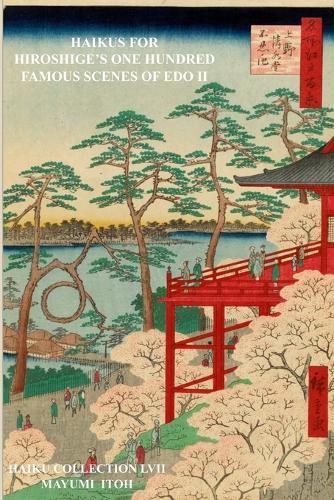
This new haiku anthology is a homage to One Hundred Famous Scenes of Edo (the old name for Tokyo), a masterpiece of the ukiyo-e woodblock print collection by Utagawa Hiroshige (1797-October 1858). Hiroshige is also known for another ukiyo-e woodblock print series, The Fifty-Three Stations of the Tōkaidō Road, among many woodblock prints and paintings he made. One Hundred Famous Scenes of Edo-consisting of 119 prints and a table of contents added by the illustrator Baisotei Gengyo (1817-February 1880)-was Hiroshige's swan song. He began working on this series in February 1856 and continued until his death in October 1858, presumably due to cholera, so that several prints in this series were completed by his successor Hiroshige II (1826-October 1869). As each print was published, it became an instant best-seller in Edo. This however did not amount to any fortune for Hiroshige. On his deathbed, he instructed his successors on how to handle his debts. After Hiroshige's death, his successors compiled his ukiyo-e woodblock prints of Edo into One Hundred Famous Scenes of Edo, according to the four seasons, rather than in the actual sequence of the dates each print was published: Specifically, this ukiyo-e woodblock print series is categorized into four sections: the Spring Section comprising 42 scenes; the Summer Section including 31 scenes; the Autumn Section consisting of 26 scenes; and the Winter Section having 20 scenes. The works on spring dominate the series not only because it is the most praised season by Japanese, but also because Hiroshige wanted to depict happy images, hoping for the early reconstruction of Edo that had been destroyed by the Ansei Edo Earthquake of November 1855. * * * This new haiku collection (2025) presents 42 original haikus by this author, corresponding to the 42 woodblock prints of the Spring Section in One Hundred Famous Scenes of Edo, along with appropriate season words per the Japanese calendar and annotations. The way Hiroshige's successors categorized the four seasons for One Hundred Famous Scenes of Edodoes not necessary correspond with those used in haiku. For instance, wisteria is a season word for late spring in haiku, but One Hundred Famous Scenes of Edo included a scene of wisteria in the Summer Section. So with azalea. This haiku collection has honored the order of One Hundred Famous Scenes of Edo.
Full Product Details
Author: Mayumi Itoh
Publisher: Independently Published
Imprint: Independently Published
Dimensions:
Width: 15.20cm
, Height: 1.10cm
, Length: 22.90cm
Weight: 0.268kg
ISBN: 9798269021317
Pages: 196
Publication Date: 10 October 2025
Audience:
General/trade
,
General
Format: Paperback
Publisher's Status: Active
Availability: Available To Order

We have confirmation that this item is in stock with the supplier. It will be ordered in for you and dispatched immediately.