Full Product Details
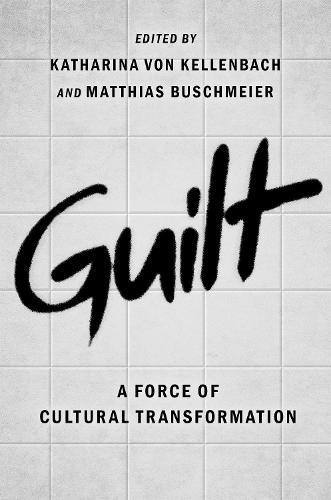
Author: Katharina von Kellenbach (Professor emerita of Religious Studies, Professor emerita of Religious Studies, St. Mary's College of Maryland) ,
Matthias Buschmeier (Associate Professor of German Literature, Associate Professor of German Literature, Bielefeld University, Germany)
Publisher: Oxford University Press Inc
Imprint: Oxford University Press Inc
Dimensions:
Width: 23.60cm
, Height: 2.30cm
, Length: 15.70cm
Weight: 0.544kg
ISBN: 9780197557440
ISBN 10: 0197557449
Pages: 376
Publication Date: 31 March 2022
Audience:
Professional and scholarly
,
Professional & Vocational
Format: Paperback
Publisher's Status: Active
Availability: To order

Stock availability from the supplier is unknown. We will order it for you and ship this item to you once it is received by us.
Reviews
This is a bold and very welcome volume. Like the classics of Hannah Arendt and Karl Jaspers, but with a broader cultural outlook and greater disciplinary width, the book sustains comprehension, unfolds unrecognized complexities, and richly serves to qualify our conversation about the question (or rather questions) of guilt. Additionally, this is one of the best cases I have seen for the value of a carefully edited interdisciplinary volume. * Thomas Brudholm, author of Resentments Virtue * This extraordinary book has the potential of becoming a real game changer. The central idea of this brilliant co-disciplinary effort is that guilt is not necessarily the end of a story but can also be the beginning of a new one. In contexts of translating history into memory, guilt can work as a transformative force when linked to concepts like accountability, recognition, and responsibility. By generating prosocial emotions it can serve to re-establish injured relationships and balance unequal power arrangements. * Aleida Assmann, University of Konstanz * How can we not only recognize, but also recover from, the atrocities of the past? Drawing on a global range of recent case studies, this book offers a kaleidoscopic, thought-provoking dive into new research on guilt in the aftermath of collective violence and confirms that penance can be productive. Mediated through religion, law, and politics, as well as film, literature, and theatre, guilt as a shared sense of moral responsibility can lead societies towards reconciliation * Patrick Gray, Durham University *
Author Information
Katharina von Kellenbach is Professor emerita of Religious Studies at St. Mary's College of Maryland and project coordinator at the Evangelische Akademie zu Berlin. She is the author of Anti-Judaism in Feminist Religious Writings, The Mark of Cain: Guilt and Denial in the Lives of Nazi Perpetrators, and Composting Guilt: The Purification of Memory after Atrocity. Matthias Buschmeier is an Associate Professor (Akademischer Oberrat) of German Literature at Bielefeld University, Germany. He has published widely on German and European Literature and the History of Knowledge from the 18th to 20th centuries. His areas of research include the relation between literature and politics, cultural theory, hermeneutics and pragmatism, philology, the historiography of world literature, and discourses of knowledge.