Overview
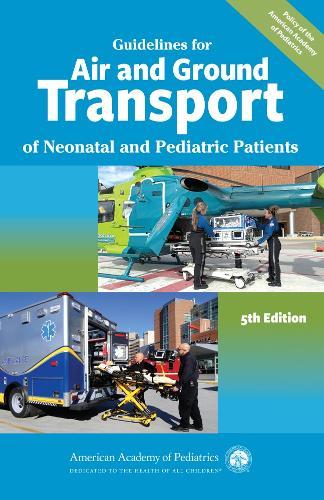
Completely updated and revised, the new Guidelines for Air and Ground Transport of Neonatal and Pediatric Patients, 5th Edition, offers the most current and comprehensive guidelines for the critical care transport of neonatal and pediatric patients. Written by experts in the field, this definitive textbook encompasses the must-have information and guidelines for health care professionals and hospital systems interested in developing transport systems and improving the transport care they deliver. This edition covers all aspects of air and ground transport—from team organization and training to equipment selection, quality improvement, safety, ethics, and much more. It also includes coverage of new and challenging areas of transport medicine, with chapters on: - Maternal High-Risk Obstetric Transport - Extracorporeal Membrane Oxygenation (ECMO) on Transport - Infection Control: Protect the Patient, Protect the Team - Considerations in Pediatric Psychiatric and Behavioral Care in Transport This essential resource is a must-have for all health care professionals involved in the transport of our most precious cargo—neonatal and pediatric patients.
Full Product Details
Author: AAP Section on Transport Medicine ,
Robert Holcomb ,
Keith Meyer ,
Ranna Rozenfeld
Publisher: American Academy of Pediatrics
Imprint: American Academy of Pediatrics
Edition: Fifth Edition
ISBN: 9781610027021
ISBN 10: 1610027027
Pages: 488
Publication Date: 31 December 2025
Audience:
Professional and scholarly
,
Professional & Vocational
Format: Paperback
Publisher's Status: Forthcoming
Availability: Not yet available

This item is yet to be released. You can pre-order this item and we will dispatch it to you upon its release.
Author Information
The American Academy of Pediatrics Section on Transport Medicine supports the safe transport of pediatric patients by developing clinical guidance, providing education, facilitating interdisciplinary networking, promoting research, and advocating for transport providers at the local, state, and national level. Robert Holcomb Jr, MD, FAAP attended Arizona State University, a dual major in Biomedical & Chemical Engineering. He earned his Medical Degree from Georgetown University. He completed his Residency at Wilford Hall US Air Force Medical Center and Fellowship in Neonatology at the University of Colorado/Denver Children's Program. Dr Holcomb was a distinguished graduate of Air Force ROTC, and is an 18-year USAF Disabled Veteran. Keith Meyer, MD, FAAP is the Medical Director of Nicklaus Children's LifeFlight© Neonatal and Pediatric Transport Services in Miami, Florida. With over 20 years of experience in Pediatric Critical Care and Transport Medicine, he has dedicated his career to improving the care of critically ill neonatal and pediatric patients during transport. Ranna A. Rozenfeld, MD, FAAP, FCCM, is Professor of Pediatrics at the Warren Alpert Medical School of Brown University. Dr. Rozenfeld specializes in Pediatric Critical Care Medicine. She is the Division Director for Pediatric Critical Care Medicine and the Medical Director of the LifePACT Pediatric Critical Care Transport Team at Rhode Island Hospital/Hasbro Children's Hospital. She is actively involved in teaching, research and clinical care. Hamilton Schwartz, MD, MEd, FAAP, FACEP, is board-certified in pediatrics, pediatric emergency medicine, and EMS medicine. He is the Medical Director of the Cincinnati Children's Critical Care Transport Team and Pediatric Medical Director for the Cincinnati Fire Department. He co-founded the Ground Air Medical qUality Transport (GAMUT) database and Quality Improvement Collaborative, an international transport medicine quality improvement collaborative involving over 400 member organizations. He is the associate editor of the American Academy of Pediatrics (AAP) Executive Committee of the Section on Transport Medicine's two-volume policy guides on neonatal and pediatric transport medicine. He is also co-editor of the AAP's new peer-reviewed transport research journal Transport Dispatch. Tamara N. Rush, MSN, RN, C-NPT, EMT, widely known as Tammy, is an accomplished nursing professional with an extensive career spanning over four decades. Tammy holds a Master of Science in Nursing from East Carolina University, earned in 2013. Her impressive career is marked by 42 years of dedicated service in pediatric and neonatal critical care nursing, with a particular focus on critical care transport management.