Overview
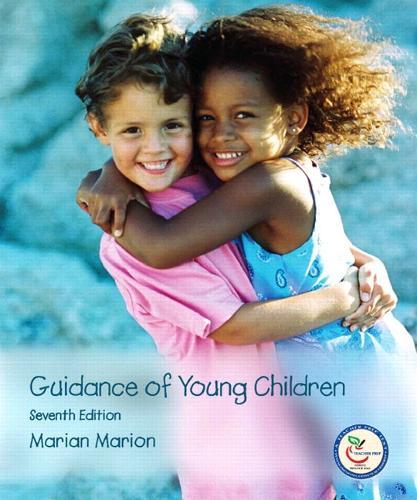
For courses in guidance and management of young children. Based on the idea that childhood professionals, like physicians, should “first, do no harm,” this popular, student-friendly text exemplifies a positive, constructivist approach to guidance that respects, protects, and helps children become self-responsible, competent, independent, cooperative people who like themselves and have strong values. Content is based on understanding the authoritative style of caregiving, understanding child development to make guidance decisions, and on observing behavior. The author never mandates a “cookbook” of techniques for guiding children, but rather, encourages students to use the Decision-Making Model of Child Guidance - a model that evolves from an understanding of a variety of child guidance theories, including those of Piaget, Vygotsky, Rogers, and Adler. Students will learn not only how to guide prosocial behavior and organize a developmentally appropriate classroom environment, but also how to minimize challenging and violent or agressive behavior, and how to help children express anger and cope with stress.
Full Product Details
Author: Marian C. Marion
Publisher: Pearson Education (US)
Imprint: Pearson
Edition: 7th edition
Dimensions:
Width: 19.10cm
, Height: 1.90cm
, Length: 23.20cm
Weight: 0.522kg
ISBN: 9780131545304
ISBN 10: 0131545302
Pages: 400
Publication Date: 02 October 2006
Audience:
Professional and scholarly
,
Professional & Vocational
Replaced By: 9780137034024
Format: Paperback
Publisher's Status: Out of Print
Availability: In Print

Limited stock is available. It will be ordered for you and shipped pending supplier's limited stock.
Reviews
The text uses more of the specific strategies that are applicable when working daily with children. The information is accurate and speaks to children's needs. It is important for adults to understand the children's point of view: stressors, temperaments, type of caregiving under which children have been raised. This viewpoint is unique among texts. Most texts present material, concepts, strategies, etc. to feed the students, whereas M. Marion presents material with the child's needs in mind. For once we have an author that practices DAP! -- Susan Christian, Patrick Henry Community College
The text uses more of the specific strategies that are applicable when working daily with children. The information is accurate and speaks to children's needs. It is important for adults to understand the children's point of view: stressors, temperaments, type of caregiving under which children have been raised. This viewpoint is unique among texts. Most texts present material, concepts, strategies, etc. to feed the students, whereas M. Marion presents material with the child's needs in mind. For once we have an author that practices DAP! -- Susan Christian, Patrick Henry Community College