Overview
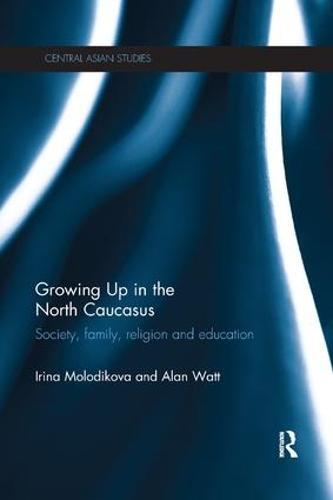
Investigating changes in upbringing in the North Caucasus, a region notorious for violent conflict, this book explores the lives of the generation born after the dissolution of the USSR who grew up under conditions of turmoil and rapid social change. It avoids the ‘traditional’ presentation of the North Caucasus as a locus of violence, and instead presents the life of people in the region through the lens of the young generation growing up there. Using focus groups with teachers and students of different ethnic groups, as well as surveys and essays written by children, the book suggests that while the legacy of conflict plays a role in many children’s lives, it is by no means the only factor in their upbringing. It explores how conflict has influenced upbringing, and goes on to consider factors such as the revival of religion, the impact of social and economic upheaval, and the shifting balance between school and parents. As well as revealing the dynamic influences on children’s upbringing in the region, the book presents recommendations on how to address some of the challenges that arise. The role of government in education is also evaluated, and prospects for the future are considered. The book is useful for students and scholars of Education, Sociology and Central Asian Studies.
Full Product Details
Author: Irina Molodikova (Central European University, Hungary) ,
Alan Watt (Central European University, Hungary)
Publisher: Taylor & Francis Inc
Imprint: Routledge
Weight: 0.453kg
ISBN: 9780815369158
ISBN 10: 0815369158
Pages: 206
Publication Date: 23 October 2017
Audience:
College/higher education
,
Tertiary & Higher Education
,
Undergraduate
Format: Paperback
Publisher's Status: Active
Availability: In Print

This item will be ordered in for you from one of our suppliers. Upon receipt, we will promptly dispatch it out to you. For in store availability, please contact us.
Reviews
The authors demonstrate that modernization, urbanization, and displacement have undermined customs and resulted in social changes, which are more evident among the Christians (Ossetians and Russians) and city-dwellers than among the Muslims and villagers. Their discussion of family histories is one of the most interesting. They uncovered startlingly large differences between the Ossetian and Cossack narratives on the one hand, and Chechen narratives on the other: the former emphasized military glory; the latter-repressions and deportations. Victor Shnirel'man, Institute of Ethnology and Anthropology, Russian Academy of Sciences
The authors demonstrate that modernization, urbanization, and displacement have undermined customs and resulted in social changes, which are more evident among the Christians (Ossetians and Russians) and city-dwellers than among the Muslims and villagers. Their discussion of family histories is one of the most interesting. They uncovered startlingly large differences between the Ossetian and Cossack narratives on the one hand, and Chechen narratives on the other: the former emphasized military glory; the latter-repressions and deportations. Victor Shnirel'man, Institute of Ethnology and Anthropology, Russian Academy of Sciences
Author Information
Irina Molodikova is Supervisor of the North Caucasus Initiative of the Open Society Foundation at the Central European University, Hungary. Alan Watt is Lecturer in the Department of Environmental Sciences and Policy at the Central European University, Hungary.