Overview
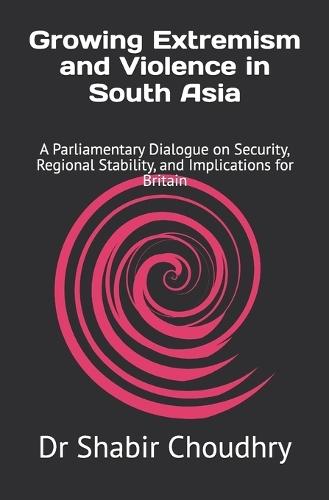
The International Conference on ""Growing Extremism and Violence in South Asia and Its Impact on Britain and the Region"", held in the Jubilee Room of the House of Commons, was not merely a formal gathering. It was a rare and significant convergence of voices representing historically marginalised and politically suppressed communities. What distinguished this conference was the diversity of representation. Baloch, Sindhi, Pakhtoon, Punjabi and Jammu & Kashmir voices were present - not as isolated complainants, but as communities articulating shared structural grievances. Each brought its own historical experience, yet a common thread ran through all testimonies: the relationship between centralised power, militarisation, and the erosion of democratic space. A Convergence of Grievances Although each region has its own political trajectory, several recurring themes emerged: Suppression of political dissent Militarisation of civil society Control over natural resources without local consent Restrictions on freedom of speech Marginalisation of indigenous political leadership Export of ideological extremism beyond borders The Baloch representatives emphasised enforced disappearances and resource exploitation. Sindhi speakers highlighted demographic engineering and cultural dilution. Pakhtoon participants raised concerns about war, militancy and the long-term impact of conflict policies. Punjabi voices reflected on the internal contradictions of state centralisation. Representatives from Jammu and Kashmir focused on constitutional ambiguity, lack of genuine autonomy, and denial of meaningful participation in dispute resolution. Despite differing contexts, the structural pattern appeared consistent: concentration of authority at the centre and weakening of federal, democratic, and provincial rights. From Regional Pain to Structural Critique The conference moved beyond emotional narratives. It advanced a structural critique of how extremism and violence become embedded within statecraft when strategic objectives override democratic accountability Several speakers argued that extremism does not arise in a vacuum. It is cultivated in environments where: Political grievances remain unaddressed Civil institutions are subordinated to security frameworks Identity is instrumentalised for strategic purposes The discussion suggested that South Asia's instability cannot be understood purely through religious lenses. Rather, it must be analysed through political economy, constitutional arrangements, and the militarisation of governance. This conference was not an expression of anger, but of collective articulation. From Balochistan to Sindh, from Khyber Pakhtunkhwa to Punjab, and from Jammu and Kashmir, diverse voices converged to highlight a shared concern: that instability in South Asia is rooted not in its diversity, but in the management of power. Silencing dissent does not create unity. Militarisation does not secure peace. Extremism flourishes where justice is absent, and representation is denied. The message of this gathering is clear: sustainable stability requires dignity, dialogue and democratic reform. The responsibility now rests with those who shape policy - and with all who believe that peace must be built on rights, not repression.
Full Product Details
Author: Shabir Ahmed Choudhry
Publisher: Independently Published
Imprint: Independently Published
Dimensions:
Width: 13.30cm
, Height: 0.80cm
, Length: 20.30cm
Weight: 0.154kg
ISBN: 9798249595104
Pages: 144
Publication Date: 23 February 2026
Audience:
General/trade
,
General
Format: Paperback
Publisher's Status: Active
Availability: Available To Order

We have confirmation that this item is in stock with the supplier. It will be ordered in for you and dispatched immediately.