Overview
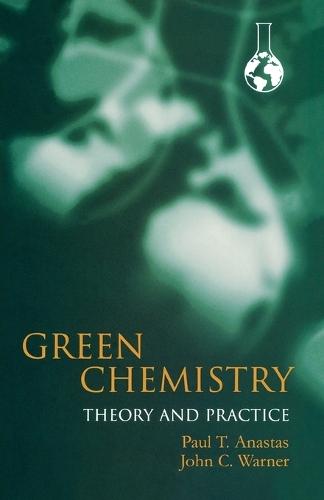
This book aims to introduce the reader to the design, development, and evaluation processes of new Green Chemistry methodologies. A comprehensive introductory text, it takes a broad view of the subject and integrates a wide variety of topics. Topics covered include: alternative feedstocks, environmentally benign synthetic methodologies, designing safer chemical products, new reaction conditions, alternative solvents and catalyst development, and the use of biosynthesis and biomimetic principles. The reader is introduced to the new evaluation process that encompasses the health and environmental impact of a synthetic pathway from choice of starting materials through to target molecule. Throughout the text, comparisons and contrasts with classical methodologies are offered as illustrative examples. This accessible text is aimed at all those involved with the design, manufacture, use and disposal of chemicals and their products - especially synthetic chemicals at the graduate and professional level, process development chemists and environmental scientists. From reviews of the hardback: 'An excellent introduction into the fast growing field and the fascinating science of green chemistry.... Should be consulted by anyone who wants to know about environmentally benign chemistry and, especially, by scientists who contemplate adopting its principles in their own research or teaching efforts.' Science
Full Product Details
Author: Paul Anastas (Chief, Industrial Chemistry Branch, Chief, Industrial Chemistry Branch, U.S. Environmental Protection Agency) ,
John Warner (Associate Professor, Department of Chemistry, Associate Professor, Department of Chemistry, University of Massachusetts)
Publisher: Oxford University Press Inc
Imprint: Oxford University Press Inc
Dimensions:
Width: 13.70cm
, Height: 0.90cm
, Length: 21.50cm
Weight: 0.186kg
ISBN: 9780198506980
ISBN 10: 0198506988
Pages: 152
Publication Date: 23 March 2000
Audience:
Professional and scholarly
,
Professional & Vocational
Format: Paperback
Publisher's Status: Active
Availability: Manufactured on demand

We will order this item for you from a manufactured on demand supplier.
Reviews
<br> What is green chemistry? In Green Chemistry: Theory and Practice, Paul T. Anastas and John C. Warner provide a concise and comprehensive answer: 'Green chemistry is the utilization of a set of principles that reduces or eliminates the use or generation of hazardous substances in the design, manufacture and application of chemical products.' . . . Measure by measure, [Anastas] and Warner fill this abstract and fairly broad definition with life. Their short book provides a framework for the pursuit of environmentally compatible chemistry. This introductory text is intended to provide a basis for teaching and includes a collection of exercises for the topics of each chapter. . . . [This book] should be consulted by anyone who wants to know about environmentally benign chemistry and, especially, by scientists who contemplate adopting its principles in their own research or teaching efforts. --Science<p><br> Historically, as Paul Anastas and John Warner point out in Green Chemistry: Theory and Practice, synthetic chemists have not been particularly environmentally conscious, since their involvement was at the beginning of the chemical synthetic chain whereas problems were mostly encountered at its end. The solution is the replacement of these technologies with cleaner catalytic alternatives. The emphasis is on eliminating waste at source--primary pollution prevention--rather than finding incremental end-of-pipe solutions. This has now become known as green chemistry, and is defined by Anastas and Warner as: 'The utilization of a set of principles that reduces or eliminates the use or generation of hazardous substances in the design, manufacture and application of chemical products'. The tools of green chemistry are alternative feedstocks, solvents and reagents, and catalytic versus stoichiometric processes. --Nature<p><br> Anastas from the US Environmental Protection Agency and Warner (chemistry, U. of Massachusetts-Boston) introduce the design, development, and eva
`""As the summary of a vision, the book is brilliant. One can feel the enthusiasm of the authors throughout...I see it as a vehicle for initiating a fruitful dialogue between chemical producers and regulatory enforcers without the confrontation, which often characterizes such interactions."" ' Martyn Poliakoff, Green Chemistry, February ' Its is an introductory text taking a broad view and intergrating a wide range of topics including synthetic methodologies, alternative solvents and catalysts, biosynthesis and alternative feedstocks. There are exercises for students and the last chapter deals with future trends' Aslib
"`""As the summary of a vision, the book is brilliant. One can feel the enthusiasm of the authors throughout...I see it as a vehicle for initiating a fruitful dialogue between chemical producers and regulatory enforcers without the confrontation, which often characterizes such interactions."" ' Martyn Poliakoff, Green Chemistry, February ' Its is an introductory text taking a broad view and intergrating a wide range of topics including synthetic methodologies, alternative solvents and catalysts, biosynthesis and alternative feedstocks. There are exercises for students and the last chapter deals with future trends' Aslib"
As the summary of a vision, the book is brilliant. One can feel the enthusiasm of the authors throughout...I see it as a vehicle for initiating a fruitful dialogue between chemical producers and regulatory enforcers without the confrontation, which often characterizes such interactions. Martyn Poliakoff, Green Chemistry, February Its is an introductory text taking a broad view and intergrating a wide range of topics including synthetic methodologies, alternative solvents and catalysts, biosynthesis and alternative feedstocks. There are exercises for students and the last chapter deals with future trends' Aslib
What is green chemistry? In Green Chemistry: Theory and Practice, Paul T. Anastas and John C. Warner provide a concise and comprehensive answer: 'Green chemistry is the utilization of a set of principles that reduces or eliminates the use or generation of hazardous substances in the design, manufacture and application of chemical products.' . . . Measure by measure, [Anastas] and Warner fill this abstract and fairly broad definition with life. Their short book provides a framework for the pursuit of environmentally compatible chemistry. This introductory text is intended to provide a basis for teaching and includes a collection of exercises for the topics of each chapter. . . . [This book] should be consulted by anyone who wants to know about environmentally benign chemistry and, especially, by scientists who contemplate adopting its principles in their own research or teaching efforts. --Science<br> Historically, as Paul Anastas and John Warner point out in Green Chemistry: Theory and Practice, synthetic chemists have not been particularly environmentally conscious, since their involvement was at the beginning of the chemical synthetic chain whereas problems were mostly encountered at its end. The solution is the replacement of these technologies with cleaner catalytic alternatives. The emphasis is on eliminating waste at source--primary pollution prevention--rather than finding incremental end-of-pipe solutions. This has now become known as green chemistry, and is defined by Anastas and Warner as: 'The utilization of a set of principles that reduces or eliminates the use or generation of hazardous substances in the design, manufacture and application of chemical products'. Thetools of green chemistry are alternative feedstocks, solvents and reagents, and catalytic versus stoichiometric processes. --Nature<br> Anastas from the US Environmental Protection Agency and Warner (chemistry, U. of Massachusetts-Boston) introduce the design, development, and evaluation processes of a currently active area of research that concentrates on the handling and use of chemicals to ensure efficiency but also human and environmental compatibility. They take a wide view and integrate such topics as alternative foodstocks, environmentally benign synthetic methodologies, designing safer chemical products, new reaction conditions, alternative solvents and catalyst development, and the use of biosynthesis and biomimetic principles. They also describe a new evaluation process that encompasses the health and environmental impact of a synthetic pathway from the choice to starting materials to the target molecule. They write for graduate and professional chemists, and include exercises for classroom or individual study. --SciTech Book News<br>
Author Information
Dr Paul T. Anastas Prof. John C. Warner Chief, Industrial Chemistry Branch Department of Chemistry U.S. Environmental Protection Agency University of Massachusetts Boston 401 M St S.W. 100 Morrissey Blvd Mail Code 7406 Boston Washington MA 02125-3393 DC 20460 US US