Overview
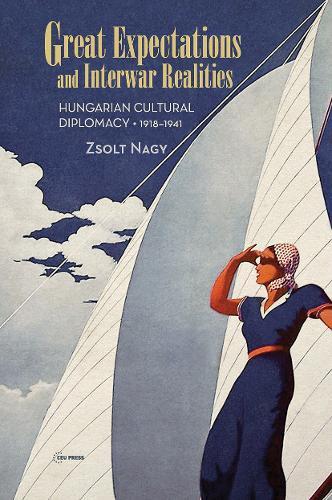
After the shock of the 1920 Treaty of Trianon, which Hungarians perceived as an unfair dictate, the leaders of the country found it imperative to change Hungary’s international image in a way that would help the revision of the post-World War I settlement. The monograph examines the development of interwar Hungarian cultural diplomacy in three areas: universities, the tourist industry, and the media—primarily motion pictures and radio production. It is a story of the Hungarian elites’ high hopes and deep-seated anxieties about the country’s place in a Europe newly reconstructed after World War I, and how these elites perceived and misperceived themselves, their surroundings, and their own ability to affect the country’s fate. The defeat in the Great War was crushing, but it was also stimulating, as Nagy documents in his examination of foreign language journals, tourism, radio, and other tools of cultural diplomacy. The mobilization of diverse cultural and intellectual resources, the author argues, helped establish Hungary’s legitimacy in the international arena, contributed to the modernization of the country, and established a set of enduring national images. Though the study is rooted in Hungary, it explores the dynamic and contingent relationship between identity construction and transnational cultural and political currents in East-Central European nations in the interwar period.
Full Product Details
Author: Zsolt Nagy
Publisher: Central European University Press
Imprint: Central European University Press
Weight: 0.840kg
ISBN: 9789633861943
ISBN 10: 9633861942
Pages: 368
Publication Date: 15 July 2017
Audience:
Professional and scholarly
,
Professional & Vocational
Format: Hardback
Publisher's Status: Active
Availability: Manufactured on demand

We will order this item for you from a manufactured on demand supplier.
Reviews
Nagy's book is a valuable first attempt to gauge the inspirations, resources, and processes behind the Hungarian decision-in the wake of a lost world war and a disastrous peace-to join competing Habsburg successor states and engage in 'cultural diplomacy' with ever more commitment. The book deserves ample praise for what its thematic chapters accomplish: a complex reading of new dimensions in a small nation's external relations, constructed by an authoritarian regime mastering the challenges of modernity with some skill and considerable flexibility. * American Historical Review * Nagy's study is a thoughtful, well-researched contribution to the field and will be invaluable to any scholar interested in culture, foreign policy, or national identity in Eastern Europe after World War I. The analysis in Great Expectations and Interwar Realities highlights the complexities of forming strong national identities and cohesive foreign policy agendas in the face of political reality, particularly for small countries. * Austrian History Yearbook * The prevailing view, that Hungary's propaganda was obsessed with denouncing the 'Treaty of Trianon,' which had affirmed the dismantling of the country that took place at the end of the First World War, is too simplistic. Instead, Hungarian officials were convinced that their country's international reputation needed to be completely transformed. The Treaty of Trianon, they concluded, was the unfortunate result of widespread ignorance and ingrained inaccuracies. As this book makes impressively clear, interwar Hungary's efforts to remedy this problem relied on diverse and innovative strategies, from the opening of various cultural institutes in Europe and the United States and the targeting of influential figures who could be persuaded to promote Hungary to the wider world to the publication of glossy magazines promoting the country as a tourist destination and the dissemination of feature films and radio broadcasts. * Journal of Modern History * As Nagy starkly demonstrates, there was a massive discrepancy between government expectations and political realities, since no amount of investment in culture, or its dissemination, could compensate for Hungary's geopolitical weaknesses. Indeed, cultural production turned out to be a very 'poor substitute for real power'. Yet the cultural capital built up in these turbulent years was significant, and 'the infrastructure created for interwar cultural diplomacy remained essential during the communist era' and beyond. Accordingly, the book concludes that in the long run the propaganda drive was not 'for naught', as it 'helped to legitimize Hungary's status as an independent state' and to develop a 'basic template of Hungarian identity, which, for better or worse, survives today'. * Slavic and East European Journal * Trianon Hungary was militarily powerless, economically exhausted, and surrounded by hostile neighbors. The popular frustration expressed in the slogan 'nem, nem soha' (signifying 'no, no never' will we accept this dictate) was ignored or deplored by the Great Powers. The regime thus turned to the only option, cultural diplomacy. In a work of high scholarly quality, Zsolt Nagy relates the historical background, local and international context, and political execution of this approach. Nagy concludes that all cultural propaganda, however well-conceived and whatever its genuine services to national pride (there is little data that might allow the historian to propose a better-documented cost-benefit analysis), was vitiated by a 'bad' (revisionist) foreign policy resting on a 'mistaken interpretation of geopolitical realities'. The truth may be somewhat simpler, if no more reassuring. Small, defeated countries are particularly vulnerable pawns in the turbulent world of power politics, and chess games are seldom won by pawns. * Slavic Review *
""Nagy’s book is a valuable first attempt to gauge the inspirations, resources, and processes behind the Hungarian decision—in the wake of a lost world war and a disastrous peace—to join competing Habsburg successor states and engage in 'cultural diplomacy' with ever more commitment. The book deserves ample praise for what its thematic chapters accomplish: a complex reading of new dimensions in a small nation’s external relations, constructed by an authoritarian regime mastering the challenges of modernity with some skill and considerable flexibility."" * American Historical Review * ""Nagy’s study is a thoughtful, well-researched contribution to the field and will be invaluable to any scholar interested in culture, foreign policy, or national identity in Eastern Europe after World War I. The analysis in Great Expectations and Interwar Realities highlights the complexities of forming strong national identities and cohesive foreign policy agendas in the face of political reality, particularly for small countries."" * Austrian History Yearbook * ""The prevailing view, that Hungary’s propaganda was obsessed with denouncing the 'Treaty of Trianon,' which had affirmed the dismantling of the country that took place at the end of the First World War, is too simplistic. Instead, Hungarian officials were convinced that their country’s international reputation needed to be completely transformed. The Treaty of Trianon, they concluded, was the unfortunate result of widespread ignorance and ingrained inaccuracies. As this book makes impressively clear, interwar Hungary’s efforts to remedy this problem relied on diverse and innovative strategies, from the opening of various cultural institutes in Europe and the United States and the targeting of influential figures who could be persuaded to promote Hungary to the wider world to the publication of glossy magazines promoting the country as a tourist destination and the dissemination of feature films and radio broadcasts."" * Journal of Modern History * ""As Nagy starkly demonstrates, there was a massive discrepancy between government expectations and political realities, since no amount of investment in culture, or its dissemination, could compensate for Hungary’s geopolitical weaknesses. Indeed, cultural production turned out to be a very ‘poor substitute for real power’. Yet the cultural capital built up in these turbulent years was significant, and ‘the infrastructure created for interwar cultural diplomacy remained essential during the communist era’ and beyond. Accordingly, the book concludes that in the long run the propaganda drive was not ‘for naught’, as it ‘helped to legitimize Hungary’s status as an independent state’ and to develop a ‘basic template of Hungarian identity,"" which, for better or worse, survives today’."" * Slavic and East European Journal * ""Trianon Hungary was militarily powerless, economically exhausted, and surrounded by hostile neighbors. The popular frustration expressed in the slogan 'nem, nem soha' (signifying 'no, no never' will we accept this dictate) was ignored or deplored by the Great Powers. The regime thus turned to the only option, cultural diplomacy. In a work of high scholarly quality, Zsolt Nagy relates the historical background, local and international context, and political execution of this approach. Nagy concludes that all cultural propaganda, however well-conceived and whatever its genuine services to national pride (there is little data that might allow the historian to propose a better-documented cost-benefit analysis), was vitiated by a 'bad' (revisionist) foreign policy resting on a 'mistaken interpretation of geopolitical realities'. The truth may be somewhat simpler, if no more reassuring. Small, defeated countries are particularly vulnerable pawns in the turbulent world of power politics, and chess games are seldom won by pawns."" * Slavic Review * ""This is a book that should appeal to both those historians who tend to dwell in the realm of signs and discourses as well as those who want to look into the machinery of state. There is something particularly engaging about the way Nagy lets us see the hypervigilant, even petty, one-upmanship of diplomats wrestling over the fickle consideration of distant audiences, laboring mightily to frame the woes of aggrieved nationalists as burdens to be shouldered by global humanity. Similarly, another strength comes in what Nagy is able to illuminate about the interactions among Hungarian government agencies and other institutions, not least because it allows him to cement his analysis of cultural discourse onto the more concrete matter of chancellery politics."" -- Andrew Behrendt * East Central Europe *
"""Nagy’s book is a valuable first attempt to gauge the inspirations, resources, and processes behind the Hungarian decision—in the wake of a lost world war and a disastrous peace—to join competing Habsburg successor states and engage in 'cultural diplomacy' with ever more commitment. The book deserves ample praise for what its thematic chapters accomplish: a complex reading of new dimensions in a small nation’s external relations, constructed by an authoritarian regime mastering the challenges of modernity with some skill and considerable flexibility."" * American Historical Review * ""Nagy’s study is a thoughtful, well-researched contribution to the field and will be invaluable to any scholar interested in culture, foreign policy, or national identity in Eastern Europe after World War I. The analysis in Great Expectations and Interwar Realities highlights the complexities of forming strong national identities and cohesive foreign policy agendas in the face of political reality, particularly for small countries."" * Austrian History Yearbook * ""The prevailing view, that Hungary’s propaganda was obsessed with denouncing the 'Treaty of Trianon,' which had affirmed the dismantling of the country that took place at the end of the First World War, is too simplistic. Instead, Hungarian officials were convinced that their country’s international reputation needed to be completely transformed. The Treaty of Trianon, they concluded, was the unfortunate result of widespread ignorance and ingrained inaccuracies. As this book makes impressively clear, interwar Hungary’s efforts to remedy this problem relied on diverse and innovative strategies, from the opening of various cultural institutes in Europe and the United States and the targeting of influential figures who could be persuaded to promote Hungary to the wider world to the publication of glossy magazines promoting the country as a tourist destination and the dissemination of feature films and radio broadcasts."" * Journal of Modern History * ""As Nagy starkly demonstrates, there was a massive discrepancy between government expectations and political realities, since no amount of investment in culture, or its dissemination, could compensate for Hungary’s geopolitical weaknesses. Indeed, cultural production turned out to be a very ‘poor substitute for real power’. Yet the cultural capital built up in these turbulent years was significant, and ‘the infrastructure created for interwar cultural diplomacy remained essential during the communist era’ and beyond. Accordingly, the book concludes that in the long run the propaganda drive was not ‘for naught’, as it ‘helped to legitimize Hungary’s status as an independent state’ and to develop a ‘basic template of Hungarian identity,"" which, for better or worse, survives today’."" * Slavic and East European Journal * ""Trianon Hungary was militarily powerless, economically exhausted, and surrounded by hostile neighbors. The popular frustration expressed in the slogan 'nem, nem soha' (signifying 'no, no never' will we accept this dictate) was ignored or deplored by the Great Powers. The regime thus turned to the only option, cultural diplomacy. In a work of high scholarly quality, Zsolt Nagy relates the historical background, local and international context, and political execution of this approach. Nagy concludes that all cultural propaganda, however well-conceived and whatever its genuine services to national pride (there is little data that might allow the historian to propose a better-documented cost-benefit analysis), was vitiated by a 'bad' (revisionist) foreign policy resting on a 'mistaken interpretation of geopolitical realities'. The truth may be somewhat simpler, if no more reassuring. Small, defeated countries are particularly vulnerable pawns in the turbulent world of power politics, and chess games are seldom won by pawns."" * Slavic Review * ""This is a book that should appeal to both those historians who tend to dwell in the realm of signs and discourses as well as those who want to look into the machinery of state. There is something particularly engaging about the way Nagy lets us see the hypervigilant, even petty, one-upmanship of diplomats wrestling over the fickle consideration of distant audiences, laboring mightily to frame the woes of aggrieved nationalists as burdens to be shouldered by global humanity. Similarly, another strength comes in what Nagy is able to illuminate about the interactions among Hungarian government agencies and other institutions, not least because it allows him to cement his analysis of cultural discourse onto the more concrete matter of chancellery politics."" -- Andrew Behrendt * East Central Europe *"
Author Information
Zsolt Nagy is assistant professor of history at the University of St. Thomas, St. Paul, MN.