Overview
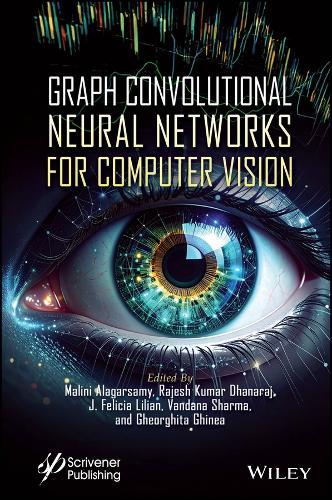
Revolutionize your machine learning practice with this essential book that provides expert insights into leveraging Graph Convolutional Networks (GCNNs) to overcome the limitations of traditional CNNs. In the last decade, computer vision has become a major focus for addressing the world's growing processing needs. Many existing deep learning architectures for computer vision challenges are based on convolutional neural networks (CNNs). Despite their great achievements, CNNs struggle to encode the intrinsic graph patterns in specific learning tasks. In contrast, graph convolutional networks have been used to address several computer vision issues with equivalent or superior results. The use of GCNNs has shown significant achievement in image classifications, video understanding, point clouds, meshes, and other applications in natural language processing. This book focuses on the applications of graph convolutional networks in computer vision. Through expert insights, it explores how researchers are finding ways to perform convolution algorithms on graphs to improve the way we use machine learning.
Full Product Details
Author: Malini Alagarsamy (Vellore Institute of Technology, Chennai, Tamilnadu, India) , Rajesh Kumar Dhanaraj (Symbiosis International (Deemed University), Pune, India) , J. Felicia Lilian (College of Engineering, Madurai, India) , Vandana Sharma (Christ University, Delhi NCR Campus, India)
Publisher: John Wiley & Sons Inc
Imprint: Wiley-Scrivener
ISBN: 9781394356331
ISBN 10: 1394356331
Pages: 304
Publication Date: 10 December 2025
Audience:
Professional and scholarly
,
Professional & Vocational
Format: Hardback
Publisher's Status: Active
Availability: Out of stock 
The supplier is temporarily out of stock of this item. It will be ordered for you on backorder and shipped when it becomes available.
Table of Contents
Preface xv 1 Role of Graph Convolutional Neural Networks (GCNN) in Computer Vision Applications 1 A. Malini, Vandana Sharma, J. Felicia Lilian, Rajesh Kumar Dhanaraj, Sharangapriyan S. and Shrinivas S. 1.1 Introduction 2 1.2 Understanding Convolutional Neural Network in Computer Vision 2 1.3 Core Components of CNN 3 1.4 Extending CNNs to Handle Graph-Structured Data 3 1.5 Application of GCNN in Computer Vision 6 1.6 Enhancing Performance and Interpretability with GCNN 8 1.7 Future Directions and Emerging Trends 10 1.8 Challenges and Open Research Questions 13 1.9 Case Studies: Real-World Applications 16 1.10 Conclusion 18 2 Scene Graph Generation from Static Images: Overview, Methods, and Applications 21 K. Krishnakishore, R. Vijayarangan, V. Jagan Naveen and V. Kannan 2.1 Introduction 22 2.2 Definition 24 2.3 Challenge 25 2.4 Scene Graph Generation 25 2.5 Static Image 25 2.6 Degradation of a Static Image 26 2.7 Method 1: Wavelet Feature Extraction 29 2.8 Psychological Perspective 32 2.9 Linguistic Perspective 33 2.10 Concepts and Conceptual Structures in Artificial Intelligence Perspective 35 2.11 Applications of CGS 37 2.12 Linguistic and Psychological Perspective 39 2.13 Image Synthesis from Layouts 41 2.14 Method Comparison 42 2.15 Conclusion 43 3 Transformation from CNN to Graph-Structured Data: Node Classification and Edge Prediction 47 R. Vijayarangan, R. Satish Kumar, K. Umadevi and K. Ashok Kumar 3.1 Why Graphs 48 3.2 SVM (Support Vector Machine) 57 3.3 XGBOOST 58 3.4 Artificial Neural Network (ANN) 59 3.5 Auto Encoder (AE) 62 3.6 Demographic and Related Data: Health Condition, Type of Gender, Age, Family Condition 63 3.7 Naïve Bayes (NB) 64 3.8 Random Forest (RF) 66 3.9 Conclusions 68 4 Research Trends and Challenges of GCNN Over CNN and Digital Image Processing Techniques 73 Rithish Kanna S., Suganthi P. and Kavitha P. 4.1 Introduction 74 4.2 Introduction to Convolutional Neural Network 75 4.3 Neural Style Transfer—Artistic View 78 4.4 Various Existing Works of NST 79 4.5 Hybrid Neural Style Transfer 81 4.6 Implementation of HNST 85 4.7 Results and Inference 86 4.8 Further Ideas of HNST 91 4.9 Conclusion 92 5 Classification of Graph Filtering Operations and Inductive Learning by Exploiting Multiple Graphs in GCNN 95 S. Kayalvizhi, Harish Sekar and Prasanna Guptha M.P. 5.1 Introduction 96 5.2 Graph Basics 96 5.3 Graph Convolutional Filters 98 5.4 Graph Filter Banks 107 5.5 Graph Neural Networks 110 5.6 Conclusion 112 6 GCNN with Adaptive Filters for Hyperspectral Image Classification 117 U. Moulali, R. Vijayarangan, S. Khaleel Ahamed and Kamakshaiah Kolli 6.1 Introduction 118 6.2 Related Works 120 6.3 Classification of Graph Filtering Operations 123 6.4 Experimental Analysis and Discussion 134 6.5 Conclusion 136 7 Graph Convolution Neural Network on Human Motion Prediction 141 B. Subbulakshmi, M. Nirmala Devi and Srimadhi J. 7.1 Introduction 141 7.2 Graph Convolution Neural Network (GCN) 146 7.3 Forms of GCN on Human Motion Prediction 148 7.4 Types of Graphs Employed on GCN 156 7.5 Conclusion 157 8 GraphChXNet: A Graph Convolutional Neural Network-Based Model for Detecting Chest Diseases Using X-Ray Images 161 D. Kiruthika, N. Vinothini, G. Jegan and G. Ananthi 8.1 Introduction 162 8.2 Proposed Methodology 164 8.3 Results and Discussion 171 8.4 Conclusion 178 9 Aspect-Based Sentiment Analysis Using GCN 181 Sachin K., Santhosh K.M.R., Sugindar A.D. and J. Felicia Lilian 9.1 Introduction 181 9.2 GCN and ABSA 185 9.3 Advancements of GCN and ABSA over the Years 189 9.4 Advancement of Technology with GCN and Algorithm Used 196 9.5 Case Study on GCN Application: Recommendation Systems 199 9.6 Summary 202 10 Analysis and Classification Using Graph Convolutional Neural Networks in Medical Imaging 205 M. Suguna and Priya Thiagarajan 10.1 Introduction 206 10.2 Literature Review—GCNN in Healthcare 210 10.3 Methodology 213 10.4 Results and Discussion 218 10.5 Conclusion 220 11 Case Studies and Real-World Applications of Graph Convolutional Networks in Computer Vision 225 Yogeesh N. 11.1 Introduction 226 11.2 Graph Convolutional Networks: A Brief Review 228 11.3 Case Study 1: Graph Convolutional Networks for Image Classification 231 11.4 Case Study 2: Object Detection and Localization Using Graph Convolutional Networks 236 11.5 Case Study 3: Semantic Segmentation with Graph Convolutional Networks 238 11.6 Case Study 4: 3D Vision and Point Cloud Processing of Graph Convolutional Networks 240 11.7 Case Study 5: Graph Convolutional Networks for Video Understanding and Action Recognition 243 11.8 Other Notable Case Studies and Applications 244 11.9 Discussion and Future Directions 249 11.10 Conclusion 250 12 Case Study and Use Cases of Dynamic Graphs in GCNN for Computer Vision 255 S. Anubha Pearline and S. Geetha 12.1 Introduction 255 12.2 Graph Convolutional Neural Networks (GCNNs) 259 12.3 GCNN Case Studies 265 12.4 Challenges and Issues in GCNN for CV 270 12.5 Conclusion 270 References 271 About the Editors 275 Index 279
Reviews
Author Information
Malini Alagarsamy, PhD is an assistant professor at the Thiagarajar College of Engineering. She has published more than 30 research papers in journals and national and international conferences. Her research interests include software engineering, mobile application development, green computing, Internet of Things, blockchain, and machine learning. Rajesh Kumar Dhanaraj, PhD is a Professor in the School of Computing Science and Engineering at Galgotias University. He has authored and edited more than 25 books and 53 articles in international journals and conferences and holds 21 patents. His research interests include machine learning, cyber-physical systems, and wireless sensor networks. J. Felicia Lilian is an Assistant Professor at the Thiagarajar College of Engineering. She has published more than 10 articles in international journals and conferences. Her research interests include natural language processing, machine learning, and deep learning. Vandana Sharma, PhD is an Associate Professor at the Amity Institute of Information Technology at the Amity University Noida Campus with more than 14 years of teaching experience. She has published 25 research papers in international journals and conferences. Her primary areas of interest include artificial intelligence, machine learning, blockchain technology, and the Internet of Things (IoT). Gheorghita Ghinea, PhD is a Professor in the Department of Computer Science at Brunel University London. He has more than 600 publications to his credit, including book chapters and research articles in international journals of repute. His research centers on extending the notion of multimedia with that of mulsemedia, a term to denote multiple sensorial media.
Tab Content 6
Author Website:
Countries Available
All regions
|