Overview
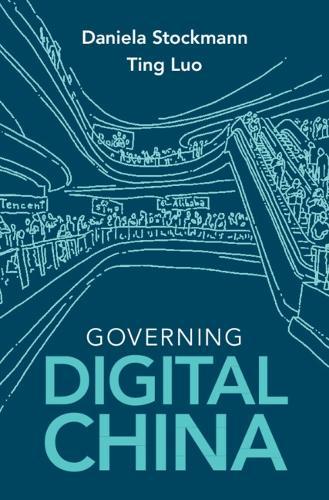
China's approach to digital governance has gained global influence, often evoking Orwellian 'Big Brother' comparisons. Governing Digital China challenges this perception, arguing that China's approach is radically different in practice. This book explores the logic of popular corporatism, highlighting the bottom-up influences of China's largest platform firms and its citizens. Drawing on extensive fieldwork and nationally representative surveys, the authors track governance of social media and commercial social credit ratings during both the Hu Jintao and Xi Jinping eras. Their findings reveal how Chinese tech companies such as Tencent, Sina, Baidu, and Alibaba, have become consultants and insiders to the state, thus forming a state-company partnership. Meanwhile, citizens voluntarily produce data, incentivizing platform firms to cater to their needs and motivating resistance by platforms. Daniela Stockmann and Ting Luo unveil the intricate mechanisms linking the state, platform firms, and citizens in the digital governance of authoritarian states.
Full Product Details
Author: Daniela Stockmann (Hertie School, Berlin) ,
Ting Luo (University of Birmingham)
Publisher: Cambridge University Press
Imprint: Cambridge University Press
Weight: 0.538kg
ISBN: 9781009360654
ISBN 10: 1009360655
Pages: 294
Publication Date: 04 December 2025
Audience:
General/trade
,
General
Format: Hardback
Publisher's Status: Active
Availability: Manufactured on demand

We will order this item for you from a manufactured on demand supplier.
Reviews
'Governing Digital China offers a compelling analytical framework to understand the intricate relationship between the state, platforms, and citizens in shaping digital governance in China. It challenges the conventional account China's top-down policies and develops a novel theory of 'citizen-influenced corporatism' shaping China's platform economy. A fascinating read!' Anu Bradford, Columbia Law School and the author of Digital Empires 'Understanding China's current data policies will be critical to anticipating global trends in the information environment in the years ahead. Stockmann and Luo, two experienced analysts of digital China, give us both the theoretical frame for understanding how the country's model for data management has emerged, and the tools needed to explain the impact of the model on governments, markets, and citizens around the world.' Phil Howard, Oxford Internet Institute and Chair of the International Panel on the Information Environment 'Governing Digital China is a groundbreaking work that illuminates China's digital strategy through extensive research. Stockmann and Luo introduce 'popular corporatism,' a model of state-tech giant collaboration for online control and innovation. Dismantling misconceptions, the authors reveal regional variations and tensions within this nuanced approach. This insightful book stands as the most comprehensive examination of digital China in the past two decades.' Yuhua Wang, Professor of Government at Harvard University
'Governing Digital China offers a compelling analytical framework to understand the intricate relationship between the state, platforms, and citizens in shaping digital governance in China. It challenges the conventional account of China's top-down policies and develops a novel theory of 'popular corporatism' shaping China's platform economy. A fascinating read!' Anu Bradford, Columbia Law School and the author of Digital Empires 'Understanding China's current data policies will be critical to anticipating global trends in the information environment in the years ahead. Stockmann and Luo, two experienced analysts of digital China, give us both the theoretical frame for understanding how the country's model for data management has emerged, and the tools needed to explain the impact of the model on governments, markets, and citizens around the world.' Phil Howard, Oxford Internet Institute and Chair of the International Panel on the Information Environment 'Governing Digital China is a groundbreaking work that illuminates China's digital strategy through extensive research. Stockmann and Luo introduce 'popular corporatism,' a model of state-tech giant collaboration for online control and innovation. Dismantling misconceptions, the authors reveal regional variations and tensions within this nuanced approach. This insightful book stands as the most comprehensive examination of digital China in the past two decades.' Yuhua Wang, Professor of Government at Harvard University
Author Information
Daniela Stockmann is Director of the Centre for Digital Governance and Professor of Digital Governance at the Hertie School. She holds degrees from the University of Michigan, Ann Arbor (PhD 2007), the School of Oriental and African Studies at the University of London, and the University of Rochester. Before joining the Hertie School, she was Associate Professor of Political Science at Leiden University. Her book, Media Commercialization and Authoritarian Rule in China (Cambridge University Press, 2013), received the 2015 Goldsmith Book Prize by the Harvard Kennedy School Shorenstein Center. Beyond her academic work, she has served as advisor on social media governance to policy-makers in the Netherlands, Germany, and the United States. Ting Luo is Associate Professor in Government and Artificial Intelligence at the University of Birmingham. Her research focuses on the intersection of technology and governance, with a particular emphasis on digital and AI governance. Prior to joining the University of Birmingham, Ting was senior lecturer in Political Communication at Manchester Metropolitan University and post-doctoral fellow at the Hertie School in Berlin and Leiden University in the Netherlands. She holds a Ph.D. in government and a Master of Science in public policy and administration from LSE.