Overview
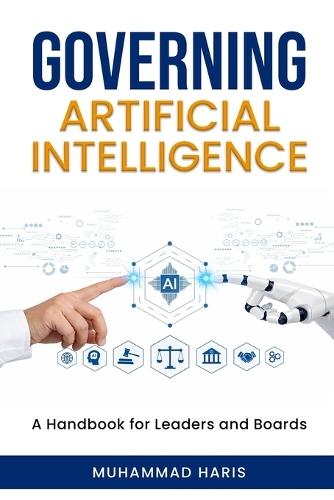
Artificial intelligence has moved far beyond research labs and experimental pilots. Today, it quietly shapes decisions across organisations-prioritising customers, assessing risk, recommending actions, and automating processes at a scale and speed that few leaders fully see.Yet while AI capability has accelerated, governance has struggled to keep up. In many organisations, AI did not arrive through a single strategic decision. It entered gradually-through vendor platforms, analytics tools, workflow automation, and ""smart"" software features introduced to improve efficiency. Over time, these systems began influencing how decisions are made, often without a corresponding shift in oversight, accountability, or leadership awareness. Governing Artificial Intelligence: A Handbook for Leaders and Boards explores this growing gap between technological capability and organisational responsibility. Written for executives, board members, risk professionals, and managers, the book does not assume a technical background. Instead, it focuses on the questions leaders actually face: Where is AI already influencing decisions in our organisation? Who is accountable when automated systems shape outcomes? How do governance models designed for human decision-making adapt to systems that learn from data? What structures, oversight mechanisms, and leadership responsibilities are needed to govern AI responsibly? Rather than focusing on algorithms or coding, the book examines AI through the lens of decision-making, accountability, and governance. It explains how AI systems learn, why they behave differently from traditional software, how bias and opacity emerge, and why automation changes the distribution of authority inside organisations. It then translates these insights into practical governance foundations-structures, accountability models, monitoring practices, and oversight approaches that leaders can apply in real organisational settings. The book also connects these governance principles with major global frameworks and regulatory developments, including ISO/IEC 42001, the NIST AI Risk Management Framework, and the EU AI Act. Ultimately, Governing Artificial Intelligence is not about controlling technology. It is about ensuring that organisations remain accountable for decisions made in an era where machines increasingly influence how those decisions occur. For leaders responsible for risk, trust, and long-term organisational integrity, the challenge is no longer whether AI will shape decisions. The challenge is how to govern it with confidence.
Full Product Details
Author: Muhammad Haris
Publisher: Independently Published
Imprint: Independently Published
Dimensions:
Width: 15.20cm
, Height: 1.00cm
, Length: 22.90cm
Weight: 0.249kg
ISBN: 9798251087529
Pages: 182
Publication Date: 07 March 2026
Audience:
General/trade
,
General
Format: Paperback
Publisher's Status: Active
Availability: Available To Order

We have confirmation that this item is in stock with the supplier. It will be ordered in for you and dispatched immediately.