Overview
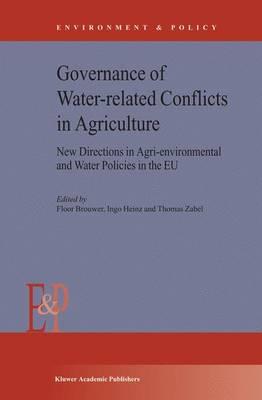
The command-and-control approach has achieved only limited success in controlling diffuse pollution from agriculture. New governance approaches are emerging, which involve voluntary co-operation between the main actors, water suppliers, farmers and public authorities, responsible for the sustainable management of drinking water supplies. This text contributes to a better understanding of the role such co-operation can play in complying cost-effectively with European environmental legislation, in particularly the EU Nitrates and Water Framework Directives, and in achieving a sustainable agriculture. The feasibility of meeting environmental standards by the application of voluntary agreements between farmers and water suppliers is analysed as a more economically efficient and environmentally effective means compared to applying alternative instruments like command-and-control and taxes. In addition, the potential of voluntary co-operative agreements for achieving a more flexible European Union water policy as well as for reforming the Common Agricultural Policy is assessed. The book should be of interest to those researching and working in achieving a more sustainable water management and agricultural practices.
Full Product Details
Author: F.M. Brouwer ,
I. Heinz ,
T. Zabel
Publisher: Kluwer Academic Publishers
Imprint: Kluwer Academic Publishers
Edition: 2003 ed.
Volume: 37
Dimensions:
Width: 21.00cm
, Height: 1.40cm
, Length: 29.70cm
Weight: 1.120kg
ISBN: 9781402015533
ISBN 10: 1402015534
Pages: 222
Publication Date: 30 November 2003
Audience:
College/higher education
,
Professional and scholarly
,
Undergraduate
,
Postgraduate, Research & Scholarly
Format: Hardback
Publisher's Status: Active
Availability: In Print

This item will be ordered in for you from one of our suppliers. Upon receipt, we will promptly dispatch it out to you. For in store availability, please contact us.
Reviews
"From the reviews: ""CAs are voluntary agreements negotiated between farmers and water suppliers … . This is a very empirical and concrete book, providing very useful documentation of the European experience with CAs since the 1990s. … For those working on water and environment issues in other parts of the world, notably the developing world, this book provides interesting insight into how the process of the internalisation of environmental concerns into national, regional and local water policy and practice is happening in Europe."" (Peter P. Mollinga, Quarterly Journal of International Agriculture, Vol. 45 (4), 2006)"
From the reviews: <p> CAs are voluntary agreements negotiated between farmers and water suppliers a ] . This is a very empirical and concrete book, providing very useful documentation of the European experience with CAs since the 1990s. a ] For those working on water and environment issues in other parts of the world, notably the developing world, this book provides interesting insight into how the process of the internalisation of environmental concerns into national, regional and local water policy and practice is happening in Europe. (Peter P. Mollinga, Quarterly Journal of International Agriculture, Vol. 45 (4), 2006)
From the reviews: CAs are voluntary agreements negotiated between farmers and water suppliers ... . This is a very empirical and concrete book, providing very useful documentation of the European experience with CAs since the 1990s. ... For those working on water and environment issues in other parts of the world, notably the developing world, this book provides interesting insight into how the process of the internalisation of environmental concerns into national, regional and local water policy and practice is happening in Europe. (Peter P. Mollinga, Quarterly Journal of International Agriculture, Vol. 45 (4), 2006)
From the reviews: CAs are voluntary agreements negotiated between farmers and water suppliers ... . This is a very empirical and concrete book, providing very useful documentation of the European experience with CAs since the 1990s. ... For those working on water and environment issues in other parts of the world, notably the developing world, this book provides interesting insight into how the process of the internalisation of environmental concerns into national, regional and local water policy and practice is happening in Europe. (Peter P. Mollinga, Quarterly Journal of International Agriculture, Vol. 45 (4), 2006)
From the reviews: CAs are voluntary agreements negotiated between farmers and water suppliers ! . This is a very empirical and concrete book, providing very useful documentation of the European experience with CAs since the 1990s. ! For those working on water and environment issues in other parts of the world, notably the developing world, this book provides interesting insight into how the process of the internalisation of environmental concerns into national, regional and local water policy and practice is happening in Europe. (Peter P. Mollinga, Quarterly Journal of International Agriculture, Vol. 45 (4), 2006)