Overview
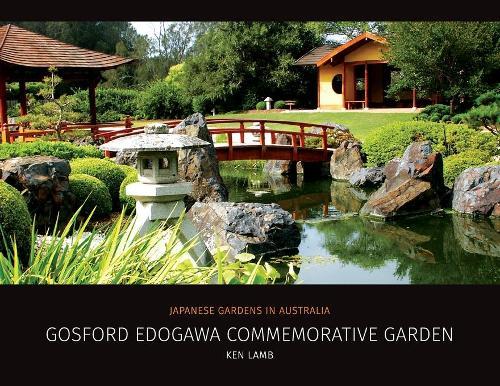
This is a wonderful book that guides you through the amazing Gosford Edogawa garden - internationally regarded as the best example of "" hide and reveal"" of any Japanese garden outside of Japan. Discover the origin of the history of the buildings, travel through centuries of tradition to understand this classic culture, revealed in the garden. This book is a simple and readable introduction to Japanese gardens in Australia!
Full Product Details
Author: Ken Lamb
Publisher: Imperial Gardens Landscape Pty Ltd
Imprint: Imperial Gardens Landscape Pty Ltd
Dimensions:
Width: 27.90cm
, Height: 0.40cm
, Length: 21.60cm
Weight: 0.191kg
ISBN: 9780648955108
ISBN 10: 0648955109
Pages: 52
Publication Date: 09 September 2020
Audience:
General/trade
,
General
Format: Paperback
Publisher's Status: Active
Availability: Available To Order

We have confirmation that this item is in stock with the supplier. It will be ordered in for you and dispatched immediately.
Reviews
Created around the world for a century and a half, Japanese gardens have become a universal form of landscape design that offers sensitive visitors the opportunity to experience nature humanized. These gardens are thoughtfully created and carefully nurtured environments where human creativity does not oppose nature but instead distills its most salubrious characteristics. I should say the best Japanese gardens have these compelling qualities and allow such enchanting experiences. Like most subtle and complex things, Japanese gardens are hard to do well. They require skillful design and even more sensitive fostering (as living things gardens cannot be simply 'maintained'). Outside Japan, Japanese gardens are too often shallow imitations or hollow copies. Created to commemorate political relationships, demonstrate multi-culturalism or simply as exotica, they frequently are a pastiche of cliched forms: gaudy red bridges, cheap concrete lanterns, haphazardly arranged stones and overgrown plants. Australians are fortunate to have a handful of landscapes designed by some of Japan's best modern garden makers: Ken Nakajima's remarkable garden in Cowra, Kinsaku Nakane's impressive Jurakuen in Toowoomba, Shiro Nakane's subtle garden at the Melbourne Zoo, and Kenzo Ogata's elegant design in Brisbane. Added to these notable locales is the Edogawa Garden in Gosford designed by Ken Lamb. As evident in the pictures and text that follows, the garden's success is founded on Lamb's sensitive eye, his knowledge of fields from adaptive horticulture to vandalism mitigation, and his commitment to growing the garden through continual care-a kind of soft creation that takes place week by week, decades after the garden was finished. As enticing as are these photos and words, they should be considered as a document of the garden's basic facts and an invitation to visit for an experience not remotely replicated in print. I have twice visited the Gosford Edogawa Commemorative Garden, 7,500 miles from my home in Los Angeles. What matters the whole Pacific Ocean when one can enter a garden where time and space begin to slip away. Dr. Kendall H. Brown Author of Visionary Landscapes: Japanese Garden Design in North America, The Work of Five Contemporary Masters and Quiet Beauty: The Japanese Gardens of North America.
Created around the world for a century and a half, Japanese gardens have become a universal form of landscape design that offers sensitive visitors the opportunity to experience nature humanized. These gardens are thoughtfully created and carefully nurtured environments where human creativity does not oppose nature but instead distills its most salubrious characteristics. I should say the best Japanese gardens have these compelling qualities and allow such enchanting experiences. Like most subtle and complex things, Japanese gardens are hard to do well. They require skillful design and even more sensitive fostering (as living things gardens cannot be simply 'maintained'). Outside Japan, Japanese gardens are too often shallow imitations or hollow copies. Created to commemorate political relationships, demonstrate multi-culturalism or simply as exotica, they frequently are a pastiche of cliched forms: gaudy red bridges, cheap concrete lanterns, haphazardly arranged stones and overgrown plants. Australians are fortunate to have a handful of landscapes designed by some of Japan's best modern garden makers: Ken Nakajima's remarkable garden in Cowra, Kinsaku Nakane's impressive Jurakuen in Toowoomba, Shiro Nakane's subtle garden at the Melbourne Zoo, and Kenzo Ogata's elegant design in Brisbane. Added to these notable locales is the Edogawa Garden in Gosford designed by Ken Lamb. As evident in the pictures and text that follows, the garden's success is founded on Lamb's sensitive eye, his knowledge of fields from adaptive horticulture to vandalism mitigation, and his commitment to growing the garden through continual care-a kind of ""soft creation"" that takes place week by week, decades after the garden was ""finished."" As enticing as are these photos and words, they should be considered as a document of the garden's basic facts and an invitation to visit for an experience not remotely replicated in print. I have twice visited the Gosford Edogawa Commemorative Garden, 7,500 miles from my home in Los Angeles. What matters the whole Pacific Ocean when one can enter a garden where time and space begin to slip away. Dr. Kendall H. Brown Author of Visionary Landscapes: Japanese Garden Design in North America, The Work of Five Contemporary Masters and Quiet Beauty: The Japanese Gardens of North America.
Author Information
Ken Lamb has a Bachelor of Fine Arts from the University of New South Wales. He specialised in modern landscape painting and abstract steel sculpture with a special interest in oriental aesthetics, Japanese sumi-e and traditional Chinese landscape ink paintings of the Sung dynasty. Ken began reading Zen at the age of 18, which led to the exploration of the history and philosophy of the Buddhist, Taoist and Confucian traditions in China and Japan. He has continued sumi-e Japanese ink painting for 40 years. After practising as an artist for ten years, having successful one man shows in Sydney and Colombo, Sri Lanka, he embarked on the journey of discovery of Japanese gardens. With the help of friends and a mentor and within only two years he had established Japanese Style Landscapes in Sydney. In 1984 this became Imperial Gardens Landscape Pty Limited, which quickly became Australia's leading landscape company specialising in oriental gardens. In Ken's words ""there has always been a close connection between landscape painting and garden design and construction in Japan. Many renowned gardeners were also painters. It was my greatest delight to realise that, when I began landscaping, I already knew the design aesthetics of oriental gardens as they are identical to landscape painting. The placement of rocks, trees, pathways and waterfalls and the respect for open space is the same."" Ken became an inaugural director and board member of the International Association of Japanese Gardens in 1998 and the printing of this book coincided with him hosting the 7th International Symposium of Japanese Gardens in Sydney and Gosford in September 2012.