Overview
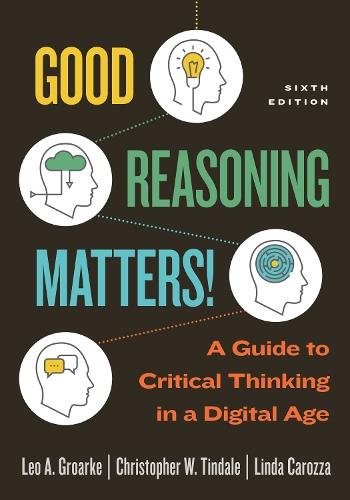
Good Reasoning Matters! teaches students how to decipher, evaluate, analyze, construct, and engage in argument. This sixth edition incorporates many timely topics, including the impact of artificial intelligence and social media on how we propose and respond to arguments. The instruction in the book is rooted in traditional philosophical understandings of argument, but is expanded to account for the complexities that characterize real-life arguments. This includes an examination of the role that images, sounds, and other non-verbal components play in attempts to convince us of some point of view—in advertising, television, YouTube, film, interpersonal exchange, and elsewhere. Numerous and varied exercises—formative within the chapters and summative at their end—help students improve their reading, reasoning, and writing skills. Instructors will find the text is informed by research in digital pedagogy and works well in a variety of course formats: in-person, remote, hybrid, and synchronous or asynchronous delivery. The authors’ expertise in argumentation theory and decades of teaching experience ensure that this book prepares students for the complexities of arguing in the 21st century.
Full Product Details
Author: Leo Groarke ,
Christopher W. Tindale ,
Linda Carozza
Publisher: Broadview Press Ltd
Imprint: Broadview Press Ltd
Dimensions:
Width: 17.80cm
, Height: 2.20cm
, Length: 22.90cm
Weight: 1.035kg
ISBN: 9781554816842
ISBN 10: 155481684
Pages: 520
Publication Date: 14 October 2025
Audience:
College/higher education
,
Tertiary & Higher Education
Format: Paperback
Publisher's Status: Active
Availability: In Print

This item will be ordered in for you from one of our suppliers. Upon receipt, we will promptly dispatch it out to you. For in store availability, please contact us.
Reviews
“This is the book I wish we’d used in my undergraduate critical thinking class! It provides a comprehensive overview of reasoning skills and argument, along with a wealth of examples taken from social media, the internet, newspapers, magazines, and philosophy. More than any other text, it’s up to date on developments in informal logic and the study of argumentation, addressing an impressive array of related topics. It includes unique discussions of arguments and audiences, argumentation schemes, emotional arguments, and the use of images and multimedia in arguing. The graduated exercises will leave students well prepared for further studies in logic, philosophy, communications, rhetoric, and any other subject. I highly recommend the sixth edition of Good Reasoning Matters! ” — David Godden, Michigan State University “The sixth edition of Good Reasoning Matters! is a clear leader among critical reasoning textbooks. Written by experts in argumentation theory, informal logic, and mediation, this edition blends cutting-edge instruction on the fundamentals of reasoning with highly relevant new content on deep disagreement, reasoning and artificial intelligence, non-linguistic modes of argument, and alternative dispute resolution. Additionally, Good Reasoning Matters! offers a rich selection of contemporary examples and well-designed exercises to help students gain the skills they need to thrive as reasoners. All-round, a terrific text!” — Moira Howes, Trent University “This updated and streamlined sixth edition of a tried-and-tested critical thinking textbook will be enthusiastically welcomed by students and instructors alike. It follows a clear progression of concept and skill development through each chapter and includes many new exercises that apply the ideas and techniques under discussion. I look forward to using this book in my own teaching.” — Paul Simard Smith, University of Regina
Author Information
Leo Groarke is Professor of Philosophy at Trent University. Christopher W. Tindale is Professor of Philosophy at the University of Windsor. Linda Carozza is an instructor at York University.