Overview
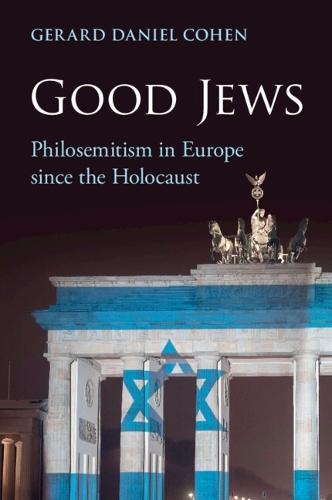
The Holocaust is now widely recognized as a central event in twentieth-century Europe. But how did the genocide of the Jews affect European attitudes towards Jews, Judaism and Jewishness after 1945? While many histories of antisemitism exist, Good Jews offers an investigation of philosemitism – defined as a politics of post-Holocaust friendship. Gerard Daniel Cohen presents a critical exploration of the languages of philosemitism in mainstream European politics and culture from 1945 to the present day, with particular emphasis on Germany and France. Within this framework Cohen explores how the 'Jewish question', or the problem of Jewish difference and incorporation in Western countries during the postwar decades, has been distinctively foregrounded in the language of philosemitism. Ultimately, Good Jews demonstrates that philosemitic Europe is not an idealised love story, but a reflection of European attitudes towards Jews from the Holocaust to the present.
Full Product Details
Author: Gerard Daniel Cohen (Rice University, Houston)
Publisher: Cambridge University Press
Imprint: Cambridge University Press
ISBN: 9781009370899
ISBN 10: 1009370898
Pages: 296
Publication Date: 07 August 2025
Audience:
College/higher education
,
Postgraduate, Research & Scholarly
Format: Paperback
Publisher's Status: Active
Availability: Manufactured on demand

We will order this item for you from a manufactured on demand supplier.
Reviews
'G. Daniel Cohen shows that Europeans answered their 'Jewish Question' after the Holocaust in different versions of Philosemitism: an always revocable promise of national membership. With the majority of European populations opposing Israel's military campaigns while their governments largely support them, rarely has there been a more timely book. A must read.' A. Dirk Moses, author of The Problems of Genocide 'Cohen's landmark study offers a fresh examination of discourses of philosemitism and antisemitism across Europe in the decades from the Holocaust into the 21st Century. As Cohen traces the evolution of non-Jews' ideas about Jews, he reveals the tangled relationships between philosemitism, philo-Zionism, anti-colonialism and Islamophobia.' Alyssa Sepinwall, author of Slave Revolt on Screen 'This first comprehensive analysis of European attitudes of toward Jews deftly explains why widespread prewar antisemitic sentiments transformed after the Holocaust into philosemitism, anti-antisemitism, and growing support for Israel. A crucial and timely contribution at a time of controversy over the uses and abuses of antisemitism and anti-Zionism.' Omer Bartov, author of Genocide, the Holocaust and Israel-Palestine: First-Person History in Times of Crisis
Author Information
Gerard Daniel Cohen is the Samuel W. & Goldye Marian Spain Associate Professor of Modern European History and Jewish Studies at Rice University. He specializes in the history of forced displacement after 1945, humanitarianism, and philosemitism in European thought and politics since the Holocaust.