Awards
- Junior Library Guild Selection
- New York Public Library Best Books for Teens
- SCBWI Golden Kite Award Finalist
Overview
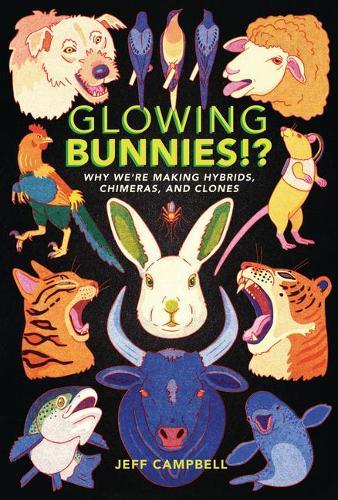
Our brave new world is here. With modern genetic technologies, science fiction's ""what if?"" has become the scientist's ""why not?"" Bioengineering has the potential to remake animals in almost any way we can imagine, and it's being used to solve a range of urgent global problems, including climate change, species extinctions, the destruction of natural habitats, and human health issues. But just because we can do all these things, does that mean we should? In the pages of Glowing Bunnies!? you will encounter some of the strange and wonderful genetically modified animals of tomorrow. Learn why scientists are going to such lengths to mess with genes and what the ethical and health-related consequences might be. By understanding both the science and the stakes, you too can judge the potential of this budding science to save—or ruin—the world. Presented as a compendium of existing and proposed creatures, this book describes the animals being created, the scientific techniques involved, and each animal's purpose. Additionally, it addresses bioethics, unintended consequences, and animal welfare.
Full Product Details
Author: Jeff Campbell
Publisher: Lerner Publishing Group
Imprint: Lerner Publishing Group
Dimensions:
Width: 15.90cm
, Height: 1.20cm
, Length: 23.50cm
Weight: 0.449kg
ISBN: 9781541599307
ISBN 10: 1541599306
Pages: 208
Publication Date: 03 May 2022
Recommended Age: From 11 to 12 years
Audience:
Young adult
,
Primary & secondary/elementary & high school
,
Teenage / Young adult
,
Educational: Primary & Secondary
Format: Paperback
Publisher's Status: Active
Availability: Available To Order

We have confirmation that this item is in stock with the supplier. It will be ordered in for you and dispatched immediately.
Reviews
New tools have opened new avenues to genetic engineering of animals, living and dead. Is this a good idea? This engaging introduction invites readers to form their own conclusions about the new world of genetic modifications. An opening essay provides an overview of the book's structure, relatively simple explanations of how the process of genetic change works and new gene-editing technology, and some questions to consider about projects of this sort: Are they practical and effective? Are they socially and morally acceptable? Will genetic changes harm the animal (or other animals) in any way? In subsequent sections, further divided into short chapters, Campbell describes projects connected to animal conservation, the restoration of extinct animals and damaged ecosystems, our food, our pets, and our own health and medicine. Each major section is followed by a spread on a specific topic: genetic engineering, cryobanking, synthetic biology, and efforts to improve humans. The conversational text is comfortably accessible, broken up with frequent topic headings and photographs and enhanced by the colorful design. The examples--from ligers and tigons in zoos to the titular glowing bunnies created in a French lab and pigs for human organ transplants--are intriguing. The writer's emphasis on animal welfare will resonate with his audience, and there is extensive backmatter for readers interested in going further. A controversial subject presented with verve that allows readers to make up their own minds.--Kirkus Reviews -- Journal (3/1/2022 12:00:00 AM)
A chickenosaurus hatches, a liger stalks prey, and a cyborg rat zips through mazes in Campbell's (Last of the Giants) unique look at animal bioengineering. An opening essay explains how genetic modification works, and explores questions concerning contemporary society's interpretations of the science. In short, colorfully designed chapters accompanied by photos, the narrative delves into myriad accounts detailing genetic experiments, such as bringing back the extinct woolly mammoth to aid in the Siberian grasslands' environmental rehabilitation and cultivation, and engineering lab-grown meats to feed a booming world population. Each section is followed by a brief spread on various fledgling experiments within the bioengineering space, including improving human bodies using genetic modification and 'biohacking' single-celled organisms to create fuel. Campbell's intriguing, easily digestible foray into animal gene editing, its effects on present and future scientific climates, and its contemplation on whether these practices are ethically responsible, practical, or inherently harmful proves thought-provoking. This enlightening work encourages readers to ask questions and conduct their own research, while maintaining that science continues evolving and changing faster than one can blink. Back matter includes an author's note, glossary, and more. --Publishers Weekly -- Journal (6/27/2022 12:00:00 AM) Ligers (the product of a lion and tiger mating), aurochs resurrected from extinction, self-destructing mosquitoes, spider goats, and, yes, glowing bunnies are no longer fodder for science fiction but are genetically engineered animals already in the works. Rather than simply explain the science of genetically engineered animals, Campbell uses a variety of projects and scenarios to get readers to consider whether scientists should genetically engineer animals. Divided into five parts, this fascinating, detailed text focuses on how genetic engineering could help animal conservation and the extinction crisis, restore damaged ecosystems, make agriculture more efficient and less polluting, create unusual and useful pets, and fight or eliminate disease in both animals and humans. As Campbell takes readers through different cases, such as bringing back the woolly mammoth to restore the steppe in the Arctic or modifying pig hearts to use as transplants in humans, he presents safety and ethical pros and cons, raises legal considerations, and asks guided questions but ultimately allows readers to decide for themselves. Periodic photos of already modified animals further enhance this high-interest, debatable topic. --Booklist -- Journal (5/1/2022 12:00:00 AM) New tools have opened new avenues to genetic engineering of animals, living and dead. Is this a good idea? This engaging introduction invites readers to form their own conclusions about the new world of genetic modifications. An opening essay provides an overview of the book's structure, relatively simple explanations of how the process of genetic change works and new gene-editing technology, and some questions to consider about projects of this sort: Are they practical and effective? Are they socially and morally acceptable? Will genetic changes harm the animal (or other animals) in any way? In subsequent sections, further divided into short chapters, Campbell describes projects connected to animal conservation, the restoration of extinct animals and damaged ecosystems, our food, our pets, and our own health and medicine. Each major section is followed by a spread on a specific topic: genetic engineering, cryobanking, synthetic biology, and efforts to improve humans. The conversational text is comfortably accessible, broken up with frequent topic headings and photographs and enhanced by the colorful design. The examples--from ligers and tigons in zoos to the titular glowing bunnies created in a French lab and pigs for human organ transplants--are intriguing. The writer's emphasis on animal welfare will resonate with his audience, and there is extensive backmatter for readers interested in going further. A controversial subject presented with verve that allows readers to make up their own minds. --Kirkus Reviews -- Journal (3/1/2022 12:00:00 AM) This book provides an excellent introduction to genetic engineering for younger readers. Five sections address the complicated issue from a variety of perspectives: crossbreeding to save endangered animals; using genetics to 'resurrect' extinct animals; cloning; breeding animals selectively to create designer pets; and using gene therapy for medicinal purposes. The author provides a balanced view of these scientific advances, paying careful attention to highlight their benefits and potential drawbacks. For example, while it's wonderful that we can save endangered species, discover solutions to human illnesses and diseases, and create nonallergenic pets, what are the downsides? Should society support these efforts just because the opportunity exists? Probing questions such as these are peppered throughout, reminding readers of the ethical conundrums. The book is written in a friendly, age-appropriate style with genetic engineering terms and procedures well defined. Young readers will enjoy popular culture references to Jurassic Park and Frankenstein that make the complicated subject matter more relatable. Colorful captioned photographs and larger font headings balance the text in each chapter. The work also aids future reading and reference with an extensive bibliography, source notes, and glossary. VERDICT Libraries looking to update their science collections for middle grade students will want to consider this nicely packaged publication, keeping in mind that with rapid changes in technology, it may soon be supplanted by newer works. --School Library Journal -- Journal (9/1/2022 12:00:00 AM) What do glowing bunnies, a chickenosaurus, and a liger all have in common? They are all real creatures resulting from humans trying to unlock the secrets of DNA and genetic modifications. Campbell introduces readers to a number of ways that humans are manipulating genetics, from inter species mating to attempting to bring back (or re-create) a chicken size dinosaur. His clear prose makes the highly technical subjects understandable. Additionally, his focus is less on how humans do this and more on why, encouraging readers to think about both intended and unintended consequences of playing with nature. Just because we CAN do something, Campbell suggests, doesn't mean we SHOULD. But, Campbell's book isn't simply an argument against genetic modification. In fact, he frequently points out he benefits to humans and the environment, while decrying fearmongering. Instead, he encourages readers to thoughtfully consider the reasons and possible consequences--for both humans and animals--for manipulating these complex systems. Back matter such as a glossary, resources, and index make this an excellent tool for research. Give this to students looking working on reports or just curious about current science research. Reviewer Rating 4 -Children's Literature -- Website (10/10/2022 12:00:00 AM)
Ligers (the product of a lion and tiger mating), aurochs resurrected from extinction, self-destructing mosquitoes, spider goats, and, yes, glowing bunnies are no longer fodder for science fiction but are genetically engineered animals already in the works. Rather than simply explain the science of genetically engineered animals, Campbell uses a variety of projects and scenarios to get readers to consider whether scientists should genetically engineer animals. Divided into five parts, this fascinating, detailed text focuses on how genetic engineering could help animal conservation and the extinction crisis, restore damaged ecosystems, make agriculture more efficient and less polluting, create unusual and useful pets, and fight or eliminate disease in both animals and humans. As Campbell takes readers through different cases, such as bringing back the woolly mammoth to restore the steppe in the Arctic or modifying pig hearts to use as transplants in humans, he presents safety and ethical pros and cons, raises legal considerations, and asks guided questions but ultimately allows readers to decide for themselves. Periodic photos of already modified animals further enhance this high-interest, debatable topic.--Booklist -- Journal (5/1/2022 12:00:00 AM) New tools have opened new avenues to genetic engineering of animals, living and dead. Is this a good idea? This engaging introduction invites readers to form their own conclusions about the new world of genetic modifications. An opening essay provides an overview of the book's structure, relatively simple explanations of how the process of genetic change works and new gene-editing technology, and some questions to consider about projects of this sort: Are they practical and effective? Are they socially and morally acceptable? Will genetic changes harm the animal (or other animals) in any way? In subsequent sections, further divided into short chapters, Campbell describes projects connected to animal conservation, the restoration of extinct animals and damaged ecosystems, our food, our pets, and our own health and medicine. Each major section is followed by a spread on a specific topic: genetic engineering, cryobanking, synthetic biology, and efforts to improve humans. The conversational text is comfortably accessible, broken up with frequent topic headings and photographs and enhanced by the colorful design. The examples--from ligers and tigons in zoos to the titular glowing bunnies created in a French lab and pigs for human organ transplants--are intriguing. The writer's emphasis on animal welfare will resonate with his audience, and there is extensive backmatter for readers interested in going further. A controversial subject presented with verve that allows readers to make up their own minds.--Kirkus Reviews -- Journal (3/1/2022 12:00:00 AM)
Author Information
Jeff Campbell has published two previous young adult books about animals: Daisy to the Rescue (a 2015 IPPY gold medal winner), about animals saving human lives and the science of animal intelligence; and Last of the Giants (a 2016 Junior Library Guild selection), about conservation and our current extinction crisis. For twelve years, Jeff was an award-winning travel writer for Lonely Planet, and he's also a book editor and creative writing teacher. He is based in Morristown, New Jersey.