Overview
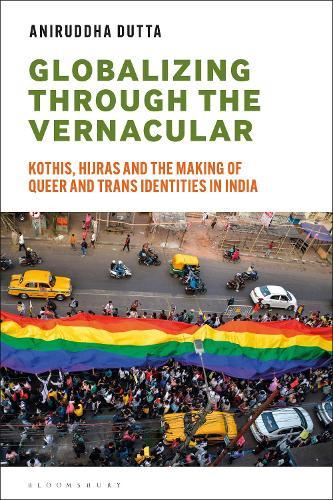
Globalizing through the Vernacular analyzes the relation between dominant frameworks of LGBTQ+ identity in India and non-elite, non-metropolitan communities such as kothis and hijras, a spectrum of feminine-identified people usually assigned male at birth. Going beyond the well-known ‘third gender’ hijra community, this is the first book to study the discourses and practices of related but underrepresented groups like kothis and dhuranis in small-town and rural India while simultaneously examining their relation to and role within LGBTQ+ identity politics. Based on long-term ethnographic fieldwork, the book demonstrates that non-elite groups facilitate the transregional expansion of organized queer politics and become more consolidated as gender/sexual identities in the process. Yet, they often remain irreducible to emerging identity categories and become subordinated through hierarchies of scale and language that serve to contain such communities and related discourses as local and vernacular. The book shows how this process, in effect, denies them an equal role in transnational LGBT politics; reinforces class/caste hierarchies within and beyond queer communities; and delegitimizes or erases articulations of gender/sexual difference that contravene dominant understandings of gender/sexual identity aligned with transnational capitalism, liberalism, or nationalism. Simultaneously, it reveals how non-elite communities rearticulate dominant identity categories in more equal, liberatory ways.
Full Product Details
Author: Aniruddha Dutta (University of Iowa, USA)
Publisher: Bloomsbury Publishing PLC
Imprint: Bloomsbury Academic
Dimensions:
Width: 15.50cm
, Height: 2.00cm
, Length: 23.40cm
Weight: 0.540kg
ISBN: 9781350382770
ISBN 10: 1350382779
Pages: 256
Publication Date: 09 January 2025
Audience:
Professional and scholarly
,
Professional & Vocational
Format: Hardback
Publisher's Status: Active
Availability: Manufactured on demand

We will order this item for you from a manufactured on demand supplier.
Reviews
Aniruddha Dutta’s book based on several years of painstaking fieldwork is a theoretically strong and empirically rich work analysing non elite and non-metropolitan LGBT communities and identities in India. It excellently provides a critical counter narrative to the globalising discourse around queer identities and rights in neoliberal India. * Rohit K. Dasgupta, London School of Economics & Political Science, UK * A paradigm-shifting, timely, and long overdue study. Recasting the analytical purchase of vernacularization, Dutta issues a major intervention in debates around scalar, linguistic, and epistemic hierarchies. By bridging vertical and horizontal traffics of transness, Globalizing through the Vernacular refutes a romanticized idea of cultural authenticity as much as the unidirectional burden of globalization. This book, replete with compelling ethnographic insights, constitutes a major blow to (queer) theory’s stubborn unwillingness to register the power of geopolitical fault lines. * Howard Chiang, author of Transtopia in the Sinophone Pacific *
Aniruddha Dutta’s book based on several years of painstaking fieldwork is a theoretically strong and empirically rich work analysing non elite and non-metropolitan LGBT communities and identities in India. It excellently provides a critical counter narrative to the globalising discourse around queer identities and rights in neoliberal India. * Rohit K. Dasgupta, London School of Economics & Political Science, UK *
Author Information
Aniruddha Dutta is Associate Professor at University of Iowa, USA. Their essays on gender and sexual politics in India have appeared in journals such as Transgender Studies Quarterly, QED: A Journal in GLBTQ Worldmaking, International Feminist Journal of Politics, and Gender and History.