Overview
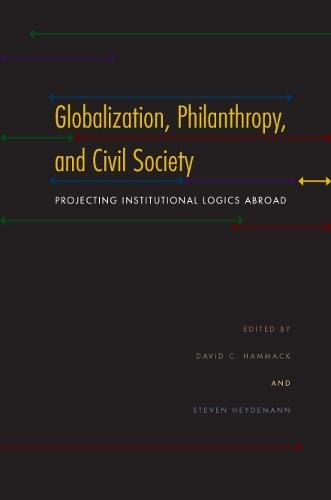
The essays in this book reflect pioneering efforts to study the global movement of ideas and institutions. They deal with topics of significant contemporary importance: initiatives to address the AIDS epidemic in East Africa; to protect the peoples and ecosystems of the Amazon; to advance the ""truth and reconciliation"" process in South Africa and in other areas of great conflict; to promote ""civil society"" in Eastern Europe and Central Asia; to advocate for environmental protection in the United States, Great Britain, Germany, and Japan; and to spread Rotary Clubs and encourage ""social entrepreneurship"" throughout the world. These essays highlight a wide range of research, paying close attention to the realities of particular situations and to current thinking about general processes.
Full Product Details
Author: David C. Hammack ,
Steven Heydemann
Publisher: Indiana University Press
Imprint: Indiana University Press
Dimensions:
Width: 15.60cm
, Height: 2.50cm
, Length: 23.50cm
Weight: 0.612kg
ISBN: 9780253353030
ISBN 10: 0253353033
Pages: 320
Publication Date: 22 June 2009
Audience:
College/higher education
,
Postgraduate, Research & Scholarly
Format: Hardback
Publisher's Status: Active
Availability: In Print

This item will be ordered in for you from one of our suppliers. Upon receipt, we will promptly dispatch it out to you. For in store availability, please contact us.
Reviews
Hammack and Heydemann are filling an important gap in the literature on philanthropy, with a book that goes beyond the usual generalizations about the imposition of Western models backed by economic power or the celebration of global activism and its seamless-and disincarnated-networks of activists. The book offers important insights into the working of globalization, thanks to careful studies of institutional logics. -Nicolas Guilhot, London School of Economics This book aims to demonstrate the value of social scientific studies of philanthropy. It tackles its specific task of studying efforts to spread ideas and practices by means of the donation of money, goods, human action and ideas through the movement of models for the organisation of such activities as medical care, education, advocacy, social improvement and cultural expression... [T]he topic is important. -Philanthropy UK Newsletter [The book does not] treat 'Western' as synonymous with 'American,' as is evident in Sandra Moog's analysis of U.S. and German approaches to protecting the Amazon rain forest. It does, however, offer diverse perspectives on topics ranging from attempts to import South Africa's Truth and Reconciliation Commission as a model for transitional justice to the advocacy strategies of Greenpeace and Friends of the Earth in four different countries.Informative and provocative? Yes. -Kyoko Uchida, Foundation Center, Philanthropy News Digest (online), Oct. 20, 2009 According to a new controversial academic book entitled Globalization, Philanthropy, and Civil Society... US foundations funding overseas are an element of American 'soft power,' projecting the governments interests overseas and remaking the world in America's image. The book's editors, David C. Hammack of Case Western Reserve University and Steven Heydemann of the United States Institute for Peace, argue in the introduction that foundations project their ideas and operating practices to create a 'Western grant economy,' but access to material, professional and 'reputational' resources are contingent on the extent to which local nonprofits assimilate the norms, practices and procedures of their Western counterparts. -The Peacemaker [These] essays reflect a wide range of individual research effort, rather than an attempt to evaluate a single approach. They give close attention to the realities of particular situations while at the same time highlighting the best current thinking about general processes. -Abstracts of Public Administration, Development, and Environment This book raises key theoretical questions for the field of nonprofit and philanthropic studies and offers insightful case studies that attempt to deal with those questions. It is suitable for graduate-level courses oriented toward educating new scholars. -Nonprofit and Voluntary Sector Quarterly [A] timely and important contribution to understanding the role of nonprofits and foundations in globalization... It deserves careful attention by anyone interested in the globalization and civil society. -Social Service Review [E]ditors David Hammack and Steven Heydemann have assembled an impressive collection of essays focused on organizational philanthropy in cross-national perspective. -Contemporary Sociology
Hammack and Heydemann are filling an important gap in the literature on philanthropy, with a book that goes beyond the usual generalizations about the imposition of Western models backed by economic power or the celebration of global activism and its seamless-and disincarnated-networks of activists. The book offers important insights into the working of globalization, thanks to careful studies of institutional logics. -Nicolas Guilhot, London School of Economics This book aims to demonstrate the value of social scientific studies of philanthropy. It tackles its specific task of studying efforts to spread ideas and practices by means of the donation of money, goods, human action and ideas through the movement of models for the organisation of such activities as medical care, education, advocacy, social improvement and cultural expression... [T]he topic is important. -Philanthropy UK Newsletter [The book does not] treat 'Western' as synonymous with 'American,' as is evident in Sandra Moog's analysis of U.S. and German approaches to protecting the Amazon rain forest. It does, however, offer diverse perspectives on topics ranging from attempts to import South Africa's Truth and Reconciliation Commission as a model for transitional justice to the advocacy strategies of Greenpeace and Friends of the Earth in four different countries. Informative and provocative? Yes. -Kyoko Uchida, Foundation Center, Philanthropy News Digest (online), Oct. 20, 2009 According to a new controversial academic book entitled Globalization, Philanthropy, and Civil Society... US foundations funding overseas are an element of American 'soft power,' projecting the governments interests overseas and remaking the world in America's image. The book's editors, David C. Hammack of Case Western Reserve University and Steven Heydemann of the United States Institute for Peace, argue in the introduction that foundations project their ideas and operating practices to create a 'Western grant economy,' but access to material, professional and 'reputational' resources are contingent on the extent to which local nonprofits assimilate the norms, practices and procedures of their Western counterparts. -The Peacemaker [These] essays reflect a wide range of individual research effort, rather than an attempt to evaluate a single approach. They give close attention to the realities of particular situations while at the same time highlighting the best current thinking about general processes. -Abstracts of Public Administration, Development, and Environment This book raises key theoretical questions for the field of nonprofit and philanthropic studies and offers insightful case studies that attempt to deal with those questions. It is suitable for graduate-level courses oriented toward educating new scholars. -Nonprofit and Voluntary Sector Quarterly [A] timely and important contribution to understanding the role of nonprofits and foundations in globalization... It deserves careful attention by anyone interested in the globalization and civil society. -Social Service Review [E]ditors David Hammack and Steven Heydemann have assembled an impressive collection of essays focused on organizational philanthropy in cross-national perspective. -Contemporary Sociology
Hammack and Heydemann are filling an important gap in the literature on philanthropy, with a book that goes beyond the usual generalizations about the imposition of Western models backed by economic power or the celebration of global activism and its seamless - and disincarnated - networks of activists. The book offers important insights into the working of globalization, thanks to careful studies of institutional logics. Nicolas Guilhot, London School of Economics
Author Information
David C. Hammack is Hiram C. Haydn Professor of History at Case Western Reserve University. He is editor of Making the Nonprofit Sector in the United States: A Reader (IUP, 1998). Steven Heydemann is Vice President of the Grants and Fellowship Program at the U.S. Institute for Peace, and Adjunct and Research Associate Professor in the Center for Contemporary Arab Studies at Georgetown University. He is author of Authoritarianism in Syria: Institutions and Social Conflict, 1946–1970.