|
|
|||
|
||||
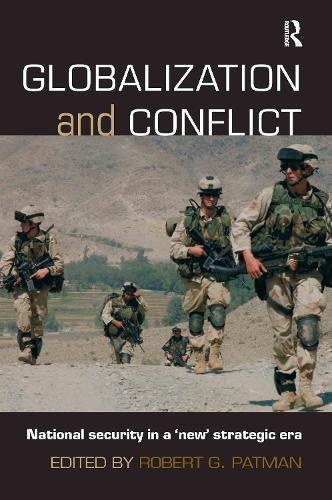
OverviewThe conventional wisdom since the suicide attacks of September 11 is that the world will never be the same again. According to President George W. Bush, ""September 11 changed the strategic thinking"" of the US. But despite proclaiming a ""new war"" against terrorism, it is not clear that the US, the world's only superpower, has fundamentally changed its thinking on international security. A Cold War phenomenon known as the national security state, in which defence and foreign policy interests essentially merged, remains largely intact. Indeed, the ideas of global primacy and pre-emptive war, articulated in President Bush's new National Security strategy of September 2002, have reinvigorated and extended the idea of the national security state.However, President Bush's distinctively national approach to security, especially with respect to Iraq, does not sit comfortably with the broader requirement that international problems like terrorism need multilateral responses to be effective. This book examines the changing parameters of the national security state. Key themes are: globalization and the new security environment; the political economy of internal conflicts; specific security challenges of the contemporary period; and the instrumentalities of managing the 'new conflicts'. Full Product DetailsAuthor: Robert G. PatmanPublisher: Taylor & Francis Ltd Imprint: Routledge Edition: New edition Volume: v. 10 Dimensions: Width: 15.60cm , Height: 1.70cm , Length: 23.40cm Weight: 0.430kg ISBN: 9780415359887ISBN 10: 0415359880 Pages: 288 Publication Date: 06 July 2006 Audience: College/higher education , Professional and scholarly , Tertiary & Higher Education , Professional & Vocational Format: Paperback Publisher's Status: Active Availability: In Print This item will be ordered in for you from one of our suppliers. Upon receipt, we will promptly dispatch it out to you. For in store availability, please contact us. Table of Contents"1. Introduction: Globalization, the End of the Cold War and the Doctrine of National Security ""Robert G. Patman"" Part 1: Globalization and the New Security Environment 2. The Concept of Security in a Globalizing World ""Steve Smith"" 3. Globalization and Violent Political Dissent in Developing Countries ""Philip Nel"" Part 2: Challenges of 'The Unipolar Moment' 4. Globalization, American Exceptionalism and Security James ""Gibney "" 5. The Impact of the 'Vietnam Syndrome' on US Foreign Policy in a Post-Cold War World ""David A. Welch"" 6. Afghanistan, the 'War on Terror', and the Continuing Quest for Security ""Najibullah Lafraie"" Part 3: New Conflicts in the Post-Cold War Era 7. Russia, America and the New Conflicts in Central Asia ""Rouben Azizian"" 8. Globalization and the 'New Wars': The Case of Chechnya ""Jim Headley"" 9. Globalization, Power and Reform in the Middle East: Arab Responses to September 11 and its Aftermath ""Leanne Piggott"" 10. Humanitarian Intervention in East Timor: Some Ingredients for Building Sustainable Security? ""Anthony Hayward"" Part 4: Managing the New Security Environment 11. Globalization, Peace Operations and the New Wars of the 1990s: Operational Challenges and Lessons Learned ""Peter Viggo Jakobsen"" 12. The Requirements for Effective Military Intervention ""Rupert Smith"" 13. Managing Civil Conflicts in Eastern Africa ""Gilbert Khadiagala"" 14. Conclusion: The Future of National Security ""Robert Ayson ""Index"ReviewsAuthor InformationRobert G. Patman Tab Content 6Author Website:Countries AvailableAll regions |
||||