Overview
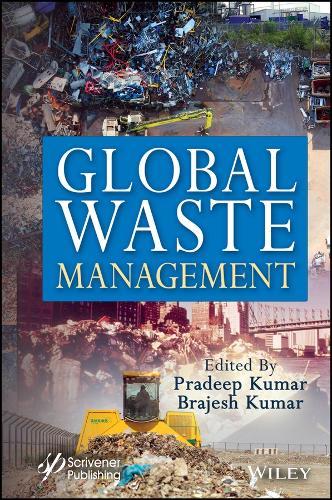
Global Waste Management raises awareness among readers about industrial application-based problems by encouraging self-evaluation and verification processes related to waste creation and its minimization. While other books discuss the “Do’s and Don’ts” of waste-related issues, our aim is to inspire readers to brainstorm solutions by providing appropriate data integrated with human values. This outstanding new volume highlights the relationship between human activities and their effects on ecology and the environment in the form of waste, including e-waste, industrial waste, radioactive waste (generated during medical treatment and diagnosis, the refining of radioactive materials, operations of nuclear power plants, and through weapons of mass destruction), and micro- and macro-plastic waste. Specifically targeting higher education levels—those teaching, studying, or conducting research on waste generated through various sources—this volume covers the outcomes of waste generation and its management. It draws on the experiences, practices, teachings, and leadership of academia, industry experts, process plant engineers, and researchers. This book is a collective effort to provide essential information on values and ethics, case studies, and the implementation of regulations from national and international governing bodies related to waste and the environment. It offers plausible solutions for the significant amounts of waste generated annually by the sectors mentioned.
Full Product Details
Author: Pradeep Kumar (Department of Chemical Engineering, IET Lucknow, India) , Brajesh Kumar (Department of Chemical Engineering, NIT Srinagar, India) , Brajesh Kumar Kaushik (Indian Institute of Technology Roorkee, India)
Publisher: John Wiley & Sons Inc
Imprint: Wiley-Scrivener
Weight: 0.921kg
ISBN: 9781394318384
ISBN 10: 1394318383
Pages: 448
Publication Date: 09 January 2025
Audience:
Professional and scholarly
,
Professional & Vocational
Format: Hardback
Publisher's Status: Active
Availability: In Print 
This item will be ordered in for you from one of our suppliers. Upon receipt, we will promptly dispatch it out to you. For in store availability, please contact us.
Table of Contents
Preface xix Section 1: Global Waste Scenario 1 1 Waste Utilization for Sustainable Development 3 Pradeep Kumar 1.1 Introduction 4 1.2 Waste Utilization 6 1.3 Circular Economy 9 1.4 Waste Utilization in Practice 12 1.5 Conclusion 13 2 Waste: Challenges and Opportunities 15 Brajesh Kumar 2.1 Introduction 15 2.2 Waste as a Challenge 18 2.3 Waste as Opportunity 20 2.4 Conclusion 25 Section 2: E-Waste and Environment 29 3 E-Waste: A Leading Hazardous Waste 31 Abhishek Kumar Chandra, Wasim Khan, Arun Kumar Gupta, Praveen Bhai Patel and Ramendra Singh Niranjan 3.1 Introduction 32 3.2 E-Waste: Classification 34 3.3 Generation Scale 38 3.4 Classification of E-Waste 39 3.5 Necessity for E-Waste Management 42 3.6 Rules for Managing E-Waste 50 3.7 Challenges of E-Waste Management 56 3.8 E-Waste Trends and Recycling in Four Key Indian Cities 56 3.9 Conclusion 59 4 e-Waste Generation: A Journey from e-Device to e-Waste 63 Deepak Mehra, Vikas Dave and S.P. Harsha 4.1 Introduction 64 4.2 Electronic Device’s Evolution 69 4.3 Disposal After-Use 73 4.4 Characterization 74 4.5 Classification of E-Waste in Electronic Devices 76 4.6 Other Issues of E-Waste 78 4.7 Selection Criteria for Further Processing 79 4.8 Conclusion 81 5 E-Waste Management: An Essential Deed to Safeguard Future 85 Mamta Awasthi, Kumar Vaibhav, Abhay Kumar Choudhary, Arvind K. Gautam and Avinash Chandra 5.1 Introduction 86 5.2 Types of E-Waste 88 5.3 Composition 94 5.4 Understanding E-Waste 95 5.5 Regulatory Initiatives and Efforts 97 5.6 Individual and Collective Action 105 5.7 Cooperation and International Collaboration 110 5.8 Summary and Conclusion 111 6 Impact Assessment of E-Waste: Environment and Society 115 Yogendra Kumar, Pradeep Kumar and Brajesh Kumar 6.1 Introduction 116 6.2 Factors Responsible for E-Waste Generation 118 6.3 Stakeholders of E-Waste Management Process 120 6.4 Implications on Natural Resources 122 6.5 Human Health Issues 123 6.6 Life Cycle Assessment of E-Waste 128 6.7 End of Life Management Strategies 133 6.8 Safety Issues 138 6.9 Conclusion 139 Section 3: Radioactive Waste and Its Intensity 145 7 Radioactive Waste: A Catastrophic Waste 147 Gaurav Mishra, Vikesh Singh Bhadouria, Dipanjan Ray, Sudha Chauhan, Satya Prakash Saraswat, Shobhit Dixit and Ghazi Mohd Sawood 7.1 Introduction 148 7.2 History and Background 150 7.3 Sources of RW 154 7.4 Classification of RW 162 7.5 Hazards and Risks of RW 174 7.6 Segregation Methods for RW 179 7.7 Comparative Analysis of RWM Policies Implemented by Various Agencies 183 7.8 Challenges and Future Perspectives 189 8 Radioactive Waste: Treatment and Management 195 Indu Kumari, Pradeep Kumar and B. Krishna Srihari 8.1 Introduction 196 8.2 Classifications of Radioactive Waste 196 8.3 Management 199 8.4 Treatment Technologies 206 8.5 Nuclear Fuel Cycle 207 8.6 Conclusion 213 9 Microwave Technology: A New Frontier in Radioactive Waste Management 215 Vikesh Singh Bhadouria, Gaurav Mishra, Dipanjan Ray, Deepak Kumar Yadav, Satya Prakash Saraswat and Shobhit Dixit 9.1 Introduction 216 9.2 History of LLW Management 220 9.3 Treatment Methods 222 9.4 Role of Microwave Nondestructive Testing 224 9.5 Simulation Study of the Microwave Heating 229 9.6 Conclusion 245 10 Utilization of Futuristic Reactor Design for Efficient Treatment of Spent Nuclear Fuel 251 Dipanjan Ray, Vikesh Singh Bhadouria and Gaurav Mishra 10.1 Introduction 252 10.2 Breed-and-Burn (B&B) Reactors 253 10.3 Explanation of Transient and Steady-State Wave Characterization Indicators 259 10.4 Numerical Analysis of B&B Reactors 260 10.5 Conclusion 269 Section 4: Industrial Waste and Its Impact 273 11 Industrial Solid Waste 275 Ravish Singh Rajput, Manish Singh Rajput, Kumari Arpita and Sanjay Kumar Singh 11.1 Introduction 275 11.2 Classification of Industrial Solid Waste 288 11.3 Impact of Industrial Solid Waste 291 11.4 Collection and Recycling of Solid Wastes 292 11.5 Treatment and Management 297 11.6 Rules and Regulations of EPA 303 11.7 Conclusion 304 12 Industrial Liquid and Gaseous Waste 311 Anin Kaipakasseri, Yogesh Kumar Murugesan and Aniruddha Sanyal 12.1 Introduction 311 12.2 Classification of Industrial Wastes 314 12.3 Characterization of Wastes 319 12.4 Effects of Liquid and Gaseous Waste 324 12.5 Disposal and Management of Industrial Liquid and Gaseous Waste 326 12.6 Laws and Regulations 331 12.7 Conclusion 332 Section 5: Plastic Waste and Its Severity 335 13 Plastic Waste: A Long-Lasting Threat to the Environment 337 Anand Maurya, Pradeep Kumar, Brajesh Kumar and Vinay Kumar Singh 13.1 Introduction 338 13.2 The Rise of Plastic Production 339 13.3 Classification of Plastics 340 13.4 Environmental Impact of Plastic Waste 343 13.5 Global Initiatives and Regulations 346 13.6 Innovative Solutions 347 13.7 Circular Economy Approaches 351 13.8 Corporate Responsibility and Community Engagement 352 13.9 Case Studies 353 13.10 Conclusions and Future Scope 354 14 Treatment and Recycling of Plastic Waste: A Dire Need for a Sustainable Future 359 Abrar Ahamad, Pradeep Kumar and Brajesh Kumar 14.1 Introduction 360 14.2 Sources of Plastic Waste 362 14.3 The Persistence of Plastic in the Environment 363 14.4 Treatment Technologies for Plastic Waste 366 14.5 Emerging Technologies and Innovations 368 14.6 Government Policies and Regulations 372 14.7 Industry Initiatives and Corporate Responsibility 373 14.8 Community Engagement and Education 374 14.9 Case Studies 375 14.10 Conclusion and Future Scope 378 15 Plastic Waste Assessment 383 Abrar Ahamad, Pradeep Kumar, Brajesh Kumar and Himanshu 15.1 Introduction 384 15.2 Consumer Demand and Industry Supply 385 15.3 Life Cycle Assessment 387 15.4 Rules and Regulations 391 15.5 Case Studies 393 15.6 Future Trends 395 15.7 Conclusions and Future Recommendations 398 References 399 About the Editors 403 Index 405
Reviews
Author Information
Pradeep Kumar, PhD, is an assistant professor in the Department of Chemical Engineering at IET Lucknow, India. He is also the Associate Dean for Undergraduate Studies and Value Education at AKTU, India, with around 20 years of teaching and research experience in various government organizations. An expert in polymer composites and separation processes, he has published more than 25 articles in reputed journals and books, along with five book chapters. Brajesh Kumar, PhD, is an assistant professor in the Department of Chemical Engineering at NIT Srinagar, India. He has over ten years of research and teaching experience in academic institutions and five years of teaching experience in various government institutions. He has published 11 journal articles, seven book chapters, and has presented papers at five international conferences.
Tab Content 6
Author Website:
Countries Available
All regions
|