Overview
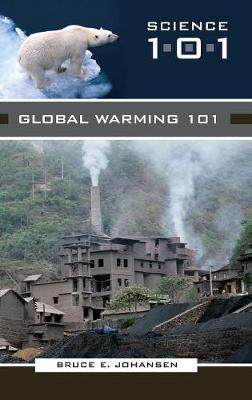
The accelerating pace of global warming is provoking anxiety that the Earth is reaching an ominous threshold, a point of no return. Within a decade or two, various feedbacks may take greenhouse warming past any human ability to contain or reverse it. Carbon-dioxide levels in the atmosphere are rising rapidly, fed by increasing fossil-fuel use world-wide, melting permafrost, slash-and-burn agriculture in Indonesia and Brazil, increasing wildfires, as well as rapid industrialization using dirty coal in China and India. Global warming may well become the most urgent problem the world faces during the 21st Century . Natural variations are no longer the major contribution (or forcing) in Earth's climate. Human contributions became the major factor about 1950. This book has been prepared as a reference for high-school students, but it also will be useful for anyone who wants a compact, plain-spoken basic guide to the science of global warming. Global Warming 101 begins with an examination of basic issues, followed by important controversies in the field. The book then describes scientific issues related to melting ice, rising seas, and effects on plants and animals, as well as human health. Global Warming 101 concludes with consideration of possible solutions. Global Warming 101 combines a survey of the science of global warming with reporting from around the world, from sinking Pacific islands and thawing Arctic permafrost, which indicate that significant global warming already has begun.
Full Product Details
Author: Bruce E. Johansen, Ph.D.
Publisher: Bloomsbury Publishing Plc
Imprint: Greenwood Press
Dimensions:
Width: 15.60cm
, Height: 2.00cm
, Length: 23.50cm
Weight: 0.482kg
ISBN: 9780313346903
ISBN 10: 0313346909
Pages: 216
Publication Date: 30 June 2008
Recommended Age: From 7 to 17 years
Audience:
General/trade
,
General
Format: Hardback
Publisher's Status: Active
Availability: Manufactured on demand

We will order this item for you from a manufactured on demand supplier.
Reviews
<p>. ..this book takes a crucial, complex scientific field and makes it readily accessible to readers. I firmly think this book ought to be required reading for everyone on teh planet, and at the very least, I think a copy shoudl be in every high school classroom in this country. Anything less would be a disservice to our educational charges. - <p>National Science Teachers Association
...this book takes a crucial, complex scientific field and makes it readily accessible to readers. I firmly think this book ought to be required reading for everyone on teh planet, and at the very least, I think a copy shoudl be in every high school classroom in this country. Anything less would be a disservice to our educational charges. - National Science Teachers Association
Author Information
Bruce E. Johansen is Frederick W. Kayser Professor at the University of Nebraska at Omaha. He has been teaching and writing in the School of Communication at UNO since 1982. Johansen writes frequently about environmental subjects, including Global Warming in the 21st century (Praeger, 3 vols., 2006), The Global Warming Desk Reference (Greenwood, 2001), The Dirty Dozen: Toxic Chemicals and the Earth's Future (Praeger, 2003), and Indigenous Peoples and Environmental Issues (Greenwood, 2004).