|
|
|||
|
||||
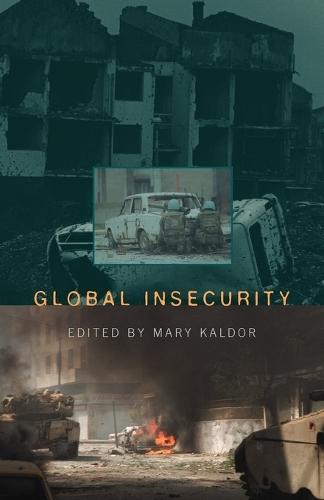
OverviewThe first half of the 1990s was a period of great optimism about humanitarian intervention. In the aftermath of the Cold War, it was hoped that the international community could begin to act cohesively in defence of fundamental international principles and that a global security policy aimed at the prevention of conflict and upholding human rights could be established. The actual experience of this period, however, has been sobering. Agreements engineered from above, like the Dayton Agreement or the Oslo Agreement, have mixed consequences. Efforts at humanitarian relief have often ended up frustrating good intentions and prolonging conflict. This book looks at what we learn from such experiences. Should we retreat from intervention? Is there a global reponsibility for wars and for massive violations of human rights? The authors start from a conviction that in a globalized world we do have certain responsibilities and that the point is to look at how we intervene. They aim to open up a ""third approach"" - an alternative to the dominance of realist or neo-liberal approaches - which would address the reality of contemporary conflict. Key themes include the need for a more democratic approach in terms of the accountability and openness of both governments and international institutions, the importance of international humanitarian law and the future of formal military forces. Full Product DetailsAuthor: Mary KaldorPublisher: Bloomsbury Publishing PLC Imprint: Continuum International Publishing Group Ltd. Volume: v. 3 Dimensions: Width: 14.00cm , Height: 1.30cm , Length: 21.60cm Weight: 0.303kg ISBN: 9781855676459ISBN 10: 1855676451 Pages: 258 Publication Date: 01 July 2000 Audience: College/higher education , Professional and scholarly , Undergraduate , Postgraduate, Research & Scholarly Format: Paperback Publisher's Status: Active Availability: Awaiting stock The supplier is currently out of stock of this item. It will be ordered for you and placed on backorder. Once it does come back in stock, we will ship it out for you. Table of ContentsThe politics of war in Africa, Alex de Waal; frozen conflicts in Europe, Mient Jan Faber; the economics of new conflicts, Vesna Bojicic; the changing composition of armed forces and military technology, Ulrich Albrecht; creating the arms industry of the 21st century, John Lovering.ReviewsAuthor InformationMary Kaldor is Director of the Programme on Global Civil Society at the Centre for the Study of Global Governance, London School of Economics. Among her most recent publications are New and Old Wars: Organized Violence in a Global Era (Polity Press and Stanford University Press 1999) and Global Insecurity (edited) (Continuum 2000). Tab Content 6Author Website:Countries AvailableAll regions |
||||