Overview
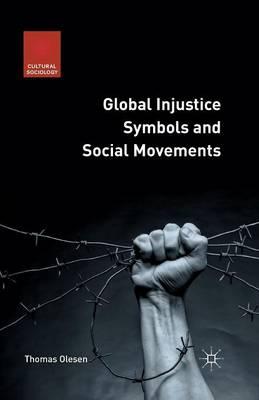
Global Injustice Symbols and Social Movements examines our collective moral and political maps, dotted with symbols shaped by political dynamics beyond their local or national origin and offers the first systematic sociological treatment of this important phenomenon.
Full Product Details
Author: T. Olesen
Publisher: Palgrave Macmillan
Imprint: Palgrave Macmillan
Edition: 1st ed. 2015
Dimensions:
Width: 14.00cm
, Height: 1.10cm
, Length: 21.60cm
Weight: 2.631kg
ISBN: 9781349502790
ISBN 10: 1349502790
Pages: 189
Publication Date: 09 April 2015
Audience:
Professional and scholarly
,
Professional & Vocational
Format: Paperback
Publisher's Status: Active
Availability: Manufactured on demand

We will order this item for you from a manufactured on demand supplier.
Reviews
This new book does a nice job describing how social movements `scale up' to a global level through the mediation of injustice symbols. ... Students of social movements, cultural sociology, and globalization will find this book valuable. Summing Up: Recommended. Research collections. (J. Li, Choice, Vol. 53 (5), January, 2016) In this brilliant book, Olesen bridges the micro-macro divide to expose the inextricable relationship between social movements, symbols, and society in the global age. A strong and bright contribution to a renewal of the sociology of social movements beyond the business as usual of utilitarian theories, and to a sociology of social movements as a general sociology. - Geoffrey Pleyers, President of the Research Committee 47: Social Movements , International Sociological Association; Professor, Catholic University of Louvain, Belgium Focusing on injustice symbols, Olesen proposes an innovative theoretical perspective, bridging social movement studies with cultural studies with the support of a careful empirical investigation. Filling a gap in the literature, this book helps us understand the global diffusion of some episodes of protest. - Donatella della Porta, Director of the Center on Social Movement Studies-Cosmos, European University Institute, Italy Finally, a book that does justice to the cultural dimensions of the global justice movement, demonstrating that symbols and emotions can be found in the most extensive political efforts and are not restricted to local accounts. A major step forward in our understanding of recent protest. - James M. Jasper, Professor of Sociology, The Graduate Center of the City University of New York, USA This systematic, lucid, and clearly structured study on the link between social movements and global injustice symbols is theoretically informed and empirically grounded. Based on four instructive case chapters, it offers valuable insights into both the weaknesses and strengths of an emerging global civil society that engages in an uphill struggle to secure human rights and social justice in all parts of the world. - Dieter Rucht, Professor of Sociology, Berlin Social Science Center, Germany Olesen's original book demonstrates how global injustice symbols are politically powerful, sometimes even explosive, social constructions, created in and through social movement mobilization. And yet they have received quite little attention in studies of global civil society and social movements. Olesen's book does not only fill a gap, his analytically sharp and creative analysis of injustice symbols such as the Rwanda genocide, Guantanamo Bay, and Nelson Mandela, made in a truly inter-disciplinary spirit, is groundbreaking. This book is an important contribution not only to the study of globalization and social movements, but of contemporary politics more generally. - Hakan Thoern, Professor of Sociology, University of Gothenburg, Sweden, and author of Anti-Apartheid and the Emergence of a Global Civil Society (2006)
This new book does a nice job describing how social movements 'scale up' to a global level through the mediation of injustice symbols. ... Students of social movements, cultural sociology, and globalization will find this book valuable. Summing Up: Recommended. Research collections. (J. Li, Choice, Vol. 53 (5), January, 2016) In this brilliant book, Olesen bridges the micro-macro divide to expose the inextricable relationship between social movements, symbols, and society in the global age. A strong and bright contribution to a renewal of the sociology of social movements beyond the business as usual of utilitarian theories, and to a sociology of social movements as a general sociology. - Geoffrey Pleyers, President of the Research Committee 47: Social Movements , International Sociological Association; Professor, Catholic University of Louvain, Belgium Focusing on injustice symbols, Olesen proposes an innovative theoretical perspective, bridging social movement studies with cultural studies with the support of a careful empirical investigation. Filling a gap in the literature, this book helps us understand the global diffusion of some episodes of protest. - Donatella della Porta, Director of the Center on Social Movement Studies-Cosmos, European University Institute, Italy Finally, a book that does justice to the cultural dimensions of the global justice movement, demonstrating that symbols and emotions can be found in the most extensive political efforts and are not restricted to local accounts. A major step forward in our understanding of recent protest. - James M. Jasper, Professor of Sociology, The Graduate Center of the City University of New York, USA This systematic, lucid, and clearly structured study on the link between social movements and global injustice symbols is theoretically informed and empirically grounded. Based on four instructive case chapters, it offers valuable insights into both the weaknesses and strengths of an emerging global civil society that engages in an uphill struggle to secure human rights and social justice in all parts of the world. - Dieter Rucht, Professor of Sociology, Berlin Social Science Center, Germany Olesen's original book demonstrates how global injustice symbols are politically powerful, sometimes even explosive, social constructions, created in and through social movement mobilization. And yet they have received quite little attention in studies of global civil society and social movements. Olesen's book does not only fill a gap, his analytically sharp and creative analysis of injustice symbols such as the Rwanda genocide, Guantanamo Bay, and Nelson Mandela, made in a truly inter-disciplinary spirit, is groundbreaking. This book is an important contribution not only to the study of globalization and social movements, but of contemporary politics more generally. - Hakan Thoern, Professor of Sociology, University of Gothenburg, Sweden, and author of Anti-Apartheid and the Emergence of a Global Civil Society (2006)
This new book does a nice job describing how social movements 'scale up' to a global level through the mediation of injustice symbols. ... Students of social movements, cultural sociology, and globalization will find this book valuable. Summing Up: Recommended. Research collections. (J. Li, Choice, Vol. 53 (5), January, 2016) In this brilliant book, Olesen bridges the micro-macro divide to expose the inextricable relationship between social movements, symbols, and society in the global age. A strong and bright contribution to a renewal of the sociology of social movements beyond the business as usual of utilitarian theories, and to a sociology of social movements as a general sociology. - Geoffrey Pleyers, President of the Research Committee 47: Social Movements , International Sociological Association; Professor, Catholic University of Louvain, Belgium Focusing on injustice symbols, Olesen proposes an innovative theoretical perspective, bridging social movement studies with cultural studies with the support of a careful empirical investigation. Filling a gap in the literature, this book helps us understand the global diffusion of some episodes of protest. - Donatella della Porta, Director of the Center on Social Movement Studies-Cosmos, European University Institute, Italy Finally, a book that does justice to the cultural dimensions of the global justice movement, demonstrating that symbols and emotions can be found in the most extensive political efforts and are not restricted to local accounts. A major step forward in our understanding of recent protest. - James M. Jasper, Professor of Sociology, The Graduate Center of the City University of New York, USA This systematic, lucid, and clearly structured study on the link between social movements and global injustice symbols is theoretically informed and empirically grounded. Based on four instructive case chapters, it offers valuable insights into both the weaknesses and strengths of an emerging global civil society that engages in an uphill struggle to secure human rights and social justice in all parts of the world. - Dieter Rucht, Professor of Sociology, Berlin Social Science Center, Germany Olesen's original book demonstrates how global injustice symbols are politically powerful, sometimes even explosive, social constructions, created in and through social movement mobilization. And yet they have received quite little attention in studies of global civil society and social movements. Olesen's book does not only fill a gap, his analytically sharp and creative analysis of injustice symbols such as the Rwanda genocide, Guantanamo Bay, and Nelson Mandela, made in a truly inter-disciplinary spirit, is groundbreaking. This book is an important contribution not only to the study of globalization and social movements, but of contemporary politics more generally. - Hakan Thorn, Professor of Sociology, University of Gothenburg, Sweden, and author of Anti-Apartheid and the Emergence of a Global Civil Society (2006)
This new book does a nice job describing how social movements `scale up' to a global level through the mediation of injustice symbols. ... Students of social movements, cultural sociology, and globalization will find this book valuable. Summing Up: Recommended. Research collections. (J. Li, Choice, Vol. 53 (5), January, 2016) In this brilliant book, Olesen bridges the micro-macro divide to expose the inextricable relationship between social movements, symbols, and society in the global age. A strong and bright contribution to a renewal of the sociology of social movements beyond the business as usual of utilitarian theories, and to a sociology of social movements as a general sociology. - Geoffrey Pleyers, President of the Research Committee 47: Social Movements , International Sociological Association; Professor, Catholic University of Louvain, Belgium Focusing on injustice symbols, Olesen proposes an innovative theoretical perspective, bridging social movement studies with cultural studies with the support of a careful empirical investigation. Filling a gap in the literature, this book helps us understand the global diffusion of some episodes of protest. - Donatella della Porta, Director of the Center on Social Movement Studies-Cosmos, European University Institute, Italy Finally, a book that does justice to the cultural dimensions of the global justice movement, demonstrating that symbols and emotions can be found in the most extensive political efforts and are not restricted to local accounts. A major step forward in our understanding of recent protest. - James M. Jasper, Professor of Sociology, The Graduate Center of the City University of New York, USA This systematic, lucid, and clearly structured study on the link between social movements and global injustice symbols is theoretically informed and empirically grounded. Based on four instructive case chapters, it offers valuable insights into both the weaknesses and strengths of an emerging global civil society that engages in an uphill struggle to secure human rights and social justice in all parts of the world. - Dieter Rucht, Professor of Sociology, Berlin Social Science Center, Germany Olesen's original book demonstrates how global injustice symbols are politically powerful, sometimes even explosive, social constructions, created in and through social movement mobilization. And yet they have received quite little attention in studies of global civil society and social movements. Olesen's book does not only fill a gap, his analytically sharp and creative analysis of injustice symbols such as the Rwanda genocide, Guantanamo Bay, and Nelson Mandela, made in a truly inter-disciplinary spirit, is groundbreaking. This book is an important contribution not only to the study of globalization and social movements, but of contemporary politics more generally. - Hakan Thorn, Professor of Sociology, University of Gothenburg, Sweden, and author of Anti-Apartheid and the Emergence of a Global Civil Society (2006)
Author Information
Thomas Olesen is Associate Professor of Political Science, Aarhus University, Denmark. His research interests lie in the intersection of social movements, globality, solidarity, communication, and media. He has contributed widely to the fields of social movements and global sociology in journals such as Mobilization, Research in Social Movements, Conflicts, and Change, and International Political Sociology.