Overview
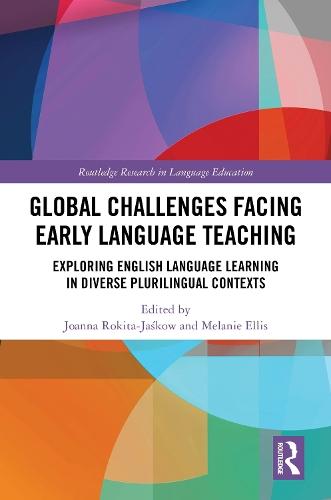
Acknowledging the differing motivations between multilingual and monolingual societies in advocating for the adoption of a second language amongst (pre)primary school children, this book discusses universal challenges in implementing early language teaching in various international contexts. Effectively teaching additional languages to young learners requires an understanding of their learning capacities, as well as their socio-linguistic backgrounds and linguistic repertoires. Demonstrating findings from global contexts such as those from Japan, Cyprus, Spain, Poland, Slovenia, Germany, South Korea, Croatia, Indonesia, Canada, and the UK, this book provides valuable means to support additional language acquisition that have garnered local success, focusing on plurilingual contexts, migrant populations, and the need for samples of ELL syllabi, outcomes, and assessment. Through cross-sectional surveys, ethnographic small-scale studies, and experimental empirical research reports, this book looks to foster future plurilingual individuals who can communicate successfully. This book will be of interest to scholars, researchers, and postgraduate students in the fields of Bilingualism/ESL, teaching and learning, early childhood education, and education policy. Curriculum designers working in international language education contexts may also find this volume of use.
Full Product Details
Author: Joanna Rokita-Jaśkow (University of the National Education Commission, Poland) ,
Melanie Ellis (Silesian University of Technology, Poland)
Publisher: Taylor & Francis Ltd
Imprint: Routledge
ISBN: 9781041080176
ISBN 10: 1041080174
Pages: 204
Publication Date: 05 May 2026
Audience:
College/higher education
,
Professional and scholarly
,
ELT/ESL
,
Postgraduate, Research & Scholarly
,
Professional & Vocational
Format: Hardback
Publisher's Status: Forthcoming
Availability: Not yet available

This item is yet to be released. You can pre-order this item and we will dispatch it to you upon its release.
Reviews
'This timely volume offers an in-depth view into latest developments in researching English language learning and teaching to young and very young learners. It brings new research-informed insights into major changes prompted by new realities in different contexts across the globe, ranging from insistence on intensive teaching by English native speakers to 'trolley teaching' in contexts where English is perceived as a threat to the official language. The interested reader will find convincing evidence for the need to reevaluate the roles of familiar approaches such as focus on form or pre-task planning as well as novel ideas for dealing with new realities of teaching English in increasingly multilingual classes. New teacher competences necessary to meet diverse needs of plurilingual young learners are suggested based on insights from novel studies on English language teacher education. This is a must-read for both researchers and practitioners engaged in the young language learners field.' - Jelena Mihaljević Djigunović, Retired Full Professor, University of Zagreb 'The editors have put together a rich and insightful collection of papers discussing globally persisting challenges in our field. The chapters take the reader on a world tour of contexts highlighting some globally shared challenges but also focussing on specific issues and questions unique to individual contexts. This volume raises awareness about how the rapid changes happening in our societies impact language classrooms around the world and it also makes some excellent recommendations about how stakeholders can collaborate and begin to address these challenges. This is a ‘must-read’ not just for researchers and teacher educators but also for policy makers and administrators interested in early language learning and teaching.' Annamaria Pinter, University of Warwick, UK 'This volume addresses multilingualism as a defining feature of language teaching to young learners, illuminating the complex status of the English language in a globalised world. It is thus a timely addition to current research in the field of Early Language Teaching. Taking a global perspective, the contributions in the book explore longer-standing as well as new challenges in both theoretical depth and with a view to practical relevance. Positioning practitioners and learners at the centre, the volume highlights the interconnectedness of empirical research, teacher education, policy making and classroom experiences. Covering aspects such as CLIL, grammar and literacy instruction, Virtual Exchange, learners’ self-concepts, tandem teaching, and institutional challenges, the book is a must-read for researchers, practitioners, and teacher educators alike who seek to better understand and navigate multilingual environments.' Karen Glaser, University of Leipzig, Germany
'This timely volume offers an in-depth view into latest developments in researching English language learning and teaching to young and very young learners. It brings new research-informed insights into major changes prompted by new realities in different contexts across the globe, ranging from insistence on intensive teaching by English native speakers to 'trolley teaching' in contexts where English is perceived as a threat to the official language. The interested reader will find convincing evidence for the need to reevaluate the roles of familiar approaches such as focus on form or pre-task planning as well as novel ideas for dealing with new realities of teaching English in increasingly multilingual classes. New teacher competences necessary to meet diverse needs of plurilingual young learners are suggested based on insights from novel studies on English language teacher education. This is a must-read for both researchers and practitioners engaged in the young language learners field.' - Jelena Mihaljević Djigunović, Retired Full Professor, University of Zagreb 'The editors have put together a rich and insightful collection of papers discussing globally persisting challenges in our field. The chapters take the reader on a world tour of contexts highlighting some globally shared challenges but also focussing on specific issues and questions unique to individual contexts. This volume raises awareness about how the rapid changes happening in our societies impact language classrooms around the world and it also makes some excellent recommendations about how stakeholders can collaborate and begin to address these challenges. This is a ‘must-read’ not just for researchers and teacher educators but also for policy makers and administrators interested in early language learning and teaching.' Annamaria Pinter, University of Warwick, UK 'This volume addresses multilingualism as a defining feature of language teaching to young learners, illuminating the complex status of the English language in a globalised world. It is thus a timely addition to current research in the field of Early Language Teaching. Taking a global perspective, the contributions in this book explore longer-standing as well as new challenges in both theoretical depth and with a view to practical relevance. Positioning practitioners and learners at the centre, this volume highlights the interconnectedness of empirical research, teacher education, policy making and classroom experiences. Covering aspects such as CLIL, grammar and literacy instruction, Virtual Exchange, learners’ self-concepts, tandem teaching, and institutional challenges, this book is a must-read for researchers, practitioners, and teacher educators alike who seek to better understand and navigate multilingual environments.' Karen Glaser, University of Leipzig, Germany
'This timely volume offers an in-depth view into latest developments in researching English language learning and teaching to young and very young learners. It brings new research-informed insights into major changes prompted by new realities in different contexts across the globe, ranging from insistence on intensive teaching by English native speakers to ""trolley teaching"" in contexts where English is perceived as a threat to the official language. The interested reader will find convincing evidence for the need to reevaluate the roles of familiar approaches such as focus on form or pre-task planning as well as novel ideas for dealing with new realities of teaching English in increasingly multilingual classes. New teacher competences necessary to meet diverse needs of plurilingual young learners are suggested based on insights from novel studies on English language teacher education. This is a must-read for both researchers and practitioners engaged in the young language learners field.' - Jelena Mihaljević Djigunović, Retired Full Professor, University of Zagreb 'The editors have put together a rich and insightful collection of papers discussing globally persisting challenges in our field. The chapters take the reader on a world tour of contexts highlighting some globally shared challenges but also focusing on specific issues and questions unique to individual contexts. This volume raises awareness about how the rapid changes happening in our societies impact language classrooms around the world and it also makes some excellent recommendations about how stakeholders can collaborate and begin to address these challenges. This is a ""must-read"" not just for researchers and teacher educators but also for policy makers and administrators interested in early language learning and teaching.' Annamaria Pinter, University of Warwick, UK 'This volume addresses multilingualism as a defining feature of language teaching to young learners, illuminating the complex status of the English language in a globalised world. It is thus a timely addition to current research in the field of Early Language Teaching. Taking a global perspective, the contributions in this book explore longer-standing as well as new challenges in both theoretical depth and with a view to practical relevance. Positioning practitioners and learners at the centre, this volume highlights the interconnectedness of empirical research, teacher education, policy making, and classroom experiences. Covering aspects such as CLIL, grammar and literacy instruction, Virtual Exchange, learners’ self-concepts, tandem teaching, and institutional challenges, this book is a must-read for researchers, practitioners, and teacher educators alike who seek to better understand and navigate multilingual environments.' Karen Glaser, University of Leipzig, Germany
Author Information
Joanna Rokita-Jaśkow is Associate Professor and Head of the Faculty of Linguistics at the University of the National Education Commission, Poland. She is a founder member of the Early Language Learning Research Association (ELLRA). Melanie Ellis is Associate Professor in the Department of Applied Linguistics and Law, Faculty of Organization and Management, Silesian University of Technology, Poland. She is a founder member of the Early Language Learning Research Association (ELLRA).