Overview
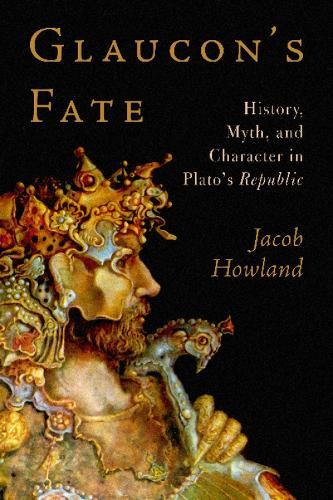
The Republic dramatizes Socrates attempt to convince Platos brother Glaucon that the just life of philosophy is preferable to the unjust life of tyranny. Jacob Howland argues that he failed, and that Glaucon joined his relatives Critias and Charmides in the brutal oligarchy of the Thirty Tyrants that governed Athens in the immediate aftermath of the Peloponnesian War. What went wrong? This is the guiding question of Glaucons Fate, a book that promises to challenge our understanding of Platos masterwork.
Full Product Details
Author: Jacob Howland
Publisher: Paul Dry Books, Inc
Imprint: Paul Dry Books, Inc
Dimensions:
Width: 14.00cm
, Height: 2.50cm
, Length: 21.50cm
Weight: 0.462kg
ISBN: 9781589881341
ISBN 10: 1589881346
Pages: 295
Publication Date: 06 November 2018
Audience:
General/trade
,
General
Format: Paperback
Publisher's Status: Active
Availability: Available To Order

We have confirmation that this item is in stock with the supplier. It will be ordered in for you and dispatched immediately.
Reviews
Clear, accessible, and very informative...a successful and inviting text. --Review of Metaphysics on Jacob Howland's The Republic: The Odyssey of Philosophy Jacob Howland's book is an engaging, readable, and extremely suggestive addition to the literature on Plato's magnum opus. --Ancient Philosophy on Jacob Howland's The Republic: The Odyssey of Philosophy In this concise, stimulating and provocative book Howland is in effect dealing with the central and persistent problem about the interpretation of the Republic: what is its purpose, and how do we establish what that is? --Polis on Jacob Howland's The Republic: The Odyssey of Philosophy I know of no other book devoted to the Republic that so straightforwardly furnishes a healthy orientation to Plato's philosophic intentions. It will be of unqualified interest both to first-time students of the Republic and to their teachers. Yet it will also intrigue those looking for further, responsible light on apparently well-worn paths. A most inviting, helpful reading. --St. John's Review on Jacob Howland's The Republic: The Odyssey of Philosophy .. .Up until Jacob Howland's fine monograph, no one has written, at least in English, a study specifically devoted to Kierkegaard's attitude towards Socrates. What immediately emerges from this book is how differently Socrates influenced Kierkegaard than he did Plato. --First Things on Kierkegaard and Socrates: A Study in Philosophy and Faith Kierkegaard and Socrates is written in a lucid and engaging manner. I will be of interest to those seeking to make sense of one of the most important of Kierkegaard's texts, scholars interested in the Socrates of Plato's dialogues, and anyone concerned with the relationship between philosophy and faith. --Journal of the History of Philosophy on Kierkegaard and Socrates: A Study in Philosophy and Faith
Jacob Howland masterfully reads Plato's Republic as a work of literature and history. By putting the education of Glaucon--Plato's brother--at the center of the text, he confirms Rousseau's famous judgment that the Republic is the greatest work on education ever written. Socrates' failure to turn Glaucon toward the philosophic life illustrates the vulnerabilities of philosophy when confronted with the allures of power and political rule. Glaucon's Fate is a must-read for every serious student of Plato's philosophy. --Steven B. Smith, Alfred Cowles Professor of Political Science, Yale University Glaucon's Fate is splendid. It shows the Republic as no mere epic but a proper Greek tragedy, with the violence, as is traditional, taking place offstage. I found Howland's book enlightening on every page. --Lenn E. Goodman, Professor of Philosophy and Andrew W. Mellon Professor in the Humanities, Vanderbilt University In Glaucon's Fate, Jacob Howland reveals exquisitely how Plato's thought was formed by his lived experience. Through close attention to the historical personalities in the circle of Socrates, Howland shows how memory of Glaucon--Plato's brother, who also figures in Xenophon's Memorabilia of Socrates--provided a foil for Plato to construct his ideal philosopher-ruler. Our reading of the Republic is richly informed by this book. --Mark Munn, Professor of Ancient Greek History and Greek Archaeology, The Pennsylvania State University Howland's fascinating new book about Plato's Republic is beautifully written, original, and profound. Providing evidence from the Timaeus, the Critias, and the Charmides as well as from other historical sources, Howland demonstrates Socrates' rivalry with the tyrannical Critias for the soul of Glaucon, the likely failure of Socrates' pedagogy, and Plato's grave reservations about the philosophic rigor and scientific control in the city in speech. Illuminating the Republic's drama and philosophy by situating the dialogue in Athens's political history, Howland's work is a masterful introduction for those reading Plato for the first time and a challenge for seasoned classical scholars. --Mary Nichols, Professor Emerita of Political Science, Baylor University Howland's book reorients nearly every detail of this dialogue that we think we know so well. Glaucon's Fate is an exhilarating read. It will change the landscape of the scholarly debate about Plato's Republic for many years to come. --Anne-Marie Schultz, Professor of Philosophy, Baylor University
Author Information
Jacob Howland is an associate professor of philosophy and chair of the department of philosophy and religion at the University of Tulsa. He is the author of The Paradox of Political Philosophy. He lives in Tulsa, Oklahoma.