Overview
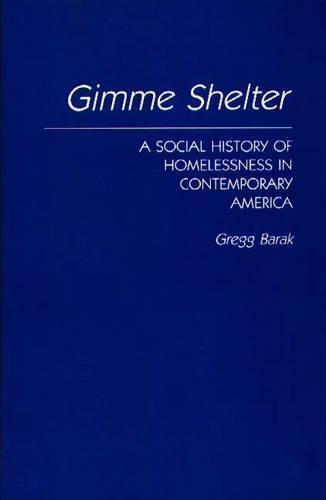
According to current projections, the number of homeless in the United States will continue to swell in the 1990s unless more aggressive efforts to combat the problem are initiated. Based upon a thorough analysis of the underlying social and political causes of homelessness in this country, this study takes a hard look at the realities and misconceptions that surround the victims. Gregg Barak demonstrates how current public service programs inadequately address the issue, and proposes governmental policy changes that could prove beneficial. In an effort to dispel the myths that stereotype the homeless, this study places their plight within the continuing domestic and worldwide economic emergency and defines their demographics according to such factors as age, sex, race, health, and education. Barak's subsequent focus on the violence and criminality associated with the condition and treatment of the homeless uncovers controversial issues of injustice and constitutionality, and aims the discussion toward possible solutions for this burgeoning problem.
Full Product Details
Author: Gregg Barak
Publisher: Bloomsbury Publishing Plc
Imprint: Praeger Publishers Inc
Edition: New edition
Dimensions:
Width: 15.60cm
, Height: 1.70cm
, Length: 23.50cm
Weight: 0.340kg
ISBN: 9780275944018
ISBN 10: 0275944018
Pages: 232
Publication Date: 30 June 1992
Recommended Age: From 7 to 17 years
Audience:
College/higher education
,
Undergraduate
,
Postgraduate, Research & Scholarly
Format: Paperback
Publisher's Status: Active
Availability: Manufactured on demand

We will order this item for you from a manufactured on demand supplier.
Reviews
Gregg Barak's book is a highly readable and interesting account of homelessness in the 1980s in the United States. . . . In a world where scientific 'objective' accounts of the homeless and their pathologies prevail, Barak contributes a much-needed alternative voice. . . . [The book also contains an] informative and up-to-date treatment of current social policy and social action regarding homelessness, including an analysis of recent legislation, current services, nonprofit agency responses, ongoing legal battles, and the emerging 'homeless movement.' No other book that I am aware of has provided such a critical treatment of these important issues. -Leon Anderson Assistant Professor, Sociology Ohio University I am extremely impressed by Barak's bold but careful study of U.S. homelessness. It is time for us to place this new and growing domestic problem in its larger context. Barak accomplishes such an analysis artfully and with much compassion and clarity. The book helps us understand the root causes of homelessness and why it is not going to 'go away.' Important reading for students of U.S. social issues and the concerned lay reader. -Victoria Rader Department of Sociology George Mason University author of Signal Through the Flames ?Barak's main argument is that the problem of homelessness in the U.S. is linked to the emerging relations of global capitalism. Barak writes from the perspectives characteristic of critical criminology and victimology. Part I examines the problem of homelessness, its changing nature, the political economy of homelessness, housing policy, and the criminalization and victimization of the homeless. Part 2 critically evaluates government policies, the homeless movement, and the rights of the homeless, and suggests how to confront the problems of injustice and redistribution. Barak stresses the need for a new housing policy. He believes that the U.S. policy-making apparatus is not truly democratic and just; policies for eliminating homelessness must address questions of power, justice, and democracy as they relate to social stratification in the U.S. . . . This book goes beyond the insistence that homelessness is fundamentally a housing problem. It is well written and well worth reading.?-Choice Barak's main argument is that the problem of homelessness in the U.S. is linked to the emerging relations of global capitalism. Barak writes from the perspectives characteristic of critical criminology and victimology. Part I examines the problem of homelessness, its changing nature, the political economy of homelessness, housing policy, and the criminalization and victimization of the homeless. Part 2 critically evaluates government policies, the homeless movement, and the rights of the homeless, and suggests how to confront the problems of injustice and redistribution. Barak stresses the need for a new housing policy. He believes that the U.S. policy-making apparatus is not truly democratic and just; policies for eliminating homelessness must address questions of power, justice, and democracy as they relate to social stratification in the U.S. . . . This book goes beyond the insistence that homelessness is fundamentally a housing problem. It is well written and well worth reading. -Choice
Gregg Barak's book is a highly readable and interesting account of homelessness in the 1980s in the United States. . . . In a world where scientific 'objective' accounts of the homeless and their pathologies prevail, Barak contributes a much-needed alternative voice. . . . [The book also contains an] informative and up-to-date treatment of current social policy and social action regarding homelessness, including an analysis of recent legislation, current services, nonprofit agency responses, ongoing legal battles, and the emerging 'homeless movement.' No other book that I am aware of has provided such a critical treatment of these important issues. -Leon Anderson Assistant Professor, Sociology Ohio University
"""Gregg Barak's book is a highly readable and interesting account of homelessness in the 1980s in the United States. . . . In a world where scientific 'objective' accounts of the homeless and their pathologies prevail, Barak contributes a much-needed alternative voice. . . . [The book also contains an] informative and up-to-date treatment of current social policy and social action regarding homelessness, including an analysis of recent legislation, current services, nonprofit agency responses, ongoing legal battles, and the emerging 'homeless movement.' No other book that I am aware of has provided such a critical treatment of these important issues.""-Leon Anderson Assistant Professor, Sociology Ohio University ""I am extremely impressed by Barak's bold but careful study of U.S. homelessness. It is time for us to place this new and growing domestic problem in its larger context. Barak accomplishes such an analysis artfully and with much compassion and clarity. The book helps us understand the root causes of homelessness and why it is not going to 'go away.' Important reading for students of U.S. social issues and the concerned lay reader.""-Victoria Rader Department of Sociology George Mason University author of Signal Through the Flames ?Barak's main argument is that the problem of homelessness in the U.S. is linked to the emerging relations of global capitalism. Barak writes from the perspectives characteristic of critical criminology and victimology. Part I examines the problem of homelessness, its changing nature, the political economy of homelessness, housing policy, and the criminalization and victimization of the homeless. Part 2 critically evaluates government policies, the homeless movement, and the rights of the homeless, and suggests how to confront the problems of injustice and redistribution. Barak stresses the need for a new housing policy. He believes that the U.S. policy-making apparatus is not truly democratic and just; policies for eliminating homelessness must address questions of power, justice, and democracy as they relate to social stratification in the U.S. . . . This book goes beyond the insistence that homelessness is fundamentally a housing problem. It is well written and well worth reading.?-Choice ""Barak's main argument is that the problem of homelessness in the U.S. is linked to the emerging relations of global capitalism. Barak writes from the perspectives characteristic of critical criminology and victimology. Part I examines the problem of homelessness, its changing nature, the political economy of homelessness, housing policy, and the criminalization and victimization of the homeless. Part 2 critically evaluates government policies, the homeless movement, and the rights of the homeless, and suggests how to confront the problems of injustice and redistribution. Barak stresses the need for a new housing policy. He believes that the U.S. policy-making apparatus is not truly democratic and just; policies for eliminating homelessness must address questions of power, justice, and democracy as they relate to social stratification in the U.S. . . . This book goes beyond the insistence that homelessness is fundamentally a housing problem. It is well written and well worth reading.""-Choice"
Author Information
GREGG BARAK is Professor and Head of the Anthropology and Criminology Department at Eastern Michigan University. He is the author of In Defense of Whom? A Critique of Criminal Justice Reform (1980) and editor of Crimes by the Capitalist State: An Introduction to State Criminality, and numerous articles in related journals.