Overview
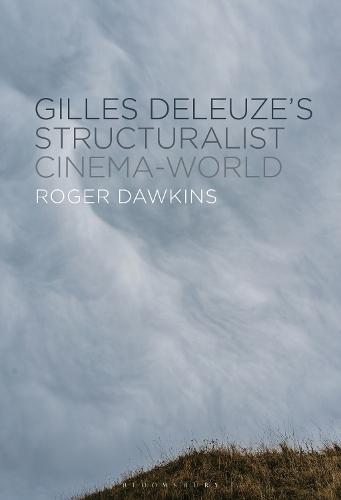
This book is an explanation of Deleuze’s cinema books that fleshes out a structuralist “method” applicable to film and media today. Gilles Deleuze’s Structuralist Cinema-World outlines a way of analyzing the meaning we interpret from film—its images, sounds and their combinations—and, in so doing, makes space for Deleuze's vision of critical resistance and creative thinking. It argues that this method is Deleuze’s radical version of Structuralism, as Deleuze borrows elements of Structuralism and deploys them throughout his entire oeuvre. This book distils this Deleuzian Structuralism down to a practical system of four criteria of analysis, including a special structuralist element called the joker. Its analysis of film serves to explicate Deleuze’s Structuralism and realize the experimentation potential to Deleuze’s method. This book investigates this perspective of Structuralism in Deleuze’s philosophy, his cinema books, and cinema generally. In so doing, it develops the system of analysis described above; it offers a novel reading of cinematic examples in line with this system, while at the same time outlining a method of analysis easily translatable to film and media studies more broadly; and, in its final chapter, it makes inroads into the application of this system beyond cinema to image-based platform media today. It includes detailed analyses of more than 10 films, from current well-known cinema (Top Gun: Maverick, Mr Bean’s Holiday), to Australian Indigenous cinema (Ten Canoes), and including less recent independent films such as What Time is it There?
Full Product Details
Author: Roger Dawkins (Western Sydney University, Australia)
Publisher: Bloomsbury Publishing Plc
Imprint: Bloomsbury Academic
ISBN: 9798765128275
Pages: 224
Publication Date: 08 January 2026
Audience:
Professional and scholarly
,
Professional & Vocational
Format: Hardback
Publisher's Status: Forthcoming
Availability: Manufactured on demand

Reviews
This book offers a genuinely new approach to cinema studies—a welcome foregrounding of Deleuze’s account of structure developed in his early philosophy. Dawkins demonstrates how Deleuze transformed key ideas of orthodox structuralism and how he critiqued the representational thinking that is so ingrained in cinema studies. But Dawkins does not simply explicate Deleuze; he also formulates an interpretive method of structural analysis that promotes non-representational thinking, which rejects sameness and negativity by recognizing novelty, creativity, and experimentation. * Warren Buckland, Associate Professor of Film, Oxford Brookes University, UK * To escape fascism and discover the possibility of thinking differently, me might need more structures. This is Dawkins’ radical claim for using structuralism to develop a novel framework of Deleuzian film analysis, shedding light on contemporary visual cultures from Aboriginal cinema to Instagram trends. * Laurence Kent, Lecturer in Digital Film and Television, University of Bristol, UK *
This book offers a genuinely new approach to cinema studies—a welcome foregrounding of Deleuze’s account of structure developed in his early philosophy. Dawkins demonstrates how Deleuze transformed key ideas of orthodox structuralism and how he critiqued the representational thinking that is so ingrained in cinema studies. But Dawkins does not simply explicate Deleuze; he also formulates an interpretive method of structural analysis that promotes non-representational thinking, which rejects sameness and negativity by recognizing novelty, creativity, and experimentation. * Warren Buckland, Associate Professor of Film, Oxford Brookes University, UK * To escape fascism and discover the possibility of thinking differently, we might need more structures. This is Dawkins’ radical claim for using structuralism to develop a novel framework of Deleuzian film analysis, shedding light on contemporary visual cultures from Aboriginal cinema to Instagram trends. * Laurence Kent, Lecturer in Digital Film and Television, University of Bristol, UK *
Author Information
Roger Dawkins is Associate Dean of Learning and Teaching at Western Sydney University, Australia. His research interests include Deleuze studies; film-philosophy; media studies (including social media); podcasting; the scholarship of teaching and learning; technology enhanced learning (TEL); and learning analytics (LA). He teaches in media theory, media law and ethics, podcasting, screen media and data visualization.