Overview
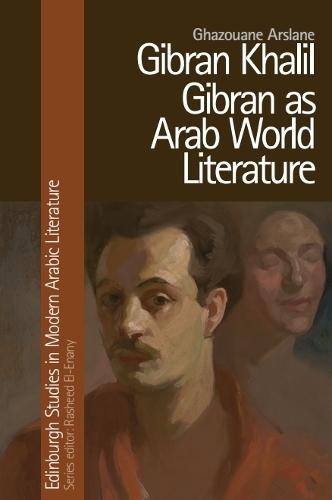
This monograph studies the Arab mahjari (emigre) writer Gibran Khalil Gibran (Kahlil Gibran) by examining his oeuvre as bilingual Arabic literature beyond biographical and culturalist approaches. It situates Gibran within his worldly contexts to unveil and analyse how the particular and the universal dialectically intersect in his multifarious work, including poetry, short stories, essays, plays and letters. What emerges is a post-religious poet who is both modern and critical of modernity, a creative but anxious bilingual writer, and a critical-nationalist intellectual embedded in the nahda or Arab renaissance. In its situated close readings of Gibran's work in both languages and across genres and contexts, the book reveals what is both absent and absented in its Anglo-American reception, demonstrating that there is much more to Gibran than his famous book The Prophet. It also probes this reception alongside its Arabic counterpart, highlighting and interrogating the multiple conditions of reading that have produced different functions of Gibran.
Full Product Details
Author: Ghazouane Arslane (Lecturer in the Department of English, Larbi Tebessi University)
Publisher: Edinburgh University Press
Imprint: Edinburgh University Press
ISBN: 9781399504690
ISBN 10: 139950469
Pages: 280
Publication Date: 28 February 2026
Audience:
Professional and scholarly
,
College/higher education
,
Professional & Vocational
,
Postgraduate, Research & Scholarly
Format: Paperback
Publisher's Status: Forthcoming
Availability: Not yet available

This item is yet to be released. You can pre-order this item and we will dispatch it to you upon its release.
Reviews
Ghazouane Arslane makes a momentous intervention in current debates about world literature via Gibran Khalil Gibran. In this fascinating study, the bilingual poet/artist emerges as a multi-faceted worldly figure who exemplifies and transcends multiple categories: Mahjar poet, Nahḍawī thinker, religious writer and more. Reading Gibran against key thinkers such as Attridge, Derrida, Heidegger and Meskini, Arslane uncovers a wealth of ideas and interpretations that will forever change our view of a writer ripe for critical re-discovery.--Ziad Elmarsafy, University of St Andrews
Ghazouane Arslane makes a momentous intervention in current debates about world literature via Gibran Khalil Gibran. In this fascinating study, the bilingual poet/artist emerges as a multi-faceted worldly figure who exemplifies and transcends multiple categories: Mahjar poet, Nahḍawī thinker, religious writer and more. Reading Gibran against key thinkers such as Attridge, Derrida, Heidegger and Meskini, Arslane uncovers a wealth of ideas and interpretations that will forever change our view of a writer ripe for critical re-discovery. -- Ziad Elmarsafy, University of St Andrews
Author Information
Ghazouane Arslane is Lecturer in the Department of English at Larbi Tebessi University, Tebessa - Algeria. He received his PhD in Comparative Literature from Queen Mary University of London, UK. He has contributed articles, essays and translations to Journal of Arabic Literature, Life Writing, Philosophy East and West, Asymptote and Universal Localities: The Languages of World Literature (J.B. Metzler Berlin, 2022).