|
|
|||
|
||||
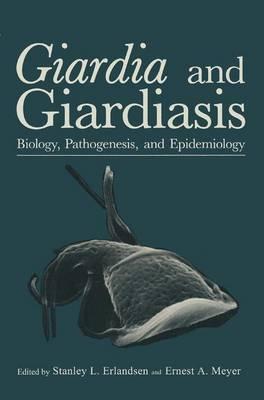
OverviewThe intestinal protozoan Giardia was first described over 300 years ago in 1681 by Leeuwenhoek, from his own stools. In his description of Giardia, he noted the size, movement, and morphology of the organism, and associated its presence with the diarrheic nature of his stools and his dietary habits. This truly remarkable account contains the first description of Giardia in morphologic, pathogenic, and epidemiologic terms. Our knowledge of the organisms in the genus Giardia has advanced tremendously in the past two decades. With the advent of new tech nologies, including techniques in electron microscopy, biochemistry, immunochemistry, tissue culture, and physiology, a tidal wave of information has appeared on the organization and function of this parasitic protozoan and its interaction with its host. The purpose of this book is to celebrate the tricentennial discovery of Giardia by Leeuwenhoek by presenting the above-mentioned advances in our knowledge of Giardia and giardiasis. In the first section of this book, the dominant theme is the biology of the organism and the correlation of structure-function relationships. Full Product DetailsAuthor: Stanley L. Erlandsen , Ernest A. MeyerPublisher: Springer Science+Business Media Imprint: Kluwer Academic/Plenum Publishers Edition: 1984 ed. Dimensions: Width: 15.60cm , Height: 2.60cm , Length: 23.40cm Weight: 1.750kg ISBN: 9780306415395ISBN 10: 0306415399 Pages: 408 Publication Date: 01 March 1984 Audience: General/trade , General Format: Hardback Publisher's Status: Active Availability: In Print This item will be ordered in for you from one of our suppliers. Upon receipt, we will promptly dispatch it out to you. For in store availability, please contact us. Table of ContentsI. Structure and Physiology.- 1 Structure of the Trophozoite and Cyst.- 2 Trophozoite Motility and the Mechanism of Attachment.- 3 Metabolism of Trophozoites.- 4 Giardia Isozymes.- 5 Methods of Isolating Trophozoites and Cysts.- 6 In Vitro Cultivation of Giardia Trophozoites.- 7 The Role of Reducing Agents and the Physiology of Trophozoite Attachment.- 8 Models for Excystation.- II. Giardiasis.- 9 Symptomatology, Diagnosis, and Treatment.- 10 Changes in the Small Intestinal Mucosa in Giardiasis.- 11 Cellular and Humoral Immunity in Giardiasis.- 12 Human Immune Responses to Giardia lamblia.- 13 Antigenicity of Giardia lamblia and the Current Status of Serologic Diagnosis of Giardiasis.- 14 Animal Models for Giardiasis.- III. Epidemiology.- 15 Waterborne Outbreaks of Giardiasis: Current Status.- 16 Detection of Giardia Cysts in Drinking Water: State of the Art.- 17 Filtration as a Barrier to Passage of Cysts in Drinking Water.- 18 Resistance of Cysts to Disinfection Agents.- 19 Direct Fecal—Oral Transmission of Giardiasis.- 20 Evidence for Animal Reservoirs and Transmission of Giardia Infection between Animal Species.- 21 Giardia lamblia: The Transfer of Human Infections by Foods.- 22 Some Perspectives on the Transmission of Giardiasis.ReviewsAuthor InformationTab Content 6Author Website:Countries AvailableAll regions |
||||