Overview
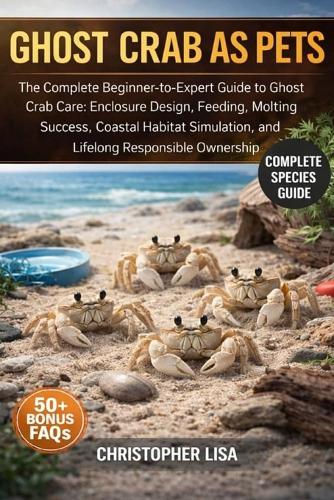
Introduction to Ghost Crabs as PetsThe Allure of the ShoreFew creatures capture the quiet mystery of the shoreline quite like the ghost crab. Small, swift, and pale as moonlit sand, these crabs seem almost unreal when first observed darting across a beach at dusk. Their name alone evokes curiosity. They are called ""ghost"" crabs not because they are supernatural, but because their sandy coloration and astonishing speed allow them to vanish in an instant, blending seamlessly into coastal landscapes. For many people, the first encounter with a ghost crab happens by accident-during a quiet evening walk along the beach, when sudden movement catches the eye. A blur of pale legs, a quick sideways dash, and the creature disappears into a neatly carved burrow. That brief encounter often lingers in memory. Unlike more familiar pet species, ghost crabs feel wild and untamed, tied closely to the rhythm of the ocean. It is precisely this wild elegance that draws curious keepers toward the idea of caring for them at home. Keeping a ghost crab is not simply about owning an unusual animal. It is about bringing a small piece of the coastline into a carefully constructed environment, observing behaviors that most people only glimpse for seconds in nature, and learning to appreciate a creature that thrives in the narrow boundary between land and sea. A Creature Between Two Worlds Ghost crabs belong to a group of crabs that are highly adapted for life on sandy beaches. Unlike fully aquatic crabs, they are primarily terrestrial. They breathe through modified gills that must remain moist, but they do not live submerged in water. Instead, they dig deep burrows in coastal sand above the high-tide line, venturing out mostly at night to forage. This dual existence-dependent on both land and moisture-makes ghost crabs biologically fascinating. They are engineers of their own habitat, capable of digging complex tunnels that can reach impressive depths relative to their body size. These burrows serve multiple purposes: Protection from predators Regulation of body temperature Maintenance of humidity for respiration Shelter during molting Their bodies reflect their environment. Long eyestalks provide a wide field of vision, allowing them to detect movement from nearly every direction. Their legs are built for speed rather than swimming, enabling quick sprints across open sand. Even their pale coloration is adaptive, serving as camouflage against predators such as birds and mammals. For people who appreciate observing natural behavior, ghost crabs offer a rare opportunity. In captivity, when provided with appropriate conditions, they continue to dig, forage, patrol territory, and maintain their burrows. They are not ornamental pets; they are active participants in shaping their surroundings. Intelligence and Awareness Though small, ghost crabs are surprisingly perceptive. They respond to vibrations in the sand, changes in lighting, and nearby movement. In the wild, they can quickly distinguish between harmless environmental disturbances and genuine threats.
Full Product Details
Author: Christopher Lisa
Publisher: Independently Published
Imprint: Independently Published
Dimensions:
Width: 15.20cm
, Height: 1.00cm
, Length: 22.90cm
Weight: 0.249kg
ISBN: 9798248813452
Pages: 182
Publication Date: 18 February 2026
Audience:
General/trade
,
General
Format: Paperback
Publisher's Status: Active
Availability: Available To Order

We have confirmation that this item is in stock with the supplier. It will be ordered in for you and dispatched immediately.