Full Product Details
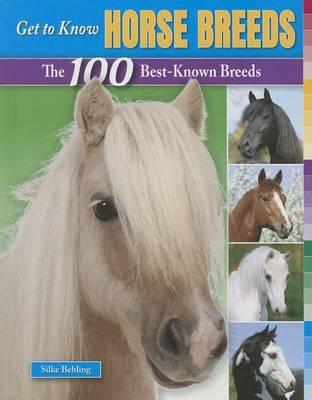
Author: Silke Behling
Publisher: Enslow Publishing
Imprint: Enslow Publishing
Dimensions:
Width: 17.50cm
, Height: 1.50cm
, Length: 21.60cm
Weight: 0.454kg
ISBN: 9780766042599
ISBN 10: 0766042596
Pages: 144
Publication Date: 16 January 2014
Recommended Age: From 11 to 17 years
Audience:
Children/juvenile
,
Children / Juvenile
Format: Hardback
Publisher's Status: Active
Availability: Available To Order

We have confirmation that this item is in stock with the supplier. It will be ordered in for you and dispatched immediately.
Reviews
Illustrated with copious color photos of horses/cats from around the world, the text in these volumes is detailed and engaging. It is also fraught with errors both minor and major. In the horse book, for example, the cob, the western horse, and the polo pony are each referred to as a distinct breed, although the cob is actually an equine body type, the western horse can be any horse shown or ridden in western tack, and a polo pony is any horse or pony used in the game of polo. Donkeys are listed in the small horses and ponies section of the book, although they are neither: donkeys are a distinctly separate species. In several instances, the distinctive markings that identify a particular breed are noted in the text, but not shown in the accompanying photos. Although this book claims to catalog the one hundred best-known horse breeds, several listed are noted to be extremely rare and nearly extinct, while at least one very common breed (the American Standardbred) is not mentioned at all. The cat book is slightly better, although as in the horse book the beautiful photographs do not always illustrate concepts emphasized in the text. Here too, obscure breeds are overly-emphasized. For example, the extremely rare Kenyan Sokoke cat is featured in a two-page spread, while the more common Manx is given a single, unillustrated paragraph.
Illustrated with copious color photos of horses/cats from around the world, the text in these volumes is detailed and engaging. It is also fraught with errors both minor and major. In the horse book, for example, the cob, the western horse, and the polo pony are each referred to as a distinct breed, although the cob is actually an equine body type, the western horse can be any horse shown or ridden in western tack, and a polo pony is any horse or pony used in the game of polo. Donkeys are listed in the small horses and ponies section of the book, although they are neither: donkeys are a distinctly separate species. In several instances, the distinctive markings that identify a particular breed are noted in the text, but not shown in the accompanying photos. Although this book claims to catalog the one hundred best-known horse breeds, several listed are noted to be extremely rare and nearly extinct, while at least one very common breed (the American Standardbred) is not mentioned at all. The cat book is slightly better, although as in the horse book the beautiful photographs do not always illustrate concepts emphasized in the text. Here too, obscure breeds are overly-emphasized. For example, the extremely rare Kenyan Sokoke cat is featured in a two-page spread, while the more common Manx is given a single, unillustrated paragraph.